Lorenz M. Lüthi - Böcker
Visar alla böcker från författaren Lorenz M. Lüthi. Handla med fri frakt och snabb leverans.
4 produkter
4 produkter
409 kr
Skickas inom 7-10 vardagar
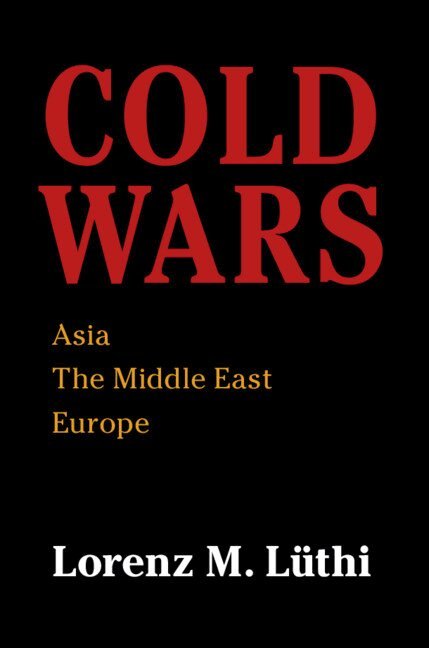
What was the Cold War that shook world politics for the second half of the twentieth century? Standard narratives focus on Soviet-American rivalry as if the superpowers were the exclusive driving forces of the international system. Lorenz M. Lüthi offers a radically different account, restoring agency to regional powers in Asia, the Middle East and Europe and revealing how regional and national developments shaped the course of the global Cold War. Despite their elevated position in 1945, the United States, Soviet Union and United Kingdom quickly realized that their political, economic, and military power had surprisingly tight limits given the challenges of decolonization, Asian-African internationalism, pan-Arabism, pan-Islamism, Arab-Israeli antagonism, and European economic developments. A series of Cold Wars ebbed and flowed as the three world regions underwent structural changes that weakened or even severed their links to the global ideological clash, leaving the superpower Cold War as the only major conflict that remained by the 1980s.
241 kr
Kommande
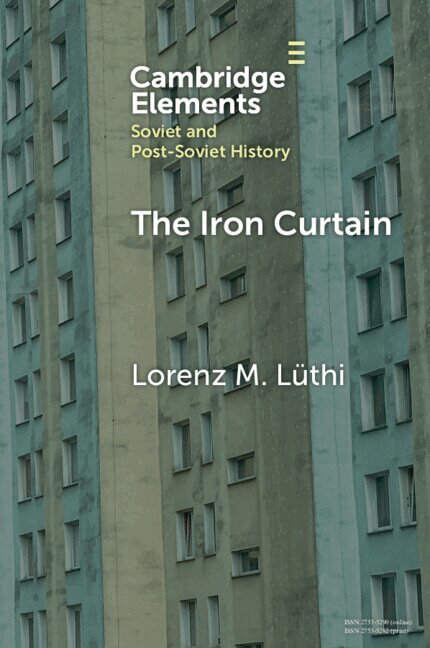
The Iron Curtain remains an iconic representation of the Cold War. But what was it really on the ground? Fortified borders to prevent citizens from leaving emerged first in the interwar USSR and then in socialist post-WW II Europe. Fortifications occurred both at borders between socialist states and at their external boundaries to the non-socialist world, but not in all cases. The most well-known case - the Berlin Wall - was both an extreme example as well as a latecomer. But since 1947, Yugoslavia, Hungary, and Czechoslovakia had fortified their borders to prevent exit. When East Germany started to build walls around West Berlin and at its borders to West Germany in the 1960s, Yugoslavia was already dismantling its border regime and Hungary was granting passports and exit visas to its citizens. Fortified borders also appeared at external borders in northern and southeastern Europe, in the Caucasus, and in Asia.
775 kr
Kommande
The Iron Curtain remains an iconic representation of the Cold War. But what was it really on the ground? Fortified borders to prevent citizens from leaving emerged first in the interwar USSR and then in socialist post-WW II Europe. Fortifications occurred both at borders between socialist states and at their external boundaries to the non-socialist world, but not in all cases. The most well-known case - the Berlin Wall - was both an extreme example as well as a latecomer. But since 1947, Yugoslavia, Hungary, and Czechoslovakia had fortified their borders to prevent exit. When East Germany started to build walls around West Berlin and at its borders to West Germany in the 1960s, Yugoslavia was already dismantling its border regime and Hungary was granting passports and exit visas to its citizens. Fortified borders also appeared at external borders in northern and southeastern Europe, in the Caucasus, and in Asia.
1 485 kr
Skickas inom 7-10 vardagar
What was the Cold War that shook world politics for the second half of the twentieth century? Standard narratives focus on Soviet-American rivalry as if the superpowers were the exclusive driving forces of the international system. Lorenz M. Lüthi offers a radically different account, restoring agency to regional powers in Asia, the Middle East and Europe and revealing how regional and national developments shaped the course of the global Cold War. Despite their elevated position in 1945, the United States, Soviet Union and United Kingdom quickly realized that their political, economic, and military power had surprisingly tight limits given the challenges of decolonization, Asian-African internationalism, pan-Arabism, pan-Islamism, Arab-Israeli antagonism, and European economic developments. A series of Cold Wars ebbed and flowed as the three world regions underwent structural changes that weakened or even severed their links to the global ideological clash, leaving the superpower Cold War as the only major conflict that remained by the 1980s.