Lorne Falkenstein - Böcker
Visar alla böcker från författaren Lorne Falkenstein. Handla med fri frakt och snabb leverans.
5 produkter
5 produkter
766 kr
Skickas inom 10-15 vardagar
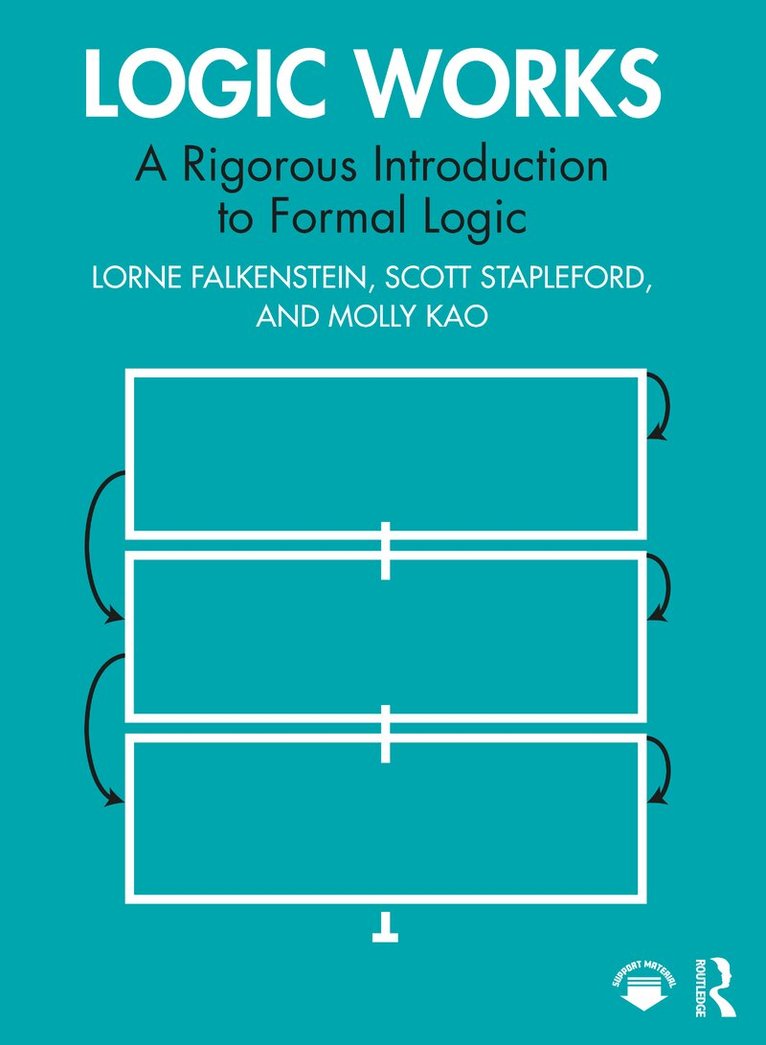
Logic Works is a critical and extensive introduction to logic. It asks questions about why systems of logic are as they are, how they relate to ordinary language and ordinary reasoning, and what alternatives there might be to classical logical doctrines. The book covers classical first-order logic and alternatives, including intuitionistic, free, and many-valued logic. It also considers how logical analysis can be applied to carefully represent the reasoning employed in academic and scientific work, better understand that reasoning, and identify its hidden premises. Aiming to be as much a reference work and handbook for further, independent study as a course text, it covers more material than is typically covered in an introductory course. It also covers this material at greater length and in more depth with the purpose of making it accessible to those with no prior training in logic or formal systems.Online support material includes a detailed student solutions manual with a running commentary on all starred exercises, and a set of editable slide presentations for course lectures.Key Features Introduces an unusually broad range of topics, allowing instructors to craft courses to meet a range of various objectives Adopts a critical attitude to certain classical doctrines, exposing students to alternative ways to answer philosophical questions about logic Carefully considers the ways natural language both resists and lends itself to formalization Makes objectual semantics for quantified logic easy, with an incremental, rule-governed approach assisted by numerous simple exercises Makes important metatheoretical results accessible to introductory students through a discursive presentation of those results and by using simple case studies
2 088 kr
Skickas inom 10-15 vardagar
Logic Works is a critical and extensive introduction to logic. It asks questions about why systems of logic are as they are, how they relate to ordinary language and ordinary reasoning, and what alternatives there might be to classical logical doctrines. The book covers classical first-order logic and alternatives, including intuitionistic, free, and many-valued logic. It also considers how logical analysis can be applied to carefully represent the reasoning employed in academic and scientific work, better understand that reasoning, and identify its hidden premises. Aiming to be as much a reference work and handbook for further, independent study as a course text, it covers more material than is typically covered in an introductory course. It also covers this material at greater length and in more depth with the purpose of making it accessible to those with no prior training in logic or formal systems.Online support material includes a detailed student solutions manual with a running commentary on all starred exercises, and a set of editable slide presentations for course lectures.Key Features Introduces an unusually broad range of topics, allowing instructors to craft courses to meet a range of various objectives Adopts a critical attitude to certain classical doctrines, exposing students to alternative ways to answer philosophical questions about logic Carefully considers the ways natural language both resists and lends itself to formalization Makes objectual semantics for quantified logic easy, with an incremental, rule-governed approach assisted by numerous simple exercises Makes important metatheoretical results accessible to introductory students through a discursive presentation of those results and by using simple case studies
2 088 kr
Skickas inom 10-15 vardagar
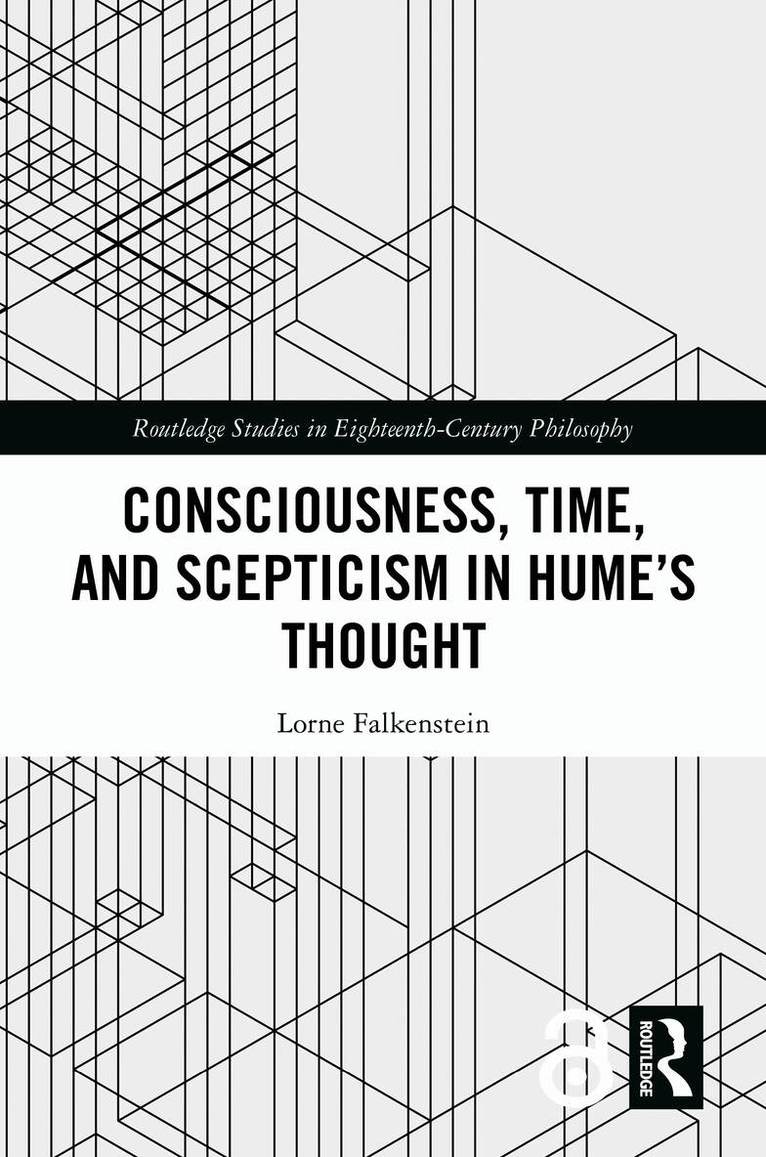
David Hume’s philosophical work presents the reader with a perplexing mix of constructive accounts of empirically guided belief and destructive sceptical arguments against all belief. This book reconciles this conflict by showing that Hume intended his scepticism to be remedial. It immunizes us against the influence of “unphilosophical” causes of belief, determining us to proportion our beliefs to the evidence.In making this case, this book develops Humean positions on topics Hume did not discuss in detail but that are of interest to contemporary philosophers: consciousness and the unity of consciousness, temporal experience, visual spatial perception, the experience of colour and other qualia, objective experience, and spatially extended minds. It also challenges currently accepted interpretations of Hume’s views on the finite divisibility of space and time, vacuum, the duration of unchanging objects, and identity over time. It deals with criticisms of Hume that were raised by his contemporaries, notably by Thomas Reid, draws attention to earlier seventeenth‑ and eighteenth‑century work that has bearing on the interpretation of Hume’s thought, and compares Hume’s achievements with those of later nineteenth‑century psychologists and philosophers.Consciousness, Time, and Scepticism in Hume’s Thought will appeal to scholars and advanced students interested in Hume, history of philosophy, and early modern theories of perception, time, and consciousness.The Introduction and Chapter 1 of this book are freely available as downloadable Open Access PDFs at http://www.taylorfrancis.com under a Creative Commons Attribution-Non Commercial-No Derivatives CC-BY-NC-ND 4.0 license.
631 kr
Skickas inom 10-15 vardagar
David Hume’s philosophical work presents the reader with a perplexing mix of constructive accounts of empirically guided belief and destructive sceptical arguments against all belief. This book reconciles this conflict by showing that Hume intended his scepticism to be remedial. It immunizes us against the influence of “unphilosophical” causes of belief, determining us to proportion our beliefs to the evidence.In making this case, this book develops Humean positions on topics Hume did not discuss in detail but that are of interest to contemporary philosophers: consciousness and the unity of consciousness, temporal experience, visual spatial perception, the experience of colour and other qualia, objective experience, and spatially extended minds. It also challenges currently accepted interpretations of Hume’s views on the finite divisibility of space and time, vacuum, the duration of unchanging objects, and identity over time. It deals with criticisms of Hume that were raised by his contemporaries, notably by Thomas Reid, draws attention to earlier seventeenth‑ and eighteenth‑century work that has bearing on the interpretation of Hume’s thought, and compares Hume’s achievements with those of later nineteenth‑century psychologists and philosophers.Consciousness, Time, and Scepticism in Hume’s Thought will appeal to scholars and advanced students interested in Hume, history of philosophy, and early modern theories of perception, time, and consciousness.The Introduction and Chapter 1 of this book are freely available as downloadable Open Access PDFs at http://www.taylorfrancis.com under a Creative Commons Attribution-Non Commercial-No Derivatives CC-BY-NC-ND 4.0 license.
334 kr
Skickas inom 3-6 vardagar