Louis Brenner - Böcker
Visar alla böcker från författaren Louis Brenner. Handla med fri frakt och snabb leverans.
2 produkter
2 produkter
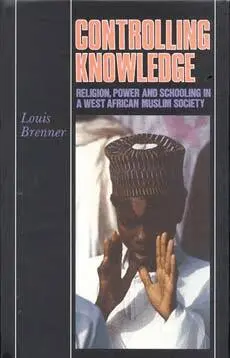
Controlling Knowledge
Religion, Power, and Schooling in a West African Muslim Society
Inbunden, Engelska, 2001
435 kr
Skickas inom 10-15 vardagar
"I know of no one who has taken such an ambitious swath of time and done such a good job of showing the continuity and change across those one hundred years. . . . a splendid achievement, the result of decades of research and reflection." —David RobinsonControlling Knowledge examines the history of West African Muslim society in the Republic of Mali, formerly the Soudan Français, in the 20th century. Focusing on the transformation of Muslim institutions—especially modernized Muslim schools (médersas) and voluntary organizations—over the past hundred years, Louis Brenner uncovers the social and political processes that have produced new forms, definitions, and expressions of Islam that are patently different from those that prevailed a century earlier. Brenner's study shows that Muslim society in Mali is religiously pluralistic and that it has developed different ways of relating religious obligations to prevailing social and political conditions. Although they were heavily influenced by French and Middle Eastern models, Brenner demonstrates that it was in opposition to French colonial authority that the first médersas and voluntary associations appeared. The complex array of power relations within which these institutions evolved, under French colonial rule and in the postcolonial secularist state, is revealed in this thoughtful book. Controlling Knowledge makes a major contribution to our understanding of Muslim history in Mali and West Africa, both in recent decades and over the long term.
Del 16 - Religion in Transforming Africa
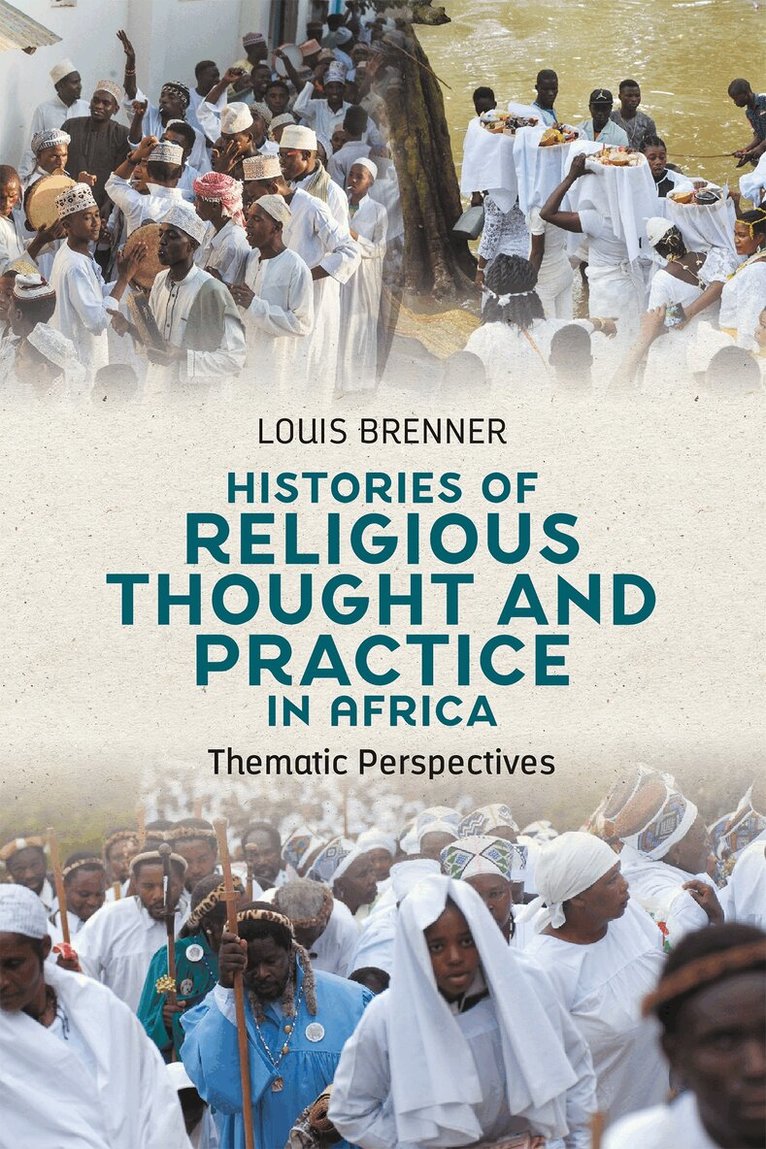
Histories of Religious Thought and Practice in Africa
Thematic Perspectives
Inbunden, Engelska, 2024
1 406 kr
Skickas inom 7-10 vardagar
This book is a richly detailed comparative analysis of endogenous, Muslim, and Christian religious thought and practice in sub-Saharan Africa. Organized thematically, the book presents a conceptual and analytical framework for the study of religious traditions as complex and constantly evolving social phenomena. The most salient theme in the book is how different religious traditions defined and provided for the personal and communal wellbeing of their adherents. Other major themes explore how religious traditions have influenced one another, how religious practitioners conceptualized and interacted with spiritual entities, how religious knowledge and expertise were acquired and transmitted, how rituals were organized and structured in order to achieve their aims, and how rituals affected those who performed them. Additional topics analysed include the personalization of relationships with spiritual entities, the gendering of religious thought and practice, how personal transformative rituals were conceptualized and enacted with reference to stages of the life cycle, such as birth, marriage and death, and how suffering was seen as integral to the process of personal transformation. Overall, the book engages with issues that continue to animate the study of religious thought and practice in Africa and African studies more generally.