Luba Golburt - Böcker
Visar alla böcker från författaren Luba Golburt. Handla med fri frakt och snabb leverans.
2 produkter
2 produkter
1 956 kr
Kommande
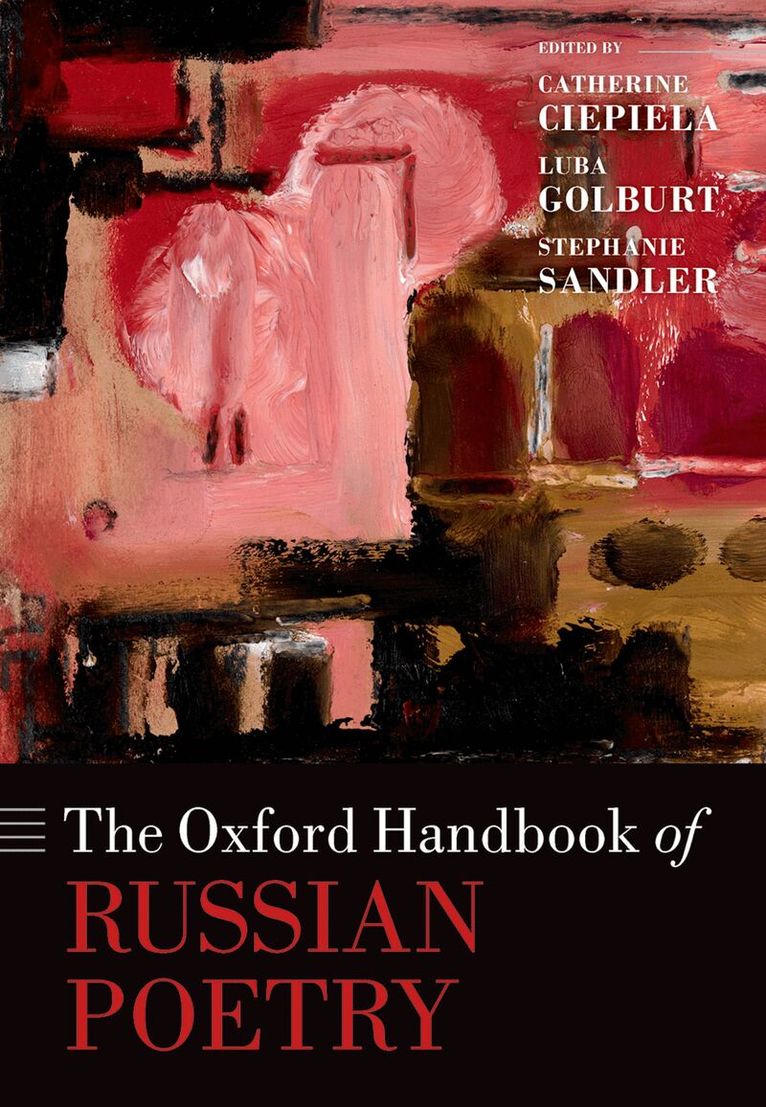
The Oxford Handbook of Russian Poetry brings together forty original chapters by scholars, critics, and poets from across North America, Russia, and Europe, offering a wide-ranging account of the Russian poetic tradition from the early modern period to the present. Responding to evolving critical priorities and the expanded sense of Russian poetic practice in recent decades, the Handbook aims not to settle the canon but rather to model a range of approaches to poetic history. Chapters are attentive to rupture, reinvention, and literature's changing social and institutional conditions. In particular, the volume engages with an increasingly complex understanding of Russian twentieth-century literature-one that treats, separately and together, censored, uncensored, and émigré writing, and that engages with multilingualism and rapidly shifting cultural boundaries. Collectively, the contributions consider texts both well-known and newly recovered, metropolitan and diasporic, official and underground. They reflect diverse methodologies, from close reading and historical poetics to network theory and performance studies. The volume is organized around seven conceptual rubrics-Timelines, Maps, Networks, Forms, Intersections, Performances, and Rereadings-which take up thematic and historiographical questions at varied scales. While designed to serve both as a reference and a pedagogical resource, the Handbook also considers urgent contemporary questions raised by war, censorship, and relocation, recognizing that the historical frameworks through which Russian poetry has been studied are themselves in flux. It is intended for a broad anglophone readership-from students and general readers to scholars of Russian literature and comparative poetics, and all quotations from Russian poetry are in the original and in English translation.
356 kr
Skickas inom 7-10 vardagar
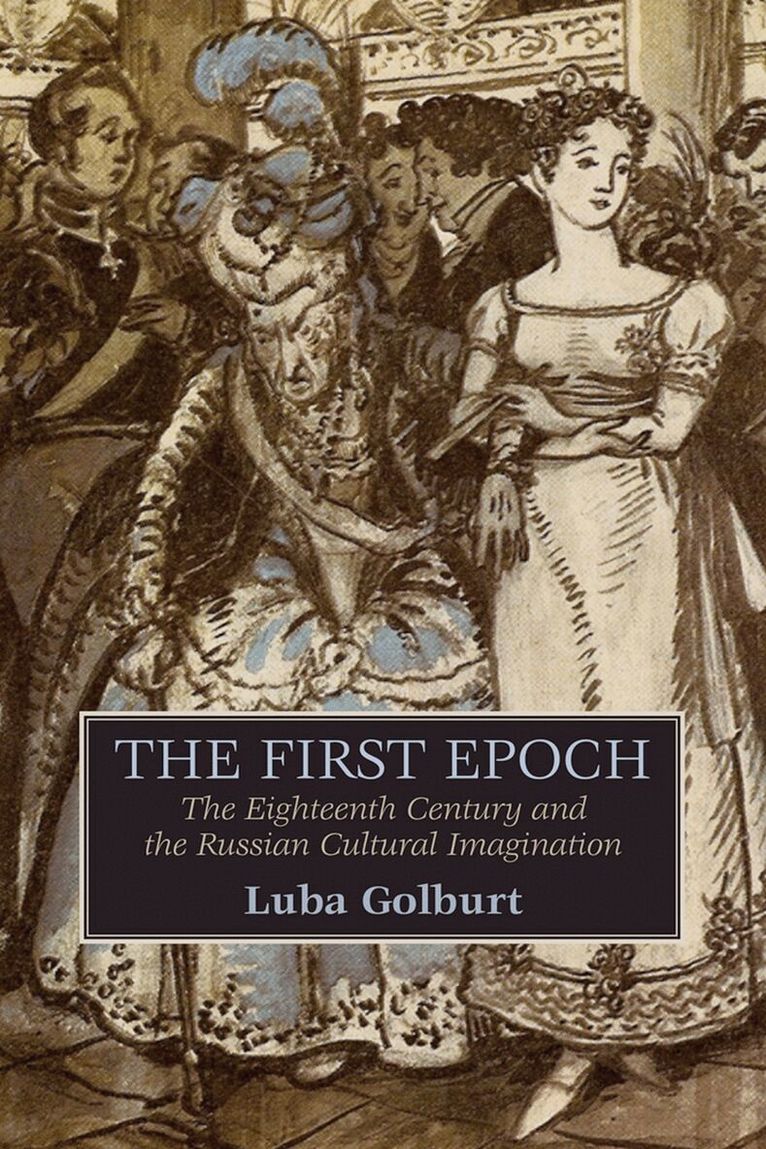
Modern Russian literature has two “first” epochs: secular literature’s rapid rise in the eighteenth century and Alexander Pushkin’s Golden Age in the early nineteenth. In the shadow of the latter, Russia’s eighteenth-century culture was relegated to an obscurity hardly befitting its actually radical legacy. And yet the eighteenth century maintains an undeniable hold on the Russian historical imagination to this day. Luba Golburt’s book is the first to document this paradox. In formulating its self-image, the culture of the Pushkin era and after wrestled far more with the meaning of the eighteenth century, Golburt argues, than is commonly appreciated.Why did nineteenth-century Russians put the eighteenth century so quickly behind them? How does a meaningful present become a seemingly meaningless past? Interpreting texts by Lomonosov, Derzhavin, Pushkin, Viazemsky, Turgenev, Tolstoy, and others, Golburt finds surprising answers, in the process innovatively analyzing the rise of periodization and epochal consciousness, the formation of canon, and the writing of literary history.