Lucia Allais - Böcker
Visar alla böcker från författaren Lucia Allais. Handla med fri frakt och snabb leverans.
2 produkter
2 produkter
292 kr
Skickas inom 7-10 vardagar
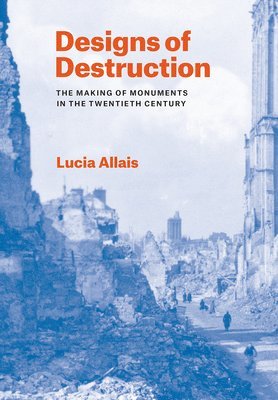
How architectural monuments survived and historical preservation was reinvented during the destructions of the twentieth century. The twentieth century was highly destructive, but from its landscapes of ruins was born a new architectural type: the cultural monument. In the wake of World War I, an international movement arose which aimed to protect architectural monuments in large numbers, and regardless of style, hoping not only to keep them safe from future conflicts but also to make them worthy of protection from more quotidian forms of destruction. An evolving group—including architects, intellectuals, art historians, archaeologists, curators, and lawyers—grew out of the new diplomacy of the League of Nations. During and after World War II, it became affiliated with the Allied Military Government and was eventually absorbed by the UN as UNESCO. By the 1970s, this organization had begun granting World Heritage status to a global register of significant sites—from buildings to bridges, shrines to city centers, ruins to colossi.Examining key episodes in the history of this preservation effort—including projects for the Parthenon, the Cathedral of St-Lô, the temples of Abu Simbel, and the Bamyian Buddahs —Lucia Allais demonstrates how the group deployed the notion of culture to shape architectural sites, and how architecture in turn shaped the very idea of global culture. Designs of Destruction emphasizes how the technical project of ensuring various buildings’ longevity jolted preservation into establishing a transnational set of codes, values, and practices. At the same time, this paradoxically helped integrate technologies of destruction—from bombs to bulldozers—into cultural governance. Designs of Destruction not only offers a fascinating narrative of cultural diplomacy, based on extensive archival findings; it also contributes an important new chapter in the intellectual history of modernity by showing the manifold ways architectural form is charged with concretizing abstract ideas and ideals, even in its destruction.
442 kr
Skickas inom 3-6 vardagar
The volume Optimism and Architecture presents the awarded and shortlisted projects for the Aga Khan Award for Architecture 2025. The book explores the ways in which optimism and hope are linked to better design outcomes, highlighting architecture's capacity to serve as a catalyst for pluralism, social transformation, cultural dialogue, and climate-responsive design.Unpublished material offers deep insights into the broad social, political, and cultural contexts that shape our built environments. The publication sheds light on the extensive jury and in-depth review processes for which the Award is renowned. Through essays and conversations, this volume examines how architecture can reinvigorate tradition through thoughtful innovation, connect local practices with global conversations, touch the earth lightly yet profoundly, and create inclusive spaces where diverse cultures and histories converge. Architecture is considered not only as a physical structure but also as a cultural practice that shapes public life, sparks social engagement, and reimagines heritage and identity in a rapidly changing world. This publication provides an optimistic and vivid portrait of contemporary architecture's role in fostering more inclusive and interconnected futures. With contributions by Azra Akamija, Lucia Allais, David Basulto, Farrokh Derakhshani, Yvonne Farrell, Hanif Kara, Yacouba Konaté, Lesley Lokko, Raafat Majzoub, Deen Sharp, and Cristina Steingräber.