
Lucian Ashworth – författare
Visar alla böcker från författaren Lucian Ashworth. Handla med fri frakt och snabb leverans.
4 produkter
4 produkter
Inbunden, Engelska, 2014
2 206 kr
Skickas inom 10-15 vardagar
International thought is the product of major political changes over the last few centuries, especially the development of the modern state and the industrialisation of the world economy. While the question of how to deal with strangers from other communities has been a constant throughout human history, it is only in recent centuries that the question of ‘foreign relations’ (and especially imperialism and war) have become a matter of urgency for all sectors of society throughout the world. This book provides the first comprehensive overview of the evolution of Western international thought, and charts how this evolved into the predominantly Anglophone field of International Relations. Along the way several myths of the origins of International Relations are explored and exposed: the myth of the peace of Westphalia, the myths of Versailles and the nature of the League of Nations, the realist-idealist ‘Great Debate’ myth, and the myth of appeasement. Major approaches to the study of international affairs are discussed within their context and on their own terms, rather than being shoe-horned into anachronistic ‘paradigms’. Written in a clear and accessible style, Ashworth’s analysis reveals how historical myths have been used as gatekeeping devices, and how a critical re-evaluation of the history of international thought can affect how we see international affairs today.
Häftad, Engelska, 1999
539 kr
Skickas inom 10-15 vardagar
This book reassesses international functionalism as an approach to global politics. In fact, functionalism provides a global view of states and international organizations working towards a peaceful and constructive world order through cooperative relationships across borders to satisfy human needs.
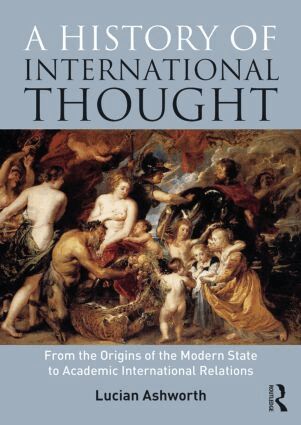
Häftad, Engelska, 2013
680 kr
Skickas inom 10-15 vardagar
International thought is the product of major political changes over the last few centuries, especially the development of the modern state and the industrialisation of the world economy. While the question of how to deal with strangers from other communities has been a constant throughout human history, it is only in recent centuries that the question of ‘foreign relations’ (and especially imperialism and war) have become a matter of urgency for all sectors of society throughout the world. This book provides the first comprehensive overview of the evolution of Western international thought, and charts how this evolved into the predominantly Anglophone field of International Relations. Along the way several myths of the origins of International Relations are explored and exposed: the myth of the peace of Westphalia, the myths of Versailles and the nature of the League of Nations, the realist-idealist ‘Great Debate’ myth, and the myth of appeasement. Major approaches to the study of international affairs are discussed within their context and on their own terms, rather than being shoe-horned into anachronistic ‘paradigms’. Written in a clear and accessible style, Ashworth’s analysis reveals how historical myths have been used as gatekeeping devices, and how a critical re-evaluation of the history of international thought can affect how we see international affairs today.
Häftad, Engelska, 2016
453 kr
Skickas inom 10-15 vardagar
From 1918 to 1945 the British Labour Party worked closely with some of the most prominent names in international relations (IR) scholarship. Through such structures as the 'Advisory Committee on International Questions', academic IR specialists were instrumental in the construction of Labour foreign policy, preparing a wealth of memoranda, reports and pamphlets for the Party. Here Lucian Ashworth examines the crucial role played by IR theorists. He puts the international theories of five key writers - Leonard Woolf, H.N. Brailsford, Philip Noel Baker, Norman Angell and David Mitrany - into the context of both the development of Labour's international policy and the evolution of the international environment between the wars. He demonstrates the inadequacy of the current interpretation within IR of the inter-war period and argues the obsession with the anachronistic division between realism and idealism - terms that had different connotations before World War II - masks both the very different debates that were going on at the time, and the changing international landscape of the inter-war period itself.