Luciano Aronne De Abreu - Böcker
Visar alla böcker från författaren Luciano Aronne De Abreu. Handla med fri frakt och snabb leverans.
3 produkter
3 produkter
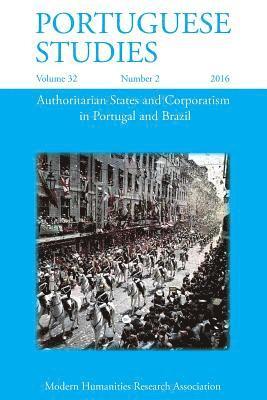
Portuguese Studies 32
2 (2016): Authoritarian States and Corporatism in Portugal and Brazil
Häftad, Engelska, 2016
470 kr
Skickas inom 5-8 vardagar
906 kr
Skickas inom 7-10 vardagar
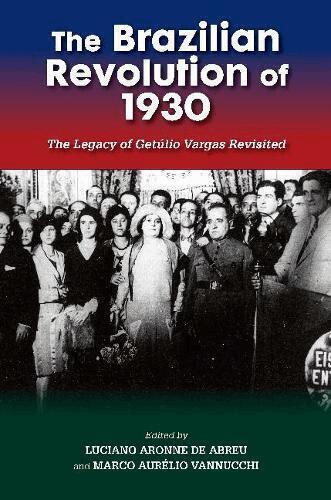
The third of October 2020 marked the 90th anniversary of the Brazilian Revolution of 1930. Although this event is recognized in Brazilian historiography as an important landmark in the construction of contemporary Brazil, debate, discourse and indeed publications commemorating the event have been much less numerous and profound than would be expected. Comparisons have been made with what took place in 1980, the year of the revolutions fiftieth anniversary, where meaningful historical judgements were made across a wide spectrum of society and the political establishment. It is pertinent to ask why there is no longer the appetite for substantive discussion on the Vargas period. Perhaps it is due to the new political climate in Brazil in the last decade, especially with regard to various projects aimed at labour and trade union reform, the main legacies of the revolutionary period which today are considered by many as obstacles to the modernization of the labour market and the country's economic development. Given the economic imperatives and aims of the 1930 Revolution, a re-evaluation of the Vargas Period will assist in better understanding the contemporary economic issues that face Brazil today. The exercise is neither one of nostalgia or exaltation of this past period, but rather to offer a (positive and negative) overview of Vargas legacy and the vast historiography that surrounds it. Scholars, politicians, business and the Brazilian workforce need to learn from past economic choices in order to better understand the challenges that contemporary Brazil faces. Recently proposed reforms have strong overtones to the revolutionary agenda of the 1930s, namely the forging of a New Brazil and the necessity of avoiding political schism. This book examines the political, economic, labour, cultural, military, and gender ramifications that will guide debate.
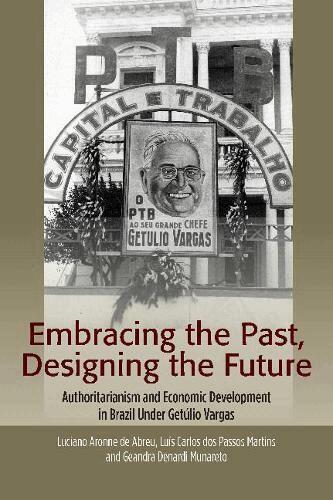
Embracing the Past, Designing the Future
Authoritarianism and Economic Development in Brazil Under Getúlio Vargas
Inbunden, Engelska, 2020
1 750 kr
Skickas inom 7-10 vardagar
Embracing the Past, Designing the Future provides an historical overview of Brazilian authoritarianism and social/economic development during the political era (1930-45) of Getulio Vargas as viewed and understood by Oliveira Viana and Azevedo Amaral, two of the principal intellectuals and ideologues of the regime at the time. Oliveira Vianna was one of the main authors of the corporatist labour legislation and Azevedo Amaral remained an important publicist who was associated with the regimes propaganda apparatus. the heart of the discussion is the legitimacy of authoritarian modernisation. Brazil's contemporary uncertainty has deep parallels with the earlier period: unruly and un-democratic political debate coupled with economic stagnation. It was during the Vargas era that the power bases and fundamental principals of the construction of modern Brazil were defined in terms of its political administration and its economy and industry. These features may still be perceived in the country today, albeit claimed or rejected by political leaders such as Luiz Inacio Lula da Silva and Fernando Henrique Cardoso. Linkage between authoritarianism and the economic development of Brazil is strong, whether viewed through the lenses of history, sociology or political science. Both periods of exceptional national economic and social growth were associated exactly to its two governmental authoritarian periods in the twentieth century the Vargas era and the military dictatorship (196485). This volume addresses a complex of ideological difficulties that go to the heart of what the Brazilian nation stands for: its racial construction; its colonial heritage; the fractured nature of the relationship between society and state; the role of corporatism, and its sometime political rejection; and the dangers of political personalisation, to the detriment of the nation.