
Lucien Gilles Benguigui – författare
Visar alla böcker från författaren Lucien Gilles Benguigui. Handla med fri frakt och snabb leverans.
5 produkter
5 produkter

Inbunden, Engelska, 2020
950 kr
Skickas inom 3-6 vardagar
The thought experiment proposed by Langevin in 1911, known under the popular names, "Clock Paradox" or "Twin Paradox", is the most surprising result of the theory of Relativity: A twin who travels to a star at nearly the velocity of light comes back to Earth and finds his twin brother much older. In over a century, several thousands of published articles debated both in favor of and against this result. Unique to the physics of Relativity, this baffling phenomenon is analyzed as a main goal of this book.Among an incredible number of solutions, is there one of simplicity and clarity which may be accepted unanimously by all of the physics community? The answer is yes and this solution, which has its origin in Einstein himself, is developed in the framework of the Special Theory of Relativity. In detailing this solution, it is shown that the essential ingredient to understand the theory is the acceleration of the twins. All the models which do not include acceleration are incompatible with the original idea of Langevin. If one considers this phenomenon, several questions come to mind. Why did physicists debate excessively on the paradox and struggle to reach an agreement? Why was there resistance to integrate acceleration into their studies? Why is the solution developed in this book known only by a minority of scientists?Written for physicists, historians and philosophers of science, this book seeks to answer these questions based on (1) the psychological difficulty to accept the theoretical results, and (2) the fact that scientific knowledge is not uniformly distributed among scientists.
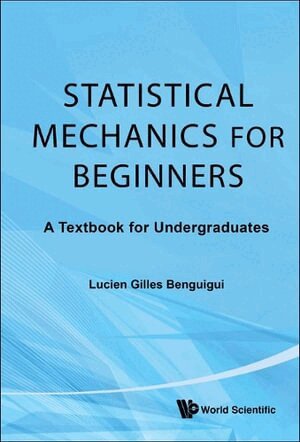
Inbunden, Engelska, 2010
800 kr
Skickas inom 5-8 vardagar
This textbook is for undergraduate students on a basic course in Statistical Mechanics. The prerequisite is thermodynamics. It begins with a study of three situations — the closed system and the systems in thermal contact with a reservoir — in order to formulate the important fundamentals: entropy from Boltzmann formula, partition function and grand partition function. Through the presentation of quantum statistics, Bose statistics and Fermi-Dirac statistics are established, including as a special case the classical situation of Maxell-Boltzmann statistics. A series of examples ensue it: the harmonic oscillator, the polymer chain, the two level system, bosons (photons, phonons, and the Bose-Einstein condensation) and fermions (electrons in metals and in semiconductors). A compact historical note on influential scientists forms the concluding chapter.The unique presentation starts off with the principles, elucidating the well-developed theory, and only thereafter the application of theory. Calculations on the main steps are detailed, leaving behind minimal gap. The author emphasizes with theory the link between the macroscopic world (thermodynamics) and the microscopic world.
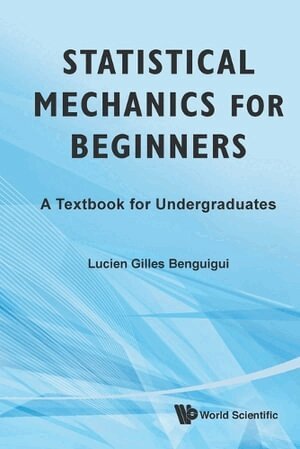
Häftad, Engelska, 2010
488 kr
Skickas inom 5-8 vardagar
This textbook is for undergraduate students on a basic course in Statistical Mechanics. The prerequisite is thermodynamics. It begins with a study of three situations — the closed system and the systems in thermal contact with a reservoir — in order to formulate the important fundamentals: entropy from Boltzmann formula, partition function and grand partition function. Through the presentation of quantum statistics, Bose statistics and Fermi-Dirac statistics are established, including as a special case the classical situation of Maxell-Boltzmann statistics. A series of examples ensue it: the harmonic oscillator, the polymer chain, the two level system, bosons (photons, phonons, and the Bose-Einstein condensation) and fermions (electrons in metals and in semiconductors). A compact historical note on influential scientists forms the concluding chapter.The unique presentation starts off with the principles, elucidating the well-developed theory, and only thereafter the application of theory. Calculations on the main steps are detailed, leaving behind minimal gap. The author emphasizes with theory the link between the macroscopic world (thermodynamics) and the microscopic world.
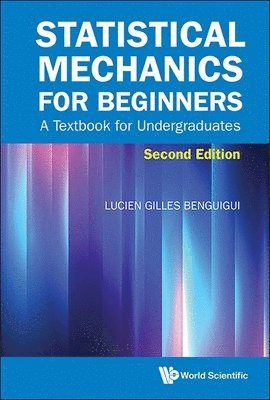
Inbunden, Engelska, 2025
1 334 kr
Skickas inom 3-6 vardagar
This second edition of the popular textbook is intended for all undergraduate students in physics, with some background in thermodynamics. The basic intention of the author is maintained: to present a book for those studying statistical mechanics for the first time. The unique presentation starts off with the principles, elucidating the well-developed theory, and only thereafter the application of theory. Calculations on the main steps are detailed, leaving behind minimal gaps. The author emphasizes with theory the link between the macroscopic world (thermodynamics) and the microscopic world.The book begins with a study of three situations — the closed system and the systems in thermal contact with a reservoir — in order to formulate the important fundamentals: entropy from Boltzmann formula, partition function and grand partition function. Through the presentation of quantum statistics, Bose statistics and Fermi-Dirac statistics are established, including as a special case the classical situation of Maxwell-Boltzmann statistics. A series of examples follow: the harmonic oscillator, the polymer chain, the two-level system, bosons (photons, phonons, and the Bose-Einstein condensation) and fermions (electrons in metals and in semiconductors). The treatment of bosons and fermions is expanded with a detailed comparison of their thermal behaviors. A study on neutron stars, a pure fermion system, is now included. The concepts of distribution and fluctuations are also briefly discussed, and an important neglected problem is explained: the equivalence between the sum of a series and the value of the associated integral, teaching further insights on Bose-Einstein condensation. A compact historical note on influential scientists forms the concluding chapter.This book will serve as a vital resource for undergraduates taking their first foray into statistical mechanics, setting a strong foundation for more advanced topics in their studies.
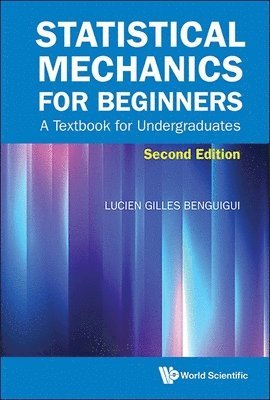
Häftad, Engelska, 2025
822 kr
Skickas inom 3-6 vardagar
This second edition of the popular textbook is intended for all undergraduate students in physics, with some background in thermodynamics. The basic intention of the author is maintained: to present a book for those studying statistical mechanics for the first time. The unique presentation starts off with the principles, elucidating the well-developed theory, and only thereafter the application of theory. Calculations on the main steps are detailed, leaving behind minimal gaps. The author emphasizes with theory the link between the macroscopic world (thermodynamics) and the microscopic world.The book begins with a study of three situations — the closed system and the systems in thermal contact with a reservoir — in order to formulate the important fundamentals: entropy from Boltzmann formula, partition function and grand partition function. Through the presentation of quantum statistics, Bose statistics and Fermi-Dirac statistics are established, including as a special case the classical situation of Maxwell-Boltzmann statistics. A series of examples follow: the harmonic oscillator, the polymer chain, the two-level system, bosons (photons, phonons, and the Bose-Einstein condensation) and fermions (electrons in metals and in semiconductors). The treatment of bosons and fermions is expanded with a detailed comparison of their thermal behaviors. A study on neutron stars, a pure fermion system, is now included. The concepts of distribution and fluctuations are also briefly discussed, and an important neglected problem is explained: the equivalence between the sum of a series and the value of the associated integral, teaching further insights on Bose-Einstein condensation. A compact historical note on influential scientists forms the concluding chapter.This book will serve as a vital resource for undergraduates taking their first foray into statistical mechanics, setting a strong foundation for more advanced topics in their studies.