
Lucy Lunevich - Böcker
Visar alla böcker från författaren Lucy Lunevich. Handla med fri frakt och snabb leverans.
6 produkter
6 produkter
Creativity in Teaching and Teaching for Creativity
Modern Practices in the Digital Era in Engineering
Inbunden, Engelska, 2022
749 kr
Skickas inom 10-15 vardagar
In this book, the authors write about creativity in teaching and how to enhance creativity in learners. They highlight the new reality of teaching and learning in the digital era, specifically the impact of artificial intelligence, data economy, and artificial minds on modern teaching practices, curriculum design, and the role of teachers in classrooms.Creativity in Teaching and Teaching for Creativity: Modern Practices in the Digital Era approaches human intelligence as a universal gift. It emphasizes that the creativity of human beings is not only a natural quality, but one that can be enhanced as a result of learning. The book suggests new teaching models and approaches and discusses how the role of teachers in the classroom has fundamentally changed, emphasizing the emotional connection between students and teachers.The book will find interest among higher education policymakers who believe in the transformation of the education industry, research scholars who are pursuing their Ph.D. in the fields of education technology and education and learning, as well as those working in the area of education technology and artificial intelligence.
Creativity in Teaching and Teaching for Creativity
Modern Practices in the Digital Era in Engineering
Häftad, Engelska, 2024
290 kr
Skickas inom 10-15 vardagar
In this book, the authors write about creativity in teaching and how to enhance creativity in learners. They highlight the new reality of teaching and learning in the digital era, specifically the impact of artificial intelligence, data economy, and artificial minds on modern teaching practices, curriculum design, and the role of teachers in classrooms.Creativity in Teaching and Teaching for Creativity: Modern Practices in the Digital Era approaches human intelligence as a universal gift. It emphasizes that the creativity of human beings is not only a natural quality, but one that can be enhanced as a result of learning. The book suggests new teaching models and approaches and discusses how the role of teachers in the classroom has fundamentally changed, emphasizing the emotional connection between students and teachers.The book will find interest among higher education policymakers who believe in the transformation of the education industry, research scholars who are pursuing their Ph.D. in the fields of education technology and education and learning, as well as those working in the area of education technology and artificial intelligence.
2 510 kr
Skickas inom 10-15 vardagar
The Engineering Management discipline remains complex and multidisciplinary, and has progressed and broadened in scope significantly over the last 10–20 years. Previously, the discipline has been fragmented and not aligned with the purposes of economic development, mega-project delivery, and technological progress. Digital engineering has revolutionized the field of engineering by introducing digital tools and technologies to the design, creation, operation, and maintenance of physical systems, products, and services. It has enabled more efficient, effective, and sustainable solutions, and has the potential to drive significant innovation and improve the way we design, build, and operate physical systems. This handbook addresses new content of complexity by offering new engineering concepts such as simple, complicated, and complex, which have never been included in this discipline before and will generate interest from higher education, financial institutions, and technology companies.Handbook of Engineering Management: The Digital Economy focuses on multidisciplinary integration and complex evolving systems. It discusses the incorporation of a system of systems along with engineering economic strategies for sustainable economic growth. This handbook highlights functional leadership as the main part of an engineering manager’s competency and discusses how to form alliances strategically. In addition, it presents a comprehensive guide for the implementation of an environmental management system and shows how environmental and social impacts can be assessed in an organization applying digital tools. This handbook also brings together the three important areas of Engineering Management: Knowledge Management, the Digital Economy, and Digital Manufacturing.In addition, this handbook provides a comprehensive guide to implementing an environmental management system and shows how environmental and social impacts in an organization can be assessed using digital tools. Based on the authors’ practical experience, it describes various management approaches and explains how such a system can be used to prioritize actions and resources, increase efficiency, minimize costs, and lead to better, more informed decision making. It is essential to follow a systematic approach and to ask the right questions, whether the system is managed and implemented by humans, AI, or a combination of both. This handbook is laid out in a series of simple steps and dispels the jargon and myths surrounding this important management tool.This handbook is an ideal read for engineering managers, project managers, industrial and systems engineers, supply chain engineers, professionals who want to advance their knowledge, and graduate students.
841 kr
Skickas inom 10-15 vardagar
The Engineering Management discipline remains complex and multidisciplinary, and has progressed and broadened in scope significantly over the last 10–20 years. Previously, the discipline has been fragmented and not aligned with the purposes of economic development, mega-project delivery, and technological progress. Digital engineering has revolutionized the field of engineering by introducing digital tools and technologies to the design, creation, operation, and maintenance of physical systems, products, and services. It has enabled more efficient, effective, and sustainable solutions, and has the potential to drive significant innovation and improve the way we design, build, and operate physical systems. This handbook addresses new content of complexity by offering new engineering concepts such as simple, complicated, and complex, which have never been included in this discipline before and will generate interest from higher education, financial institutions, and technology companies.Handbook of Engineering Management: The Digital Economy focuses on multidisciplinary integration and complex evolving systems. It discusses the incorporation of a system of systems along with engineering economic strategies for sustainable economic growth. This handbook highlights functional leadership as the main part of an engineering manager’s competency and discusses how to form alliances strategically. In addition, it presents a comprehensive guide for the implementation of an environmental management system and shows how environmental and social impacts can be assessed in an organization applying digital tools. This handbook also brings together the three important areas of Engineering Management: Knowledge Management, the Digital Economy, and Digital Manufacturing.In addition, this handbook provides a comprehensive guide to implementing an environmental management system and shows how environmental and social impacts in an organization can be assessed using digital tools. Based on the authors’ practical experience, it describes various management approaches and explains how such a system can be used to prioritize actions and resources, increase efficiency, minimize costs, and lead to better, more informed decision making. It is essential to follow a systematic approach and to ask the right questions, whether the system is managed and implemented by humans, AI, or a combination of both. This handbook is laid out in a series of simple steps and dispels the jargon and myths surrounding this important management tool.This handbook is an ideal read for engineering managers, project managers, industrial and systems engineers, supply chain engineers, professionals who want to advance their knowledge, and graduate students.
- Nyhet

1 748 kr
Skickas inom 10-15 vardagar
The revised edition of Dr Chang’s textbook showcases the dynamic evolution of the engineering management field, driven by recent advancements in artificial intelligence (AI), digital technologies, and shifts in engineering management practices defined by changes in social and economic landscapes. This updated version provides valuable perspectives on the anticipated economic growth and transformation of the discipline over the next 20 years and beyond.Engineering Management: Meeting the Global Challenges, Third Edition, provides engineers with skills for managerial roles, business perspectives, and other leadership roles. It emphasizes value addition, customer focus, and leadership attributes. This new edition includes a new chapter on AI, digital twins, creativity, and innovation, and consolidates chapters on financial accounting and financial management defined by new economic realities. The third edition places a renewed focus on knowledge management strategies, innovations, technology, and the importance of science, technology, engineering, and math (STEM) professionals and managers in overcoming challenges and seizing opportunities through strategic differentiation and operational excellence.Overall, this textbook is a valuable resource for students and engineering managers seeking to navigate the evolving landscape of the industry and emerge as global leaders in their field.PowerPoint slides and a Solutions Manual are available for qualified textbook adoption.
2 627 kr
Skickas inom 7-10 vardagar
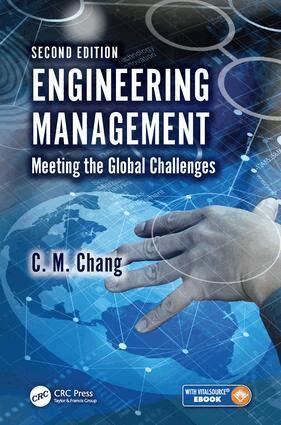
Engineering Management: Meeting the Global Challenges prepares engineers to fulfill their managerial responsibilities, acquire useful business perspectives, and take on the much-needed leadership roles to meet the challenges in the new millennium. Value addition, customer focus, and business perspectives are emphasized throughout. Also underlined are discussions of leadership attributes, steps to acquire these attributes, the areas engineering managers are expected to add value, the web-based tools which can be aggressively applied to develop and sustain competitive advantages, the opportunities offered by market expansion into global regions, and the preparations required for engineering managers to become global leaders.The book is organized into three major sections: functions of engineering management, business fundamentals for engineering managers, and engineering management in the new millennium. This second edition refocuses on the new strategy for science, technology, engineering, and math (STEM) professionals and managers to meet the global challenges through the creation of strategic differentiation and operational excellence. Major revisions include a new chapter on creativity and innovation, a new chapter on operational excellence, and combination of the chapters on financial accounting and financial management.The design strategy for this second edition strives for achieving the T-shaped competencies, with both broad-based perspectives and in-depth analytical skills. Such a background is viewed as essential for STEM professionals and managers to exert a strong leadership role in the dynamic and challenging marketplace. The material in this book will surely help engineering managers play key leadership roles in their organizations by optimally applying their combined strengths in engineering and management.