Ludwig Arnold – författare
Visar alla böcker från författaren Ludwig Arnold. Handla med fri frakt och snabb leverans.
9 produkter
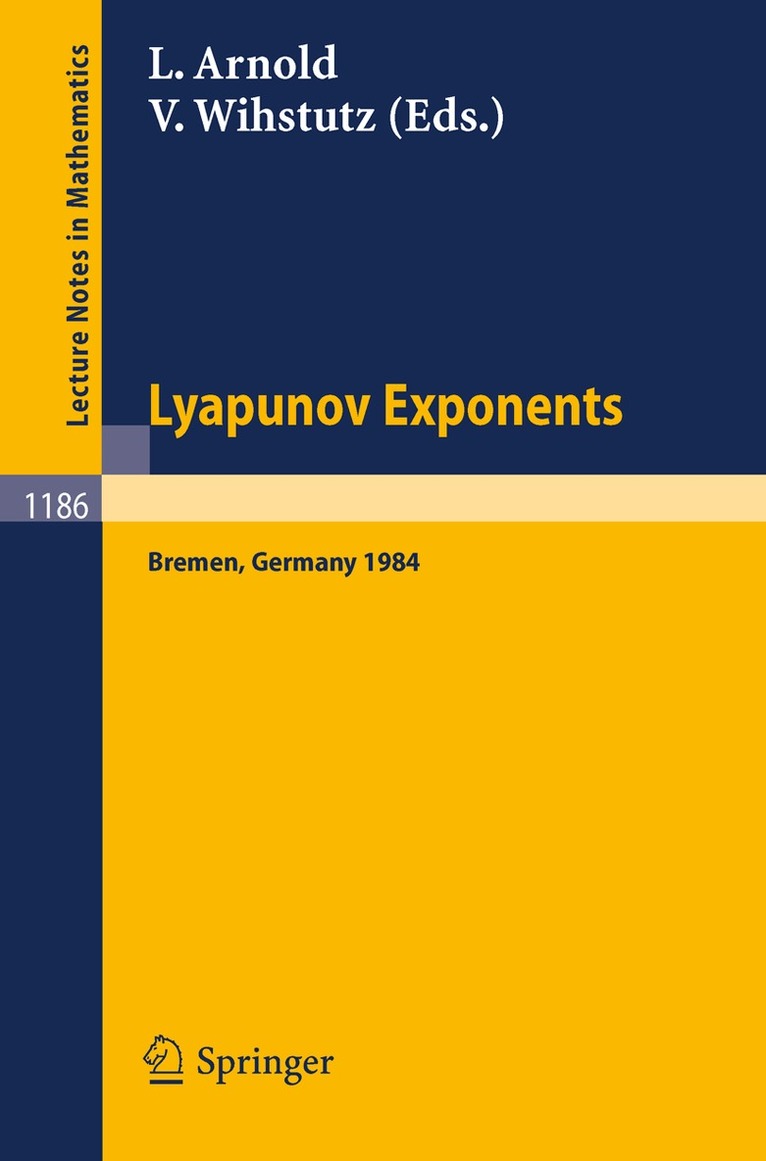
Lyapunov Exponents
Proceedings of a Workshop held in Bremen, November 12-15, 1984
Av Ludwig Arnold, Volker Wihstutz
Häftad, 1986
387 kr
Lägg i varukorg
Lyapunov Exponents
Proceedings of a Workshop held in Bremen, November 12-15, 1984
Av Volker Wihstutz, Ludwig Arnold
E-bok, 2006
440 kr
Lägg i varukorg
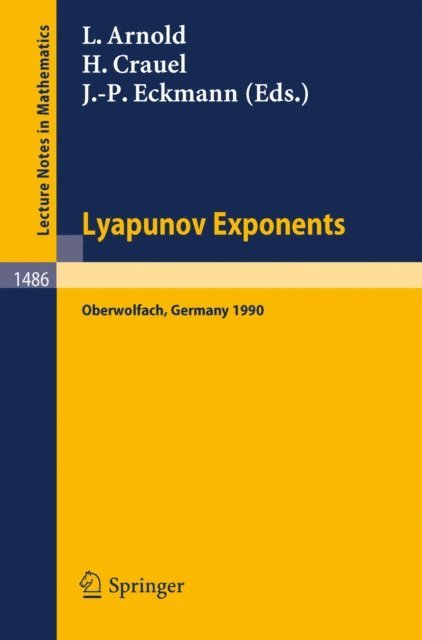
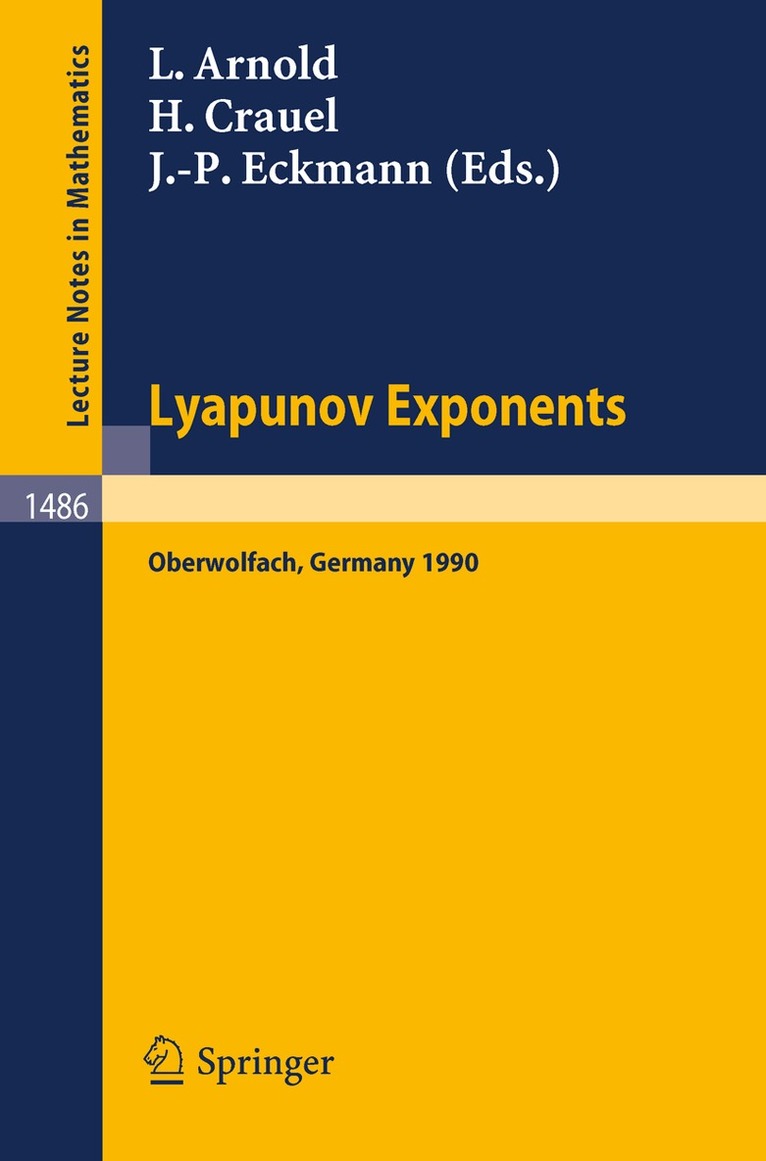
Lyapunov Exponents
Proceedings of a Conference held in Oberwolfach, May 28 - June 2, 1990
Av Jean-Pierre Eckmann, Hans Crauel m. fl.
E-bok, 2006
489 kr
Lägg i varukorg
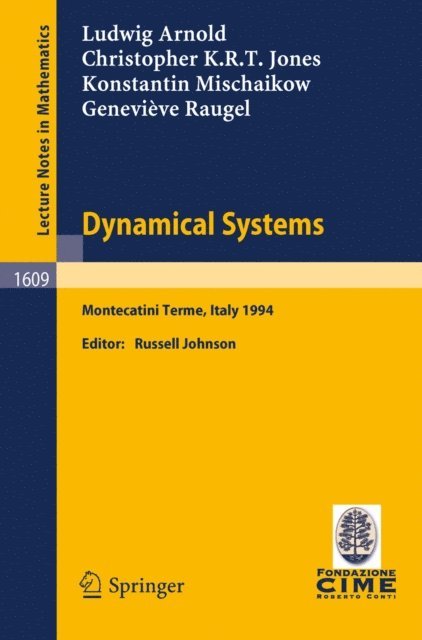
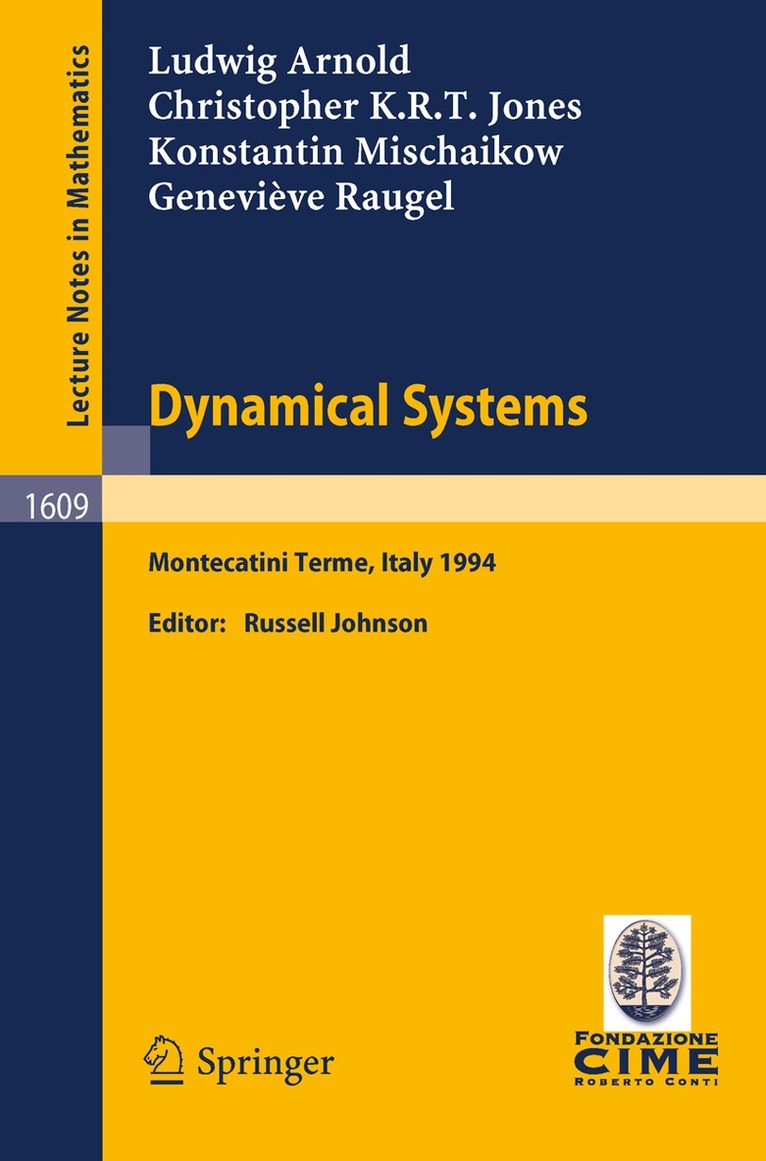
Dynamical Systems
Lectures given at the 2nd Session of the Centro Internazionale Matematico Estivo (C.I.M.E.) held in Montecatini Terme, Italy, June 13 - 22, 1994
Av Genevieve Raugel, Konstantin Mischaikow m. fl.
E-bok, 2006
574 kr
Lägg i varukorg
This volume contains the lecture notes written by the four principal speakers at the C.I.M.E. session on Dynamical Systems held at Montecatini, Italy in June 1994. The goal of the session was to illustrate how methods of dynamical systems can be applied to the study of ordinary and partial …
Lyapunov Exponents
Proceedings of a Conference held in Oberwolfach, May 28 - June 2, 1990
Av Ludwig Arnold, Hans Crauel m. fl.
Häftad, 1991
441 kr
Lägg i varukorg
Since the predecessor to this volume (LNM 1186, Eds. L. Arnold, V. Wihstutz)appeared in 1986, significant progress has been made in the theory and applications of Lyapunov exponents - one of the key concepts of dynamical systems - and in particular, pronounced shifts towards nonlinear and …
Dynamical Systems
Lectures given at the 2nd Session of the Centro Internazionale Matematico Estivo (C.I.M.E.) held in Montecatini Terme, Italy, June 13 - 22, 1994
Av Ludwig Arnold, Christopher K.R.T. Jones m. fl.
Häftad, 1995
441 kr
Lägg i varukorg
This volume contains the lecture notes written by the four principal speakers at the C.I.M.E. session on Dynamical Systems held at Montecatini, Italy in June 1994. The goal of the session was to illustrate how methods of dynamical systems can be applied to the study of ordinary and partial …
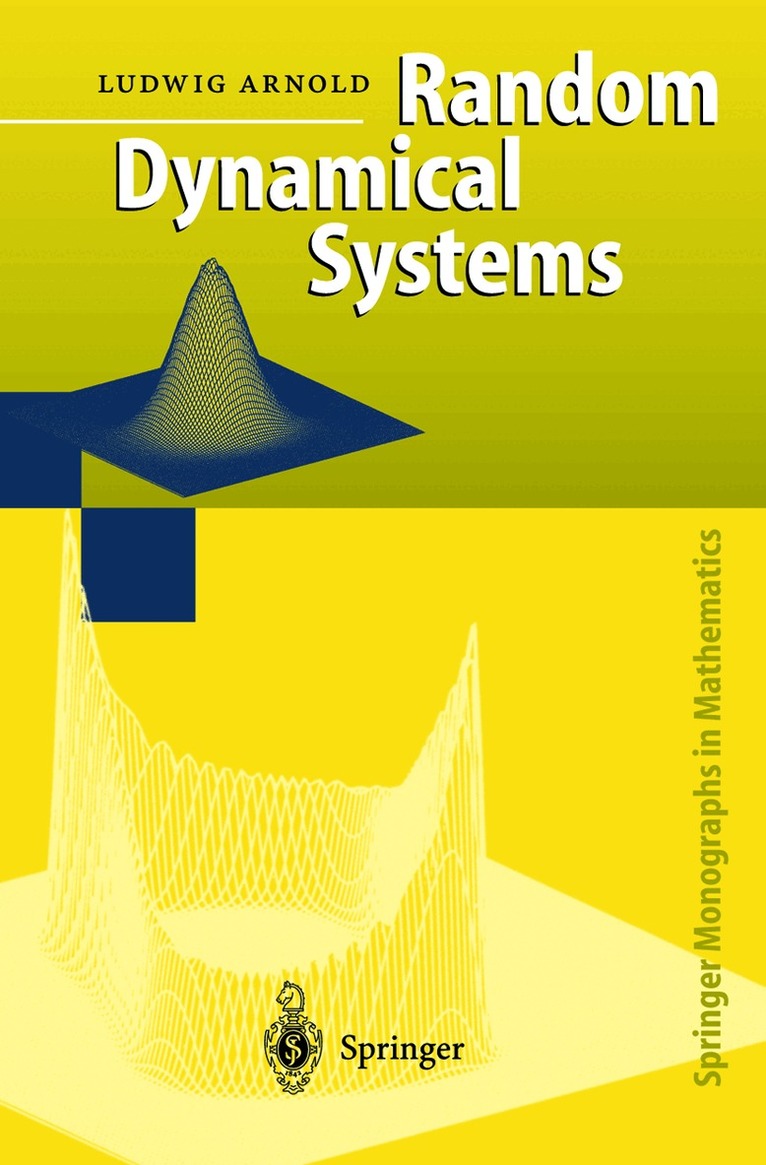
Random Dynamical Systems
Inbunden, 1998
1420 kr
Lägg i varukorg
Background and Scope of the Book This book continues, extends, and unites various developments in the intersection of probability theory and dynamical systems. I will briefly outline the background of the book, thus placing it in a systematic and historical context and tradition. Roughly speaking, …
Random Dynamical Systems
Häftad, 2010
1420 kr
Lägg i varukorg
Background and Scope of the Book This book continues, extends, and unites various developments in the intersection of probability theory and dynamical systems. I will briefly outline the background of the book, thus placing it in a systematic and historical context and tradition. Roughly speaking, …
Random Dynamical Systems
E-bok, 2013
1785 kr
Lägg i varukorg
Background and Scope of the Book This book continues, extends, and unites various developments in the intersection of probability theory and dynamical systems. I will briefly outline the background of the book, thus placing it in a systematic and historical context and tradition. Roughly speaking, …