Ludwig W. Adamec - Böcker
Visar alla böcker från författaren Ludwig W. Adamec. Handla med fri frakt och snabb leverans.
8 produkter
8 produkter
684 kr
Skickas inom 3-6 vardagar
This study explores the diplomatic history of Afghanistan between 1900 and 1923, a period marked by the nation’s strategic struggle to maintain sovereignty amidst the geopolitical pressures of British and Russian imperial ambitions. Afghanistan’s position as a buffer state, separating the British Empire in India and the expanding Russian Empire, placed it at the heart of “The Great Game”—the 19th and early 20th-century rivalry between these powers. This historical account details the efforts of Afghan rulers, particularly Abdur Rahman, Habibullah, and Amanullah, to navigate this precarious position, employing a foreign policy that balanced isolationism with strategic alliances to preserve Afghan autonomy.The study traces Afghanistan’s transition from isolation to more active engagement, especially during Amanullah’s rule, when Afghanistan ultimately gained independence from British influence after the Third Anglo-Afghan War in 1919. Key moments in this narrative include Abdur Rahman's calculated diplomacy to counter British and Russian demands, the influence of pan-Islamic sentiments, and the rise of nationalist movements within Afghanistan. It also examines the Afghan response to World War I pressures, including attempts by Germany to leverage Afghanistan against Britain through the Niedermayer expedition. This expedition, along with domestic pressures from pro-war factions within Afghanistan, reflects the complexities Afghan rulers faced in balancing internal unity with external diplomacy.By drawing extensively on primary sources from British, Indian, German, and Russian archives, this work provides an in-depth analysis of Afghan diplomacy during a crucial period. It highlights how Afghanistan’s rugged terrain, economic self-sufficiency, and strategic alliances helped it resist imperial encroachment and shaped its foreign policy. Ultimately, this diplomatic history illustrates the resilience of Afghan rulers in defending their nation’s independence amidst overwhelming odds, setting a precedent for Afghanistan’s modern foreign policy of non-alignment and cautious engagement with global powers.This title is part of UC Press's Voices Revived program, which commemorates University of California Press’s mission to seek out and cultivate the brightest minds and give them voice, reach, and impact. Drawing on a backlist dating to 1893, Voices Revived makes high-quality, peer-reviewed scholarship accessible once again using print-on-demand technology. This title was originally published in 1967.
1 513 kr
Skickas inom 3-6 vardagar
This study explores the diplomatic history of Afghanistan between 1900 and 1923, a period marked by the nation’s strategic struggle to maintain sovereignty amidst the geopolitical pressures of British and Russian imperial ambitions. Afghanistan’s position as a buffer state, separating the British Empire in India and the expanding Russian Empire, placed it at the heart of “The Great Game”—the 19th and early 20th-century rivalry between these powers. This historical account details the efforts of Afghan rulers, particularly Abdur Rahman, Habibullah, and Amanullah, to navigate this precarious position, employing a foreign policy that balanced isolationism with strategic alliances to preserve Afghan autonomy.The study traces Afghanistan’s transition from isolation to more active engagement, especially during Amanullah’s rule, when Afghanistan ultimately gained independence from British influence after the Third Anglo-Afghan War in 1919. Key moments in this narrative include Abdur Rahman's calculated diplomacy to counter British and Russian demands, the influence of pan-Islamic sentiments, and the rise of nationalist movements within Afghanistan. It also examines the Afghan response to World War I pressures, including attempts by Germany to leverage Afghanistan against Britain through the Niedermayer expedition. This expedition, along with domestic pressures from pro-war factions within Afghanistan, reflects the complexities Afghan rulers faced in balancing internal unity with external diplomacy.By drawing extensively on primary sources from British, Indian, German, and Russian archives, this work provides an in-depth analysis of Afghan diplomacy during a crucial period. It highlights how Afghanistan’s rugged terrain, economic self-sufficiency, and strategic alliances helped it resist imperial encroachment and shaped its foreign policy. Ultimately, this diplomatic history illustrates the resilience of Afghan rulers in defending their nation’s independence amidst overwhelming odds, setting a precedent for Afghanistan’s modern foreign policy of non-alignment and cautious engagement with global powers.This title is part of UC Press's Voices Revived program, which commemorates University of California Press’s mission to seek out and cultivate the brightest minds and give them voice, reach, and impact. Drawing on a backlist dating to 1893, Voices Revived makes high-quality, peer-reviewed scholarship accessible once again using print-on-demand technology. This title was originally published in 1967.
599 kr
Skickas inom 10-15 vardagar
This abridged paperpack version of The Historical Dictionary of Islam includes short biographies of theologians, philosophers, founders of Sunni and Shi'ite schools of jurisprudence, and individuals who influenced the interpretation of Islamic dogma, politics, and culture from early days to the present. The reader will find entries on major sects, philosophical trends, and the responses by Islamic movements to issues of 21st century politics, such as the inroads of Westernization in the Islamic world.A chronology lists important dates from the sixth to the end of the 20th century and an introductory chapter outlines the history of Islam and religion to modern days. A comprehensive bibliography will guide the serious student for further research.
675 kr
Skickas inom 10-15 vardagar
There is both unity and variety in the Islamic world. Muslims are not a homogeneous people who can be explained solely by their normative texts: the Koran and the Sunnah. Muslims differ vastly in their interpretation of Islam: modernists want to reinterpret Islam to adapt to the requirements of modern times while traditionalists tend to look to the classical and medieval periods of Islam as their model of the Islamic state.The A to Z of Islam presents a concise overview of Islamic history, religion, philosophy, and Islamic political movements. This is done through a chronology, an introductory essay, a bibliography, and cross-referenced dictionary entries, which include the biographies and thoughts of medieval thinkers, as well as those of modern members of the religious and political establishments. Articles describe the major sects, schools of theology, and jurisprudence, as well as aspects of Islamic culture. Together, this book represents a brief introduction to the field of Islamic studies.
695 kr
Skickas inom 10-15 vardagar
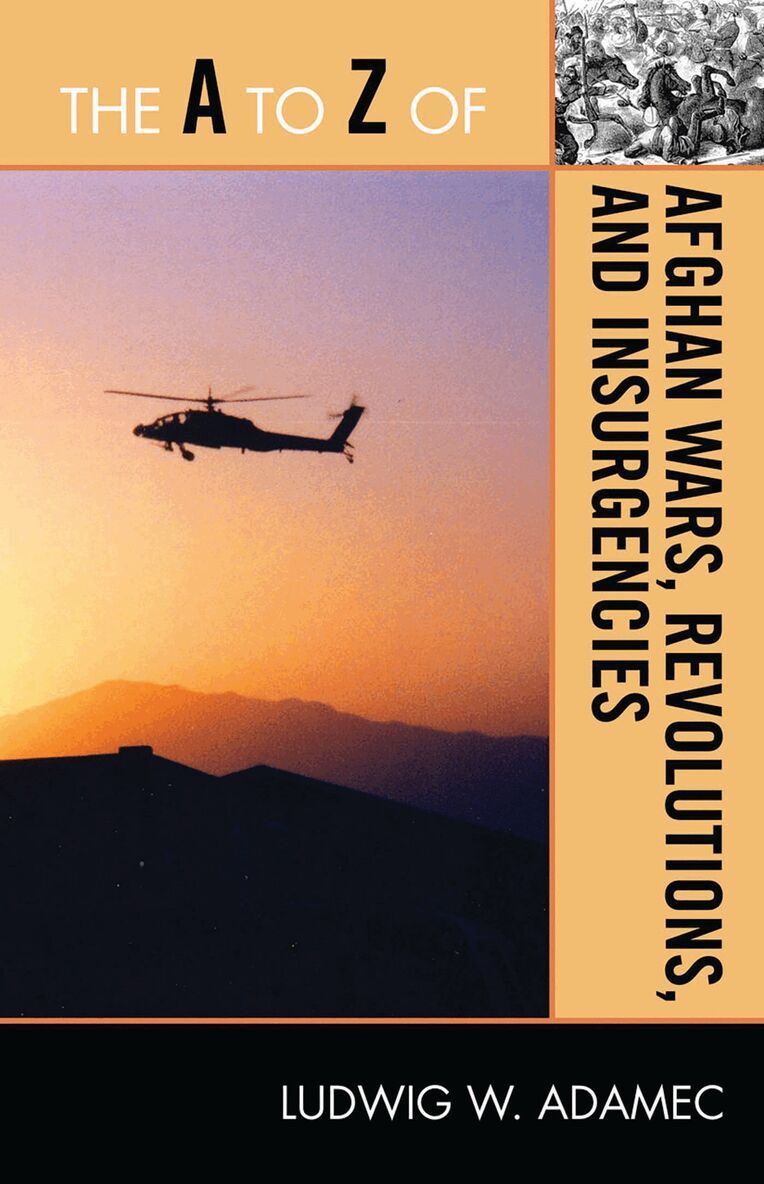
Since its foundation in 1747, Afghanistan has seen seemingly limitless wars waged by the central government to consolidate its control over the country as well as rampant tribal warfare. There have been three Anglo-Afghan Wars (1839-42, 1878-79 and 1919); a Russian-backed Marxist government in Kabul battled a coalition of tribal armies, which was soon followed by the Taliban takeover. Now, in the midst of a war against terrorism, the United States is backing another central government in yet another sporadic struggle. All the information currently available on the endless chain of wars stretching over two and a half centuries is traced in The A to Z of Afghan Wars, Revolutions and Insurgencies. It consists of the American involvement in Afghanistan since October 2001 as well as individual campaigns, including tactics and logistics of skirmishes, the weapons used, and biographical entries on the significant leaders involved in the battles. Extensive analysis of regional and ideological divisions within the country and the external forces that have brought around conflict in this remote, mountainous region, in addition to a chronology of the encounters, an extensive bibliography, and numerous maps and illustrations make this crucial volume indispensable.
2 094 kr
Skickas inom 10-15 vardagar
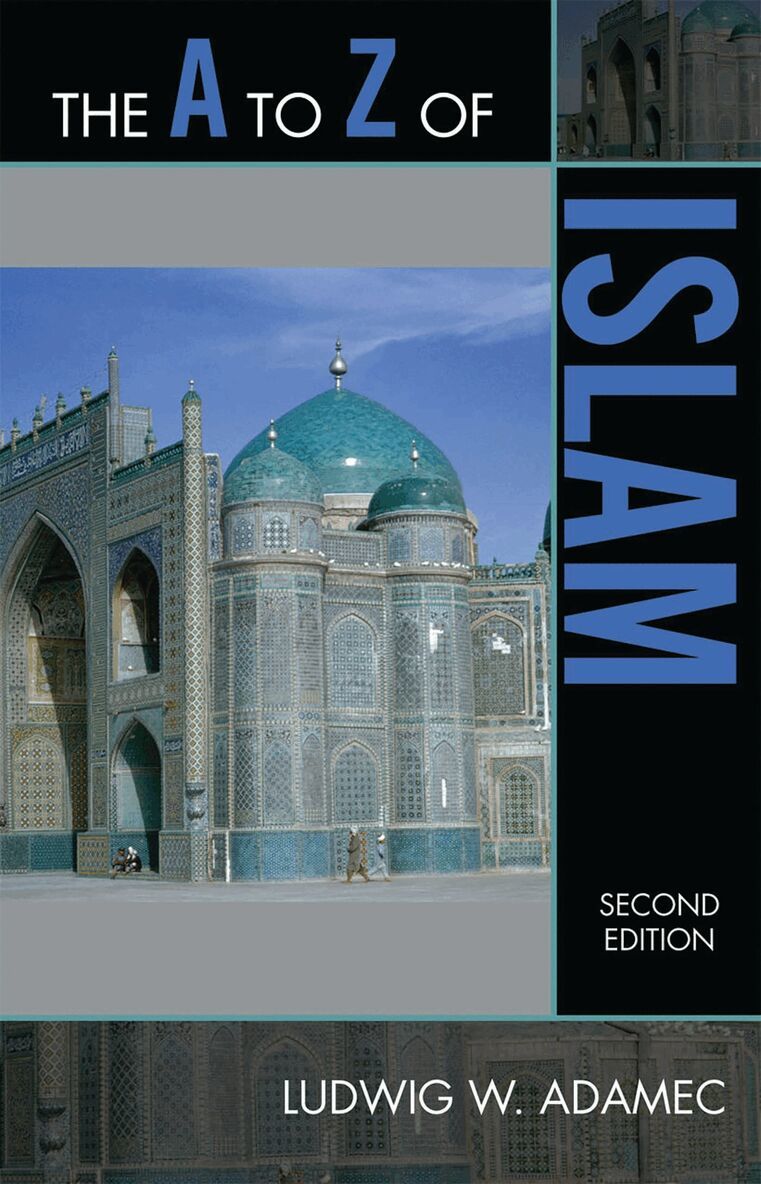
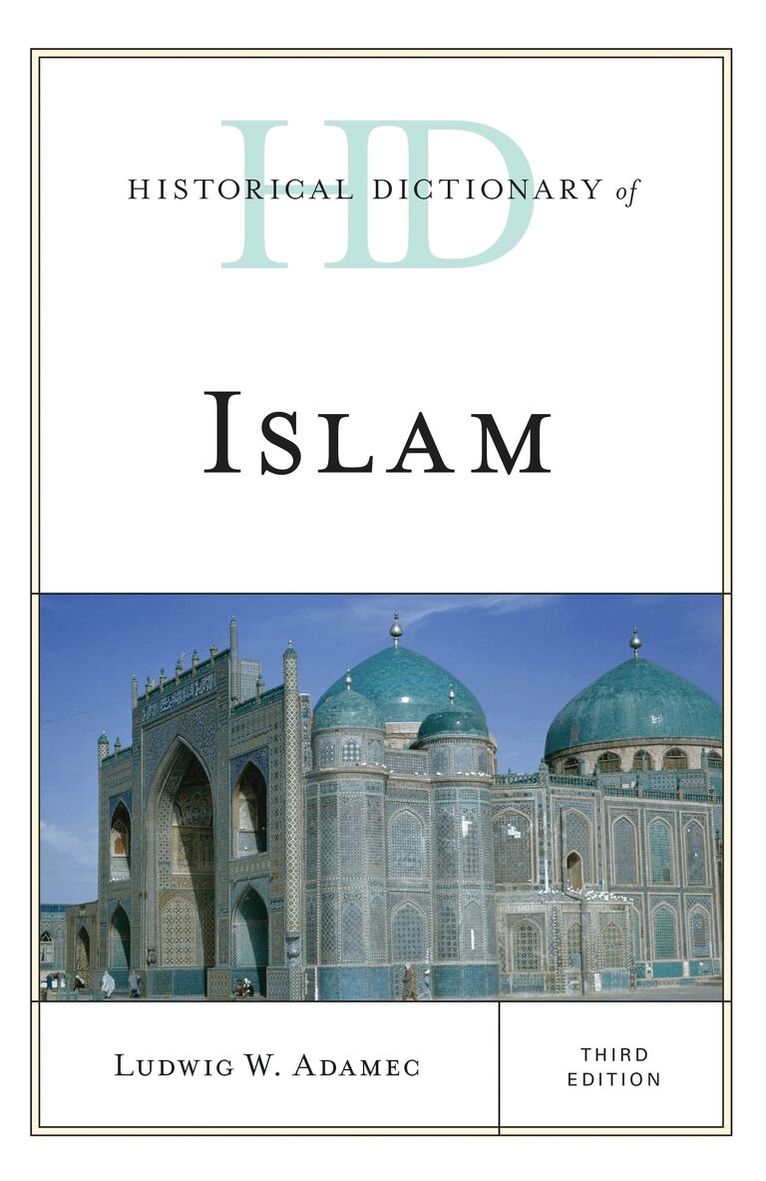
Muslims believe that the Koran is God’s message in Arabic, revealed through the medium of the Prophet Muhammad for the guidance of the Arabs and subsequently for all humanity. There is both unity and variety in the Islamic world. Muslims are not a homogeneous people who can be explained solely by their normative texts: the Koran and the Sunnah. Muslims differ vastly in their interpretation of Islam: modernists want to reinterpret Islam to adapt to the requirements of modern times while traditionalists tend to look to the classical and medieval periods of Islam as their model of the Islamic state.This third edition of Historical Dictionary of Islam contains a chronology, an introduction, appendixes, and an extensive bibliography. The dictionary section has over 700 cross-referenced entries on major sects, schools of theology, and jurisprudence, as well as aspects of Islamic culture. This book is an excellent resource for students, researchers, and anyone wanting to know more about Islam.
4 331 kr
Skickas inom 10-15 vardagar
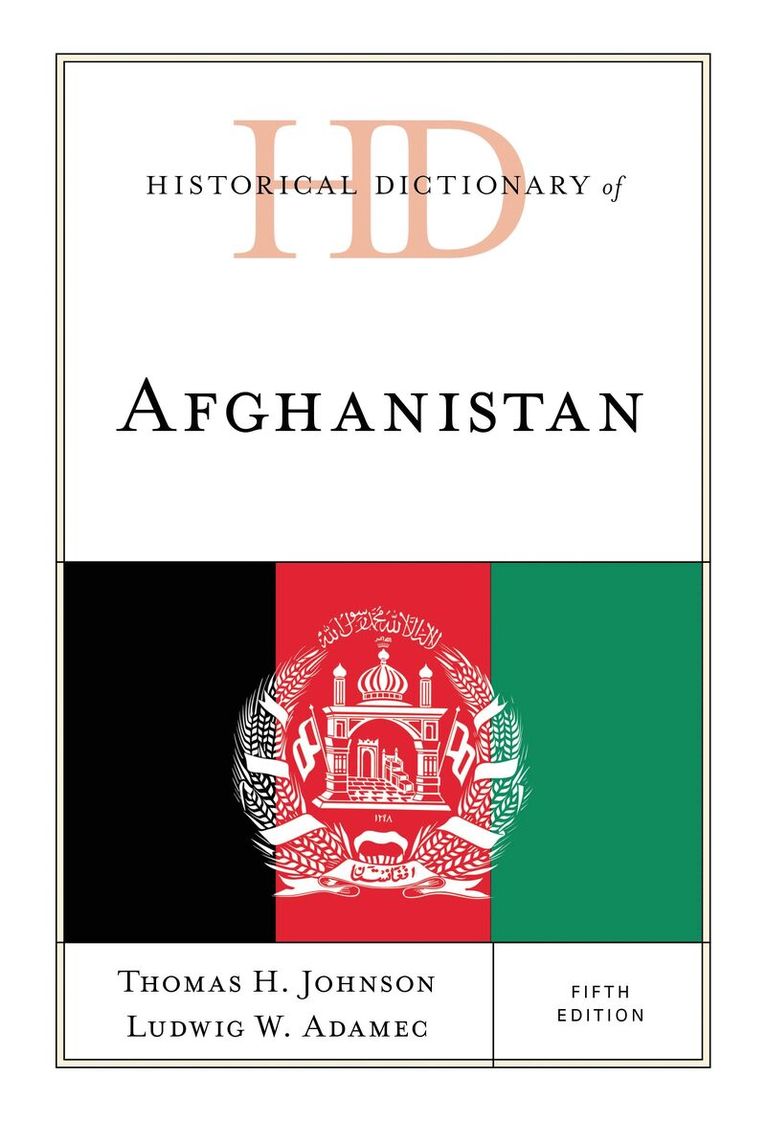
Afghanistan is an extremely complex and nuanced country that has been one of the centers of imperial conflict at least for 150 years. From the Czarist Russia’s march south in the 19th Century threatening British India, three Anglo-Afghan Wars, the Soviet Invasion and occupation of Afghanistan starting in December 1979 and the resulting anti-Soviet Jihad by the Afghan Mujahideen to Kabul’s and their allies’ (U.S. and NATO) conflict with the Taliban, Afghanistan has been one of the centers of important international and regional conflicts and events.Historical Dictionary of Afghanistan, Fifth Edition contains a chronology, an introduction, and an extensive bibliography. The dictionary section has more than 1,000 cross-referenced entries on important personalities as well as aspects of the country’s politics, economy, foreign relations, religion, and culture. This book is an excellent resource for students, researchers, and anyone wanting to know more about Afghanistan.
1 108 kr
Skickas inom 10-15 vardagar
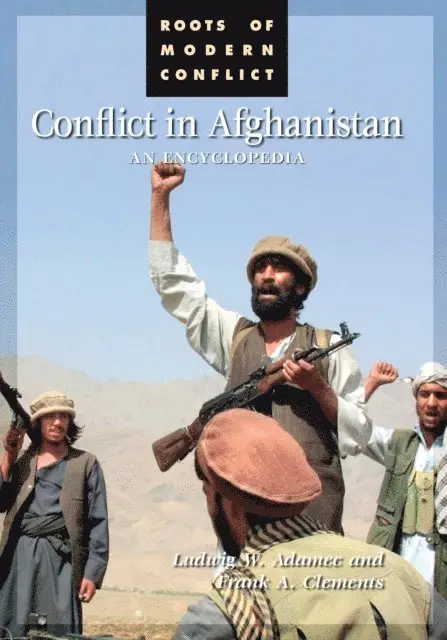
A comprehensive A–Z study of the history of conflict in Afghanistan from 1747 to the present.This authoritative, clearly written volume covers all aspects of the conflicts that have taken place in Afghanistan from 1747 to the present. Conflict in Afghanistan provides the reader with a historical overview of hostilities in Afghanistan and discusses their causes, history, and impact on Afghan society and on regional and international relations.A single A–Z section covers the three main eras in Afghanistan's history: the period from 1747, when Afghanistan first emerged as a "unified" state; the Soviet era (1979–1989), which saw the overthrow of the monarchy, the declaration of the Republic, and the rise of the Mujahideen; and the post-Soviet period, which brought civil war, the rise of the Taliban, and finally the events of September 11 and the War on Terrorism, both of which receive special attention.Over 40 illustrations, including the Buddha statues at Bamyan, Kabul; Afghanistan's difficult terrain; Taliban and Mujahideen fighters; and Soviet troopsDetailed maps, including the humanitarian situation in September 2001, provinces and major towns, ethnolinguistic groups in the area, and the border with Pakistan