Luis Cabrera - Böcker
Visar alla böcker från författaren Luis Cabrera. Handla med fri frakt och snabb leverans.
13 produkter
13 produkter
1 252 kr
Skickas inom 5-8 vardagar
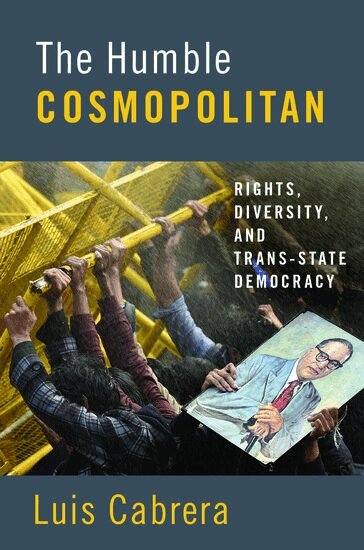
Is a strong cosmopolitan stance irretrievably arrogant? Cosmopolitanism, which affirms universal moral principles and grants no fundamental moral significance to the state, has become increasingly central to normative political theory. Yet, it has faced persistent claims that it disdains local attachments and cultures, while also seeking the neo-imperialistic imposition of Western moral views on all persons. The critique is said to apply with even greater force to institutional cosmopolitan approaches, which seek the development of global political institutions capable of promoting global aims for human rights, democracy, etc. This book works to address such objections through developing a novel theory of cosmopolitan political humility. It draws on the work of Indian constitutional architect and social activist B.R. Ambedkar, who cited universal principles of equality and rights in confronting domestic exclusions and the "arrogance" of caste. He sought to advance forms of political humility, or the recognition of equal standing, and openness to input and challenge within political institutions. This book explores how an "institutional global citizenship" approach to cosmopolitanism could similarly promote political humility globally, by supporting the development of democratic input and challenge mechanisms beyond the state. Such developments would challenge an essential political arrogance identified in the current system, where sovereign states are empowered to simply dismiss rights-based challenges from outsiders or their own populations--even as they serve as the designated guarantors of human rights. The book employs an innovative grounded normative theory method, where extensive original field research informs the development of moral claims. Insights are taken from Dalit activists reaching out to United Nations human rights bodies for support in challenging caste discrimination, and from their critics in the governing Bharatiya Janata Party. Further insights are drawn from Turkish protestors confronting a rising domestic authoritarianism, and from UK Independence Party members demanding "Brexit" from the European Union--in part because predominantly Muslim Turkey could eventually join. Overall, it is shown, an institutional global citizenship approach can inform the development of a global framework which would orient fundamentally to political humility rather than arrogance, and which could significantly advance global rights protections.
325 kr
Skickas inom 5-8 vardagar
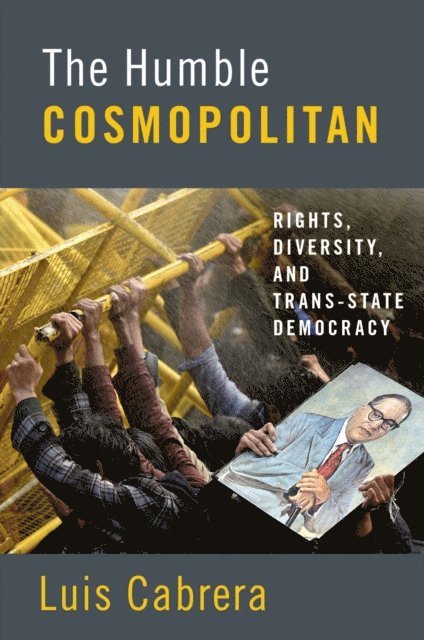
Is a strong cosmopolitan stance irretrievably arrogant? Cosmopolitanism, which affirms universal moral principles and grants no fundamental moral significance to the state, has become increasingly central to normative political theory. Yet, it has faced persistent claims that it disdains local attachments and cultures, while also seeking the neo-imperialistic imposition of Western moral views on all persons. The critique is said to apply with even greater force to institutional cosmopolitan approaches, which seek the development of global political institutions capable of promoting global aims for human rights, democracy, etc. This book works to address such objections through developing a novel theory of cosmopolitan political humility. It draws on the work of Indian constitutional architect and social activist B.R. Ambedkar, who cited universal principles of equality and rights in confronting domestic exclusions and the "arrogance" of caste. He sought to advance forms of political humility, or the recognition of equal standing, and openness to input and challenge within political institutions. This book explores how an "institutional global citizenship" approach to cosmopolitanism could similarly promote political humility globally, by supporting the development of democratic input and challenge mechanisms beyond the state. Such developments would challenge an essential political arrogance identified in the current system, where sovereign states are empowered to simply dismiss rights-based challenges from outsiders or their own populations--even as they serve as the designated guarantors of human rights. The book employs an innovative grounded normative theory method, where extensive original field research informs the development of moral claims. Insights are taken from Dalit activists reaching out to United Nations human rights bodies for support in challenging caste discrimination, and from their critics in the governing Bharatiya Janata Party. Further insights are drawn from Turkish protestors confronting a rising domestic authoritarianism, and from UK Independence Party members demanding "Brexit" from the European Union--in part because predominantly Muslim Turkey could eventually join. Overall, it is shown, an institutional global citizenship approach can inform the development of a global framework which would orient fundamentally to political humility rather than arrogance, and which could significantly advance global rights protections.
983 kr
Skickas inom 5-8 vardagar
Is a global institutional order composed of sovereign states fit for cosmopolitan moral purpose? Cosmopolitan political theorists challenge claims that states, nations or other collectives have ultimate moral significance. They focus instead on individuals: on what they share and on what each may owe to all the others. They see principles of distributive justice - and increasingly political justice - applying with force in a global system in which billions continue to suffer from severe poverty and deprivation, political repression, interstate violence and other ills. Cosmopolitans diverge widely, however, on the institutional implications of their shared moral view. Some argue that the current system of competing sovereign states tends to promote unjust outcomes and stands in need of deep structural reform. Others reject such claims and contend that justice can be pursued through transforming the orientations and conduct of individual and collective agents, especially states. This volume brings together prominent political theorists and International Relations scholars -- including some skeptics of cosmopolitanism -- in a far-ranging dialogue about the institutional implications of the cosmopolitan approach. Contributors offer penetrating analyses of both continuing and emerging issues around state sovereignty, democratic autonomy and accountability, and the promotion and protection of human rights. They also debate potential reforms of the current global system, from the transformation of cities and states to the creation of some encompassing world government capable of effectively promoting cosmopolitan aims.
2 098 kr
Kommande
The Oxford Handbook of Grounded and Engaged Normative Theory introduces readers to this burgeoning field of theory and methodology by exploring a range of empirical research practices that center lived experience to develop normative arguments. Theorists who work in this way demonstrate a commitment to expanding thinking about political theory to include those who have a stake in the concepts being studied. They consider the meanings that people make of their own experiences, political context, and histories in the struggle to be recognized by oppressors with epistemic authority. Undoing these histories depends on a commitment to epistemic inclusion, that is, a commitment to look for and attend to modes of knowing and sources of knowledge that are otherwise marginalized by the politics of knowledge or the norms of the discipline.In the last decade, grounded and engaged normative theory has coalesced into a distinctive approach in political science. This Handbook offers a cohesive overview of the field's principles, origins, methodologies, substantive lines of inquiry, and applications. Contributors to the volume enrich theoretical and methodological discussions with chapters full of examples of how the authors themselves have done the work. By laying out multiple theoretical starting points and demonstrating diverse methodological approaches, this volume helps both practitioners and students to better understand what they can learn from and do in this dynamic field.
1 964 kr
Skickas inom 10-15 vardagar
Could global government be the answer to global poverty and starvation?Cosmopolitan thinkers challenge the widely held belief that we owe more to our co-citizens than to those in other countries. This book offers a moral argument for world government, claiming that not only do we have strong obligations to people elsewhere, but that accountable integration among nation-states will help ensure that all persons can lead a decent life.Cabrera considers both the views of those political philosophers who say we have much stronger obligations to help our co-citizens than foreigners and those cosmopolitans who say our duties are equally strong to each but resist restructuring.
679 kr
Skickas inom 10-15 vardagar
Could global government be the answer to global poverty and starvation?Cosmopolitan thinkers challenge the widely held belief that we owe more to our co-citizens than to those in other countries. This book offers a moral argument for world government, claiming that not only do we have strong obligations to people elsewhere, but that accountable integration among nation-states will help ensure that all persons can lead a decent life.Cabrera considers both the views of those political philosophers who say we have much stronger obligations to help our co-citizens than foreigners and those cosmopolitans who say our duties are equally strong to each but resist restructuring.
360 kr
Skickas inom 7-10 vardagar
In this novel account of global citizenship, Luis Cabrera argues that all individuals have a global duty to contribute directly to human rights protections and to promote rights-enhancing political integration between states. The Practice of Global Citizenship blends careful moral argument with compelling narratives from field research among unauthorized immigrants, activists seeking to protect their rights, and the 'Minuteman' activists striving to keep them out. Immigrant-rights activists, especially those conducting humanitarian patrols for border-crossers stranded in the brutal Arizona desert, are shown as embodying aspects of global citizenship. Unauthorized immigrants themselves are shown to be enacting a form of global 'civil' disobedience, claiming the economic rights central to the emerging global normative charter while challenging the restrictive membership regimes that are the norm in the current global system. Cabrera also examines the European Union, seeing it as a crucial laboratory for studying the challenges inherent in expanding citizen membership.
1 073 kr
Skickas inom 7-10 vardagar
In this novel account of global citizenship, Luis Cabrera argues that all individuals have a global duty to contribute directly to human rights protections and to promote rights-enhancing political integration between states. The Practice of Global Citizenship blends careful moral argument with compelling narratives from field research among unauthorized immigrants, activists seeking to protect their rights, and the 'Minuteman' activists striving to keep them out. Immigrant-rights activists, especially those conducting humanitarian patrols for border-crossers stranded in the brutal Arizona desert, are shown as embodying aspects of global citizenship. Unauthorized immigrants themselves are shown to be enacting a form of global 'civil' disobedience, claiming the economic rights central to the emerging global normative charter while challenging the restrictive membership regimes that are the norm in the current global system. Cabrera also examines the European Union, seeing it as a crucial laboratory for studying the challenges inherent in expanding citizen membership.
336 kr
Skickas inom 5-8 vardagar
168 kr
Skickas inom 5-8 vardagar
1 192 kr
Skickas inom 7-10 vardagar
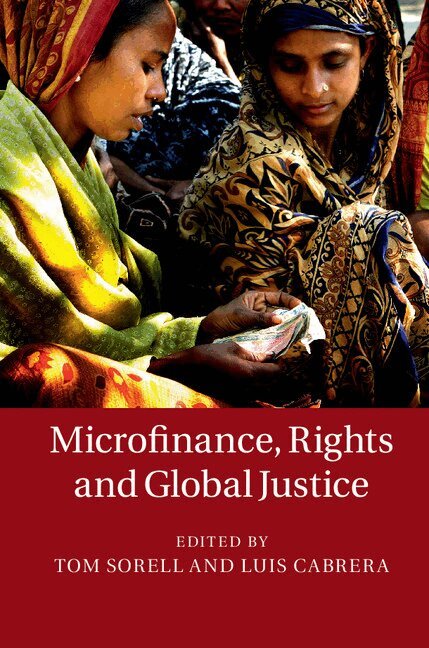
Microfinance - the practice of providing small loans to promote entrepreneurial activity among those with few financial assets - is increasingly seen as a sustainable means of aiding the global poor. Perhaps its most influential advocate, Nobel Laureate Muhammad Yunus, has claimed that there is a human right to microfinance, given its potential for poverty alleviation. This book directs critical philosophical attention at this very widely used and praised poverty-reducing measure. In chapters that discuss microfinance schemes and models around the world, internationally renowned contributors address important questions about both the positive impact of microfinance and cases of exploitation and repayment pressure. Exploring how far microfinance can or should be situated within broader concerns about justice, this volume sheds light on ethical issues that have so far received little systematic attention, and it advances discussion on new human rights, exploitation, and global justice.
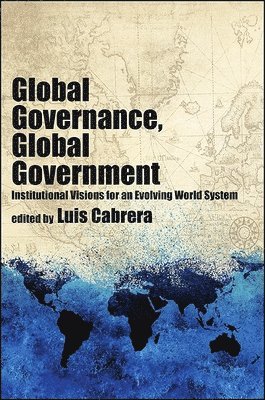
Global Governance, Global Government
Institutional Visions for an Evolving World System
Inbunden, Engelska, 2011
1 057 kr
Tillfälligt slut
Puts commentators on Global government in conversation about their often provocative global institutional visions.Recent years have seen a remarkable resurgence in rigorous thought on global government by leading thinkers in international relations, economics, and political theory. Not since the immediate post-World War II period have so many scholars given serious attention to possibilities for global political integration.This book will be of interest to students of international relations, political theory, international economics, secuity and gender studies. It pulls together some of the leading current thinkers on global government into a conversation about provocative global institutional visions. Chapters here explore whether a world state should be viewed as inevitable, ways in which global moral and political communities might be sustained, and reasons to reject world government in favor of improvements to governance in the United Nations and other institutions.
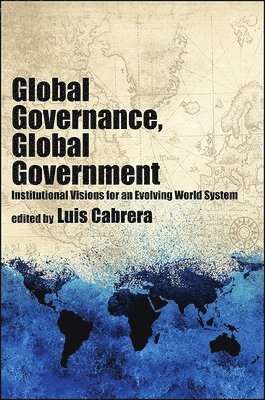
Global Governance, Global Government
Institutional Visions for an Evolving World System
Häftad, Engelska, 2012
402 kr
Tillfälligt slut
Puts commentators on Global government in conversation about their often provocative global institutional visions.Recent years have seen a remarkable resurgence in rigorous thought on global government by leading thinkers in international relations, economics, and political theory. Not since the immediate post-World War II period have so many scholars given serious attention to possibilities for global political integration.This book will be of interest to students of international relations, political theory, international economics, secuity and gender studies. It pulls together some of the leading current thinkers on global government into a conversation about provocative global institutional visions. Chapters here explore whether a world state should be viewed as inevitable, ways in which global moral and political communities might be sustained, and reasons to reject world government in favor of improvements to governance in the United Nations and other institutions.