Luis Ingelmo - Böcker
Visar alla böcker från författaren Luis Ingelmo. Handla med fri frakt och snabb leverans.
5 produkter
5 produkter
340 kr
Kommande
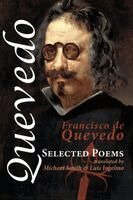
Francisco Gómez de Quevedo y Santibáñez Villegas (1580-1645), was a nobleman, whose parents were both at the royal court, and one of the most important poets of Spain's literary golden age, the siglo de oro. Quevedo was lame, had deformed feet, and was also overweight and shortsighted, but took refuge in books as a student in the Jesuit school in Madrid. In 1596 he went on to study at the University of Alcalá de Henares, after which he studied theology in Valladolid.He was already well-known as a poet by this time, and went on to establish a formidable reputation as both poet and novelist. He was a disputatious character, and engaged in many a public battle of words with his main poetic rival, Góngora, as well as with Alarcón and Pérez de Montalbán, all of whom were to feel the impact of Quevedo's bile. It must be admitted however, that Góngora, at least, repaid him with equal (verbal) measure.Quevedo was involved in a conspiracy in Venice in 1618, after which he was put under house arrest. In 1620, he was exiled, following the death of his patron, but he was pardoned when Philip IV came to the throne. Quevedo accompanied the young King on some of his journeys, but fell afoul of the Inquisition when some of his satiric verses were printed without permission. His private life seems to have been somewhat disordered, and Góngora accused him in a satire of being a drunk, referring to him as Francisco de Quebebó (i.e. Francis WhatamIdrinking).He was to be constantly involved in controversies, both political and literary, and incurred the wrath of the Count-Duke of Olivares, the most powerful nobleman in Spain, through his criticism of the government. This led to his imprisonment in León for four years from 1639. He died two years after his release.His oeuvre offers a bewildering range: theological works, literary and critical commentaries, satires, and novels. His poetry fills over a thousand pages in modern editions, and he is without doubt one of the great literary figures of his age.
250 kr
Skickas inom 5-8 vardagar
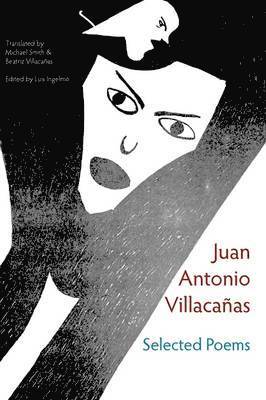
This is the first book-length collection of the poetry of Juan Antonio Villacanas in English, and enables Anglophone readers to meet for the first time one of the most significant Spanish poets of the post-war period. The translations are by the renowned Irish poet-translator Michael Smith and the author's daughter, Beatriz.
250 kr
Skickas inom 5-8 vardagar
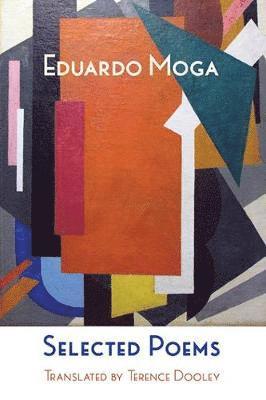
We have become used to a life of routine and uniformity: at work, in our relationships with others and with ourselves when we seek to understand what surrounds and subjugates us. Messages flood in and, instead of criticising reality, they reinforce the status quo and encourage us to accept it and maintain it. To counterbalance the hierarchies and justifications of modern life, there are voices raised in protest, like Eduardo Moga's, which don't mourn a presumed lost golden age, or bewail their disillusionment. That phase was left behind for Moga long ago, and we must presume he underwent an apprenticeship of disappointment: the discovery that the gods do not love us, but torment us, and then put all his efforts into unlearning it all. Moga's poetry does not preach, however, or burden us with rules or ideas to bring us to an imaginary better world, here or in the afterlife. The only life is this, the here and now, the life of the body, the life of the senses connecting us to the world.To restore our delight in the present is not a trivial mission and Moga confronts us time and again with our emotions and sensations, with the intention of blotting out thereby the monotonous discourse of the representatives of order. One might think, then, that the poet is acting like a strategist on a battlefield. Far from the Manichaean vision of the soldier, who is unable to see beyond dualities, this poetry is nourished by subtlety, detail and precision. It is not artillery, but a fine wielding of the scalpel which, with the delicacy and determination of the silversmith, dissects the tumour and cyst threatening our life, which is then able to flourish as a result.
250 kr
Skickas inom 5-8 vardagar
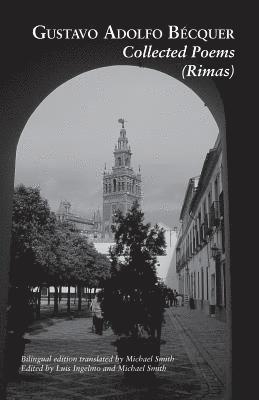
Gustavo Adolfo Becquer was one of Spain's most important poets of the 19th century, and the instigator of a new Spanish version of Romanticism, influenced by German models such as Heine. Born in Seville in 1836, the son of an artist of Flemish origin, he lived only 34 years, but in that time created a hugely influential body of verse (his Rimas, or Rhymes) as well as several short fictions (the Leyendas, or Legends). His other works include a remarkable series of letters, or epistolary fictions, published as Desde mi celda (From My Cell). Orphaned at the age of five, Becquer was raised by an elderly, and childless, uncle. A talented artist himself - as was also his brother, Valeriano - he became a pupil at a local studio in Seville, but gave this up in favour of a literary career, heading for Madrid at the age of eighteen, full of hope. He obtained a minor post in the civil-service, thanks to his uncle's influence, but was not cut out for such a routine job and was dismissed. For some time thereafter he was a typical Bohemian artist, living on very little while trying to write, and scratching a small income from the translation of foreign novels, and from part-time journalism.Towards the end of his life he obtained another government post, as a censor, but when he died, it was in considerable poverty, suffering from pneumonia and liver problems.His work was only published posthumously, thanks to the efforts of his friends.
328 kr
Skickas inom 3-6 vardagar