Luis Martínez Andrade – författare
Visar alla böcker från författaren Luis Martínez Andrade. Handla med fri frakt och snabb leverans.
13 produkter
13 produkter
Häftad, Engelska, 2025
410 kr
Skickas inom 3-6 vardagar
Offering an in-depth exploration of the intricate interplay between theology, ecology, and social justice, Facing Climate Collapse critically engages with the evolving discourse surrounding the 'Anthropocene' and presents a compelling argument for rebranding this epoch as the 'capitalocene.' Collectively offering a rigorous examination of diverse theological perspectives, including ecofeminist antiwar theology and a reimagining of salvation in the context of climate change, the chapters in this book present perspectives on ecological justice, indigenous wisdom, and congregational ecclesiology in Southern Africa. With contributions from various academic voices, including many from the Global South, this volume invites readers to engage with innovative concepts, challenge established paradigms, and explore fresh approaches to the pressing ecological issues of our era. This book is part of a new series of volumes co-published with the World Council of Mission’s DARE (Discernment And Radical Engagement) programme.
E-bok
Engelska, 2025633 kr
Läs direkt efter köp
Offering an in-depth exploration of the intricate interplay between theology, ecology, and social justice, Facing Climate Collapse critically engages with the evolving discourse surrounding the ''Anthropocene'' and presents a compelling argument for rebranding this epoch as the ''capitalocene.'' Collectively offering a rigorous examination of diverse theological perspectives, including ecofeminist antiwar theology and a reimagining of salvation in the context of climate change, the chapters in this book present perspectives on ecological justice, indigenous wisdom, and congregational ecclesiology in Southern Africa. With contributions from various academic voices, including many from the Global South, this volume invites readers to engage with innovative concepts, challenge established paradigms, and explore fresh approaches to the pressing ecological issues of our era. This book is part of a new series of volumes co-published with the World Council of Mission’s DARE (Discernment And Radical Engagement) programme.
Häftad, Engelska, 2015
450 kr
Skickas inom 11-20 vardagar
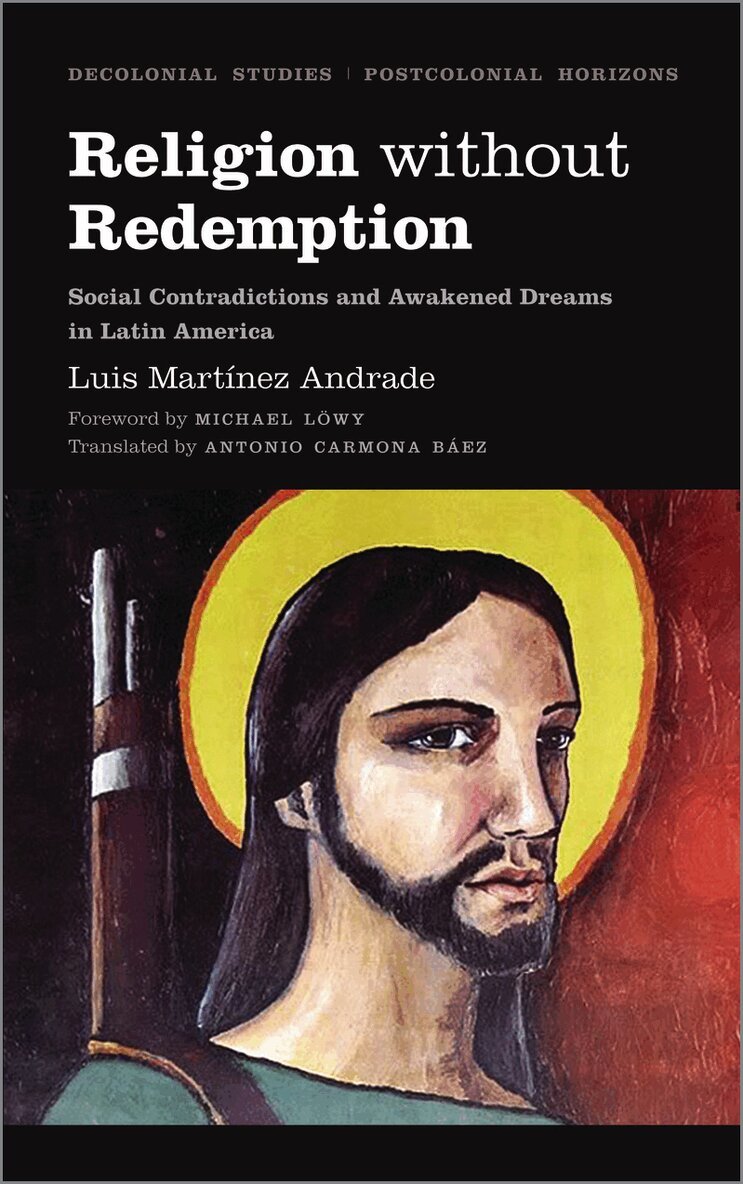
Latin America has been a place of radical political inspiration providing an alternative to the neoliberal model. Religion without Redemption looks at the sociology of religion, political philosophy and the history of ideas of the continent, in an attempt to show how Western understanding fails to come close to a correct analysis of how and why political and economic characteristics work as they do.It focuses on how the centrality of religion for the people of Latin America has influenced how they interact with the changes in the modern economic system. Capitalism has taken on religious characteristics: it has sacred places of worship, such as the shopping mall, as well as its own prophets. This book explains how this form of ‘cultural religion’ accompanies many aspects of life in a contradictory manner: not only does it fulfil the role of legitimating oppression, it also can be a powerful source of rebellion, unveiling thus a subversive side to the status quo.Religion Without Redemption advances the ideas of liberation theory into the 21st century, and challenges the provincialism to which many Latin American thinkers are usually consigned.
Inbunden, Engelska, 2015
915 kr
Skickas inom 5-8 vardagar
Latin America has been a place of radical political inspiration providing an alternative to the neoliberal model. Religion without Redemption looks at the sociology of religion, political philosophy and the history of ideas of the continent, in an attempt to show how Western understanding fails to come close to a correct analysis of how and why political and economic characteristics work as they do.It focuses on how the centrality of religion for the people of Latin America has influenced how they interact with the changes in the modern economic system. Capitalism has taken on religious characteristics: it has sacred places of worship, such as the shopping mall, as well as its own prophets. This book explains how this form of ‘cultural religion’ accompanies many aspects of life in a contradictory manner: not only does it fulfil the role of legitimating oppression, it also can be a powerful source of rebellion, unveiling thus a subversive side to the status quo.Religion Without Redemption advances the ideas of liberation theory into the 21st century, and challenges the provincialism to which many Latin American thinkers are usually consigned.
Inbunden, Engelska, 2022
1 225 kr
Skickas inom 10-15 vardagar
Crossing Racial Borders: The Epistemic Empowerment of the Subaltern explores critically the racial, socioeconomic, historical, and political contemporary conditions of the lived experiences of the subaltern, the oppressed. Through the lens of the decolonial school of thought developed by Latin American thinkers and scholars, this text focuses on the identification and analysis of the subalterns’ praxis of living, thinking, knowing, and doing. The contributors delve into the subalterns’ agency at work and how their [inter]subjective/reflective actions, gestures, and thoughts are deep-seated in subverting and resisting the material and symbolic coloniality of power's exploitation, categorization, and oppression. Drawing from sociological, anthropological, literary, and historical approaches, a new set of ideas and rationalities uncovers and challenges the complicities of modernity/coloniality (power-pattern-matrix) through new narratives and discursive epistemic-frames of empowerment and agency.
E-bok
Engelska, 2015416 kr
Läs direkt efter köp
Latin America has been a place of radical political inspiration providing an alternative to the neoliberal model. Religion without Redemption looks at the sociology of religion, political philosophy and the history of ideas of the continent, in an attempt to show how Western understanding fails to come close to a correct analysis of how and why political and economic characteristics work as they do.It focuses on how the centrality of religion for the people of Latin America has influenced how they interact with the changes in the modern economic system. Capitalism has taken on religious characteristics: it has sacred places of worship, such as the shopping mall, as well as its own prophets. This book explains how this form of ‘cultural religion’ accompanies many aspects of life in a contradictory manner: not only does it fulfil the role of legitimating oppression, it also can be a powerful source of rebellion, unveiling thus a subversive side to the status quo.Religion Without Redemption advances the ideas of liberation theory into the 21st century, and challenges the provincialism to which many Latin American thinkers are usually consigned.
Häftad, Franska, 2023
299 kr
Skickas inom 5-8 vardagar
Häftad, Franska, 2024
247 kr
Skickas inom 5-8 vardagar
Inbunden, Engelska, 2023
1 730 kr
Skickas inom 10-15 vardagar
The publication of this volume marks the Ten Year Anniversary of the Postcolonialism and Religions series. In intersectional and interdisciplinary perspectives, the chapters of this book constitute a complex whole: a volume that does justice to the justice-seeking origins of Latin American Liberation Theology, philosophy, and sociology as it emerged in the 1960s-70s and its development to the present. What drives this book is a common spirit and conviction: Liberation Theologies of the Global South remain relevant to the sociocultural and geopolitical contexts of today, which remain ensconced in the dynamics, exclusions, and resistances that gave rise to Liberation Theologies six decades ago. Today we may speak of interculturality, of borderlands, of in-betweenness, in ways that complicate, confirm, affirm, and interrogate the “underside of history”, and the spaces that are marginalized but de-centered centers of liberation struggle — within, alongside, underneath, over-against societal projects that claim and exclude them, and that represent some of the actual challenges and opportunities to liberation.
E-bok
Engelska, 20232 207 kr
Läs direkt efter köp
The publication of this volume marks the Ten Year Anniversary of the Postcolonialism and Religions series. In intersectional and interdisciplinary perspectives, the chapters of this book constitute a complex whole: a volume that does justice to the justice-seeking origins of Latin American Liberation Theology, philosophy, and sociology as it emerged in the 1960s-70s and its development to the present. What drives this book is a common spirit and conviction: Liberation Theologies of the Global South remain relevant to the sociocultural and geopolitical contexts of today, which remain ensconced in the dynamics, exclusions, and resistances that gave rise to Liberation Theologies six decades ago. Today we may speak of interculturality, of borderlands, of in-betweenness, in ways that complicate, confirm, affirm, and interrogate the “underside of history”, and the spaces that are marginalized but de-centered centers of liberation struggle — within, alongside, underneath, over-against societal projects that claim and exclude them, and that represent some of the actual challenges and opportunities to liberation.
Häftad, Engelska, 2024
1 730 kr
Skickas inom 10-15 vardagar
The publication of this volume marks the Ten Year Anniversary of the Postcolonialism and Religions series. In intersectional and interdisciplinary perspectives, the chapters of this book constitute a complex whole: a volume that does justice to the justice-seeking origins of Latin American Liberation Theology, philosophy, and sociology as it emerged in the 1960s-70s and its development to the present. What drives this book is a common spirit and conviction: Liberation Theologies of the Global South remain relevant to the sociocultural and geopolitical contexts of today, which remain ensconced in the dynamics, exclusions, and resistances that gave rise to Liberation Theologies six decades ago. Today we may speak of interculturality, of borderlands, of in-betweenness, in ways that complicate, confirm, affirm, and interrogate the “underside of history”, and the spaces that are marginalized but de-centered centers of liberation struggle — within, alongside, underneath, over-against societal projects that claim and exclude them, and that represent some of the actual challenges and opportunities to liberation.
E-bok
Spanska, 202239 kr
Läs direkt efter köp
¿Cuáles son las características de la Teoría crítica producida en el sur global? ¿Qué papel desempeña la teoría decolonial en los movimientos populares? ¿Cuál es la importancia de la política plebeya en la configuración de proyectos contrahegemónicos? ¿Cómo se expresa la violencia divina en la formación social hegemónica? ¿Por qué la perspectiva marxista sigue siendo fundamental para develar los antagonismos de la sociedad? ¿Cuáles son las afinidades electivas entre el anarquismo y el mensaje de los Evangelios? Compuesto por un conjunto de escritos académicos, este texto aborda problemáticas fundamentales no solo para las ciencias sociales históricas sino también para el horizonte político contemporáneo. Primero, se discuten aspectos centrales para la teoría crítica: la pertinencia de la noción de clase social, el aporte de las perspectivas feministas y, por supuesto, el vínculo entre la violencia divina y el proceso de subjetividad. Posteriormente, se exponen algunas biografías dedicadas a figuras señeras que han marcado el desarrollo del pensamiento crítico y la historia sociopolítica. Finalmente, el foco de atención recae en problemáticas que van desde los conflictos socioambientales hasta la dimensión útopica de diferentes proyectos sociales.
193 kr
Läs direkt efter köp
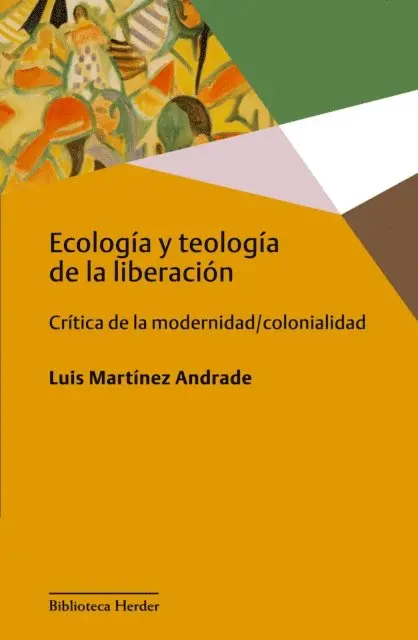
Dentro del discurso moderno sobre la fe, la teología de la liberación hace una demoledora crítica de la modernidad/colonialidad. Sin embargo, esta innovadora visión no debe ser calificada, en sentido peyorativo, de antimoderna o de posmoderna. Asimismo, ¿por qué debemos considerar a la teología de la liberación como un antecedente histórico y epistémico del "giro decolonial" en el pensamiento crítico? ¿Cuáles son las afinidades electivas entre la ecología y la teología de la liberación? ¿Cuáles son las principales características de la teología de la liberación como constelación intelectual utópica?Este es el primer ensayo que explora de manera sistemática las relaciones entre la ecología y la teología de la liberación. El análisis de la evolución intelectual y espiritual del teólogo brasileño Leonardo Boff es la base Ecología y teología de la liberación, que, a su vez, combina la sociología de la religión (de Max Weber hasta Danièle Hervieu-Léger), la sociología (marxista) de la cultura (Lucien Goldmann) y de las utopías (Ernst Bloch) y las teorías decoloniales (Enrique Dussel) para aportar una perspectiva interdisciplinaria y original a la discusión y diálogo en el seno de la teología de la liberación. Así, este libro se añade al apasionante debate entre el vínculo con la ecología y la religión.