Luke Roelofs - Böcker
Visar alla böcker från författaren Luke Roelofs. Handla med fri frakt och snabb leverans.
2 produkter
2 produkter
1 043 kr
Skickas inom 5-8 vardagar
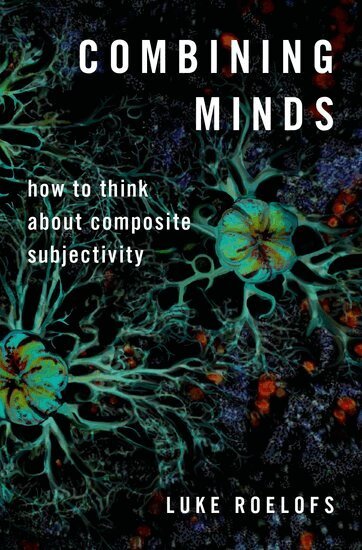
Combining Minds is about the idea of minds built up out of other minds, whether this is possible, and what it would mean if it were. Roelofs surveys many areas of philosophy and psychology, analysing and evaluating denials and affirmations of mental combination that have been made in regard to everything from brain structure, to psychological conflict, to social cooperation. In each case, he carefully distinguishes different senses in which subjectivity might be composite, and different arguments for and against them, concluding that composite subjectivity, in various forms, may be much more common than we think. Combining Minds is also the first book-length defence of constitutive panpsychism against all aspects of the 'combination problem'. Constitutive panpsychism is an increasingly prominent theory, holding that consciousness is naturally inherent in matter, with human consciousness built up out of this basic consciousness the same way human bodies are built up out of physical matter. Such a view requires that many very simple conscious minds can compose a single very complex one, and a major objection made against constitutive panpsychism is that they cannot - that minds simply do not combine. This is the combination problem, which Roelofs scrutinizes, dissects, and refutes. It reflects not only contemporary debates but a long philosophical tradition of contrasting the apparently indivisible unity of the mind with the deep and pervasive divisibility of the material world.Combining Mindsdraws together the threads of this problem and develops a powerful and flexible response to it.
929 kr
Kommande
Is it rational to be moral? Is it irrational to not care at all about anybody but yourself? In Empathic Reason, Luke Roelofs defends Empathic Rationalism, a new account of the relationship between morality and rationality. They vindicate the idea that we rationally have to care about other people because failing to do so involves treating them as less real than ourselves, explaining this in terms of the indispensable role of imagination in understanding other minds. Traditional approaches to moral philosophy have often treated empathy--imaginatively taking on another's perspective--as contrasting with or even opposed to rationality, but Empathic Rationalism views it as an integral part of rationality. This provides a secular, naturalistic foundation for belief in objective morality: to act morally is simply to act rationally, which requires acting as our estimate of perfect empathy would tell us to act. Someone who consistently shows no desire to act in this way reveals themselves to be a solipsist in denial: they treat other minds as useful fictions and other people as props in a game of make-believe. This means that a fully consistent egoist thus holds irrational beliefs about other minds, while someone who only sometimes recognizes obligations to others is inconsistent, and thus also irrational. Morality, Roelofs argues, is the only rational course.