Lydia Schumacher - Böcker
Visar alla böcker från författaren Lydia Schumacher. Handla med fri frakt och snabb leverans.
15 produkter
15 produkter
Del 25 - Challenges in Contemporary Theology
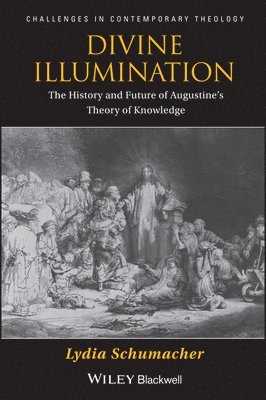
Divine Illumination
The History and Future of Augustine's Theory of Knowledge
Inbunden, Engelska, 2011
1 361 kr
Skickas inom 7-10 vardagar
DIVINE ILLUMINATION “An important and ground-breaking study which links growing interest in Augustine and medieval philosophy with cutting-edge questions in contemporary philosophy of religion, particularly concerning epistemology and the ‘rationality’ of religion.” Janet Soskice, University of Cambridge “In this lucidly argued and solidly documented study, Schumacher uncovers the roots of problems notoriously besetting modern theories of knowledge in conflicting medieval interpretations of Augustine’s assumptions about knowledge as divine illumination: an intriguing thesis, which she handles with delicacy and flair.” Fergus Kerr, O.P. University of Edinburgh “Challenges the traditional history of theories of knowledge. A bold and provocative reading.” Olivier Boulnois, École Pratique des Hautes Études (University of Paris, Sorbonne) Divine Illumination offers an original interpretation of Augustine’s theory of knowledge, tracing its development in the work of medieval thinkers such as Anselm, Bonaventure, Thomas Aquinas, and John Duns Scotus. Although Scotus is often deemed responsible for finally pronouncing Augustine’s longstanding illumination account untenable, Schumacher shows that he only rejected a version that was the byproduct of a shift in the understanding of illumination and knowledge more generally within the thirteenth-century Franciscan school of thought. To reckon with the challenges in contemporary thought on knowledge that were partly made possible by this shift, Schumacher recommends relearning a way of thinking about knowledge that was familiar to Augustine and those who worked in continuity with him. Her book thus anticipates a new approach to dealing with debates in contemporary epistemology, philosophy of religion, and theology, even while correcting some longstanding assumptions about Augustine and his most significant medieval readers.
1 341 kr
Skickas inom 10-15 vardagar
A Reader in Early Franciscan Theology presents for the first time in English key passages from the Summa Halensis, one of the first major installments in the summa genre for which scholasticism became famous. This systematic work of philosophy and theology was collaboratively written mostly between 1236 and 1245 by the founding members of the Franciscan school, such as Alexander of Hales and John of La Rochelle, who worked at the recently founded University of Paris.Modern scholarship has often dismissed this early Franciscan intellectual tradition as unoriginal, merely systematizing the Augustinian tradition in light of the rediscovery of Aristotle, paving the way for truly revolutionary figures like John Duns Scotus. But as the selections in this reader show, it was this earlier generation that initiated this break with precedent. The compilers of the Summa Halensis first articulated many positions that eventually become closely associated with the Franciscan tradition on issues like the nature of God, the proof for God's existence, free will, the transcendentals, and Christology. This book is essential reading for anyone wishing to understand the ways in which medieval thinkers employed philosophical concepts in a theological context as well as the evolution of Franciscan thought and its legacy to modernity.A Reader in Early Franciscan Theology is available from the publisher on an open-access basis.
362 kr
Skickas inom 7-10 vardagar
A Reader in Early Franciscan Theology presents for the first time in English key passages from the Summa Halensis, one of the first major installments in the summa genre for which scholasticism became famous. This systematic work of philosophy and theology was collaboratively written mostly between 1236 and 1245 by the founding members of the Franciscan school, such as Alexander of Hales and John of La Rochelle, who worked at the recently founded University of Paris.Modern scholarship has often dismissed this early Franciscan intellectual tradition as unoriginal, merely systematizing the Augustinian tradition in light of the rediscovery of Aristotle, paving the way for truly revolutionary figures like John Duns Scotus. But as the selections in this reader show, it was this earlier generation that initiated this break with precedent. The compilers of the Summa Halensis first articulated many positions that eventually become closely associated with the Franciscan tradition on issues like the nature of God, the proof for God's existence, free will, the transcendentals, and Christology. This book is essential reading for anyone wishing to understand the ways in which medieval thinkers employed philosophical concepts in a theological context as well as the evolution of Franciscan thought and its legacy to modernity.A Reader in Early Franciscan Theology is available from the publisher on an open-access basis.
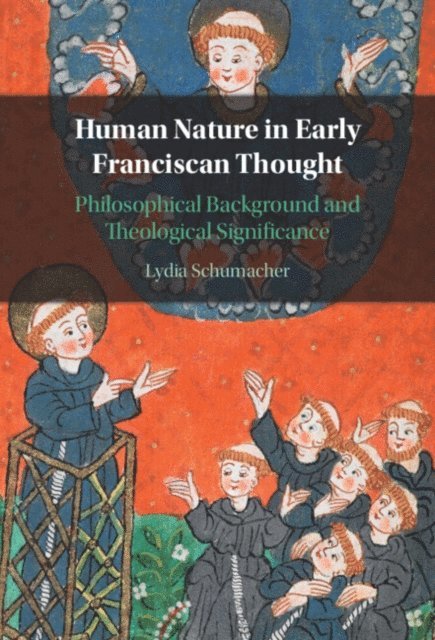
Human Nature in Early Franciscan Thought
Philosophical Background and Theological Significance
Inbunden, Engelska, 2023
1 245 kr
Skickas inom 7-10 vardagar
In this book, Lydia Schumacher challenges the common assumption that early Franciscan thought simply reiterates the longstanding tradition of Augustine. She demonstrates how scholars from this tradition incorporated the work of Islamic and Jewish philosophers, whose works had recently been translated from Arabic, with a view to developing a unique approach to questions of human nature. These questions pertain to perennial philosophical concerns about the relationship between the body and the soul, the work of human cognition and sensation, and the power of free will. By highlighting the Arabic sources of early Franciscan views on these matters, Schumacher illustrates how scholars working in the early thirteenth century anticipated later developments in Franciscan thought which have often been described as novel or unprecedented. Above all, her study demonstrates that the early Franciscan philosophy of human nature was formulated with a view to bolstering the order's specific theological and religious ideals.
1 633 kr
Skickas inom 7-10 vardagar
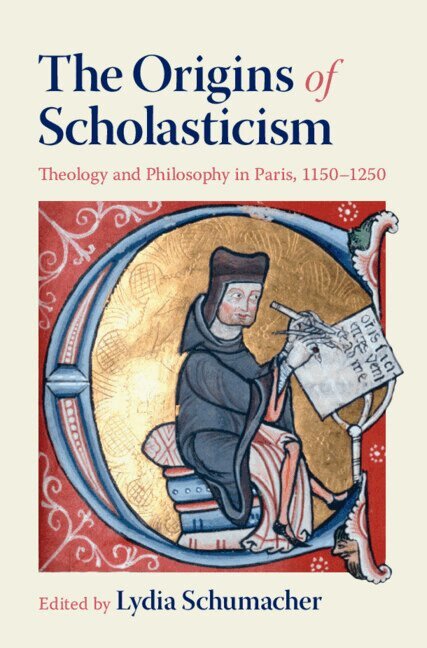
The Origins of Scholasticism provides the first systematic account of the theological and philosophical ideas that were debated and developed by the scholars who flourished during the years immediately before and after the founding of the first official university at Paris. The period from 1150-1250 has traditionally been neglected in favor of the next century (1250-1350) which witnessed the rise of intellectual giants like Thomas Aquinas, Albert the Great, and John Duns Scotus, who famously popularized the major works of Aristotle. As this volume demonstrates, however, earlier scholastic thinkers laid the groundwork for the emergence of theology as a discipline with which such later thinkers actively engaged. Although they relied heavily on traditional theological sources, this volume highlights the extent to which they also made use of philosophy not only from the Greek but also the Arabic traditions in ways that defined the role it would play in theological contexts for generations to follow.
1 245 kr
Skickas inom 7-10 vardagar
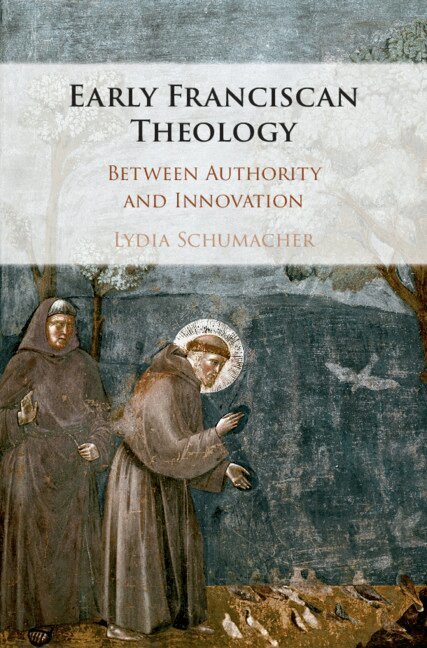
Franciscan theology before Bonaventure has long been regarded as a relatively unoriginal attempt to systematize the tradition of Augustine, which prevailed in the West for most of the earlier Middle Ages. In this book, Lydia Schumacher aims to demonstrate the innovative aspects of early Franciscan theology by examining the historical, philosophical, and religious contexts in which it was developed, and by highlighting how thinkers from this period deployed authoritative sources like Augustine as 'proof texts' for their own novel positions. She thereby exposes the continuity between the early and later Franciscan schools, which have normally been perceived as distinct from one another. Schumacher also emphasizes the ethos that inspired the development of medieval Franciscan thinking and distinguishes it from any modern intellectual trends with which it has been associated. Ultimately, Schumacher lays the foundation for future efforts to recover Franciscan theology in the contemporary context on its own terms.
630 kr
Skickas inom 10-15 vardagar
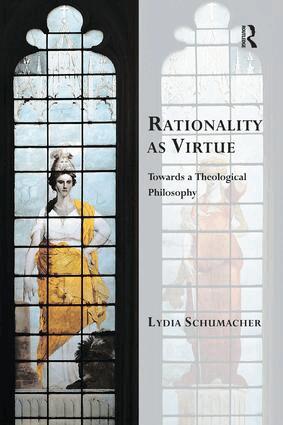
For much of the modern period, theologians and philosophers of religion have struggled with the problem of proving that it is rational to believe in God. Drawing on the thought of Thomas Aquinas, this book lays the foundation for an innovative effort to overturn the longstanding problem of proving faith's rationality, and to establish instead that rationality requires to be explained by appeals to faith. To this end, Schumacher advances the constructive argument that rationality is not only an epistemological question concerning the soundness of human thoughts, which she defines in terms of ’intellectual virtue’. Ultimately, it is an ethical question whether knowledge is used in ways that promote an individual's own flourishing and that of others. That is to say, rationality in its paradigmatic form is a matter of moral virtue, which should nonetheless entail intellectual virtue. This conclusion sets the stage for Schumacher's argument in a companion book, Theological Philosophy, which explains how Christian faith provides an exceptionally robust rationale for rationality, so construed, and is intrinsically rational in that sense.
712 kr
Skickas inom 10-15 vardagar
For much of the modern period, theologians and philosophers of religion have struggled with the problem of proving that it is rational to believe in God. Drawing on the thought of Thomas Aquinas, Theological Philosophy seeks to overturn the longstanding problem of proving faith's rationality and to establish instead that rationality requires to be explained by appeals to faith. Building on a constructive argument developed in a companion book, Rationality as Virtue, Lydia Schumacher advances the conclusion that belief in the God of Christian faith provides an exceptionally robust rationale for rationality and is as such intrinsically rational. At the same time, Schumacher overcomes a common tendency to separate spiritual from ordinary life, and construes the latter as the locus of proof for the rationality of Christian faith.
2 088 kr
Skickas inom 10-15 vardagar
For much of the modern period, theologians and philosophers of religion have struggled with the problem of proving that it is rational to believe in God. Drawing on the thought of Thomas Aquinas, Theological Philosophy seeks to overturn the longstanding problem of proving faith's rationality and to establish instead that rationality requires to be explained by appeals to faith. Building on a constructive argument developed in a companion book, Rationality as Virtue, Lydia Schumacher advances the conclusion that belief in the God of Christian faith provides an exceptionally robust rationale for rationality and is as such intrinsically rational. At the same time, Schumacher overcomes a common tendency to separate spiritual from ordinary life, and construes the latter as the locus of proof for the rationality of Christian faith.
2 088 kr
Skickas inom 10-15 vardagar
For much of the modern period, theologians and philosophers of religion have struggled with the problem of proving that it is rational to believe in God. Drawing on the thought of Thomas Aquinas, this book lays the foundation for an innovative effort to overturn the longstanding problem of proving faith's rationality, and to establish instead that rationality requires to be explained by appeals to faith. To this end, Schumacher advances the constructive argument that rationality is not only an epistemological question concerning the soundness of human thoughts, which she defines in terms of ’intellectual virtue’. Ultimately, it is an ethical question whether knowledge is used in ways that promote an individual's own flourishing and that of others. That is to say, rationality in its paradigmatic form is a matter of moral virtue, which should nonetheless entail intellectual virtue. This conclusion sets the stage for Schumacher's argument in a companion book, Theological Philosophy, which explains how Christian faith provides an exceptionally robust rationale for rationality, so construed, and is intrinsically rational in that sense.
1 424 kr
Skickas inom 5-8 vardagar
The thirteenth century was a dynamic period in intellectual history which witnessed the establishment of the first universities, most famously at Paris and Oxford. At these and other major European centres of learning, English-born Franciscans came to hold prominent roles both in the university faculties of the arts and theology and in the local studia across Europe that were primarily responsible for training Franciscans. This volume explores the contributions to scholarship of some of the leading English Franciscans or Franciscan associates from this period, including Roger Bacon, Adam Marsh, John Pecham, Thomas of Yorke, Roger Marston, Robert Grosseteste, Adam of Exeter, Richard Rufus of Cornwall, and Bartholomew of England. Through focussed studies of these figures’ signature ideas, contributions will provide a basis for drawing comparisons between the English Franciscan school and others that existed at the time, most famously at Paris.
1 712 kr
Skickas inom 5-8 vardagar
The legacy of late medieval Franciscan thought is uncontested: for generations, the influence of late-13th and 14th century Franciscans on the development of modern thought has been celebrated by some and loathed by others. However, the legacy of early Franciscan thought, as it developed in the first generation of Franciscan thinkers who worked at the recently-founded University of Paris in the first half of the 13th century, is a virtually foreign concept in the relevant scholarship. The reason for this is that early Franciscans are widely regarded as mere codifiers and perpetrators of the earlier medieval, largely Augustinian, tradition, from which later Franciscans supposedly departed. In this study, leading scholars of both periods in the Franciscan intellectual tradition join forces to highlight the continuity between early and late Franciscan thinkers which is often overlooked by those who emphasize their discrepancies in terms of methodology and sources. At the same time, the contributors seek to paint a more nuanced picture of the tradition’s legacy to Western thought, highlighting aspects of it that were passed down for generations to follow as well as the extremely different contexts and ends for which originally Franciscan ideas came to be employed in later medieval and modern thought.
1 814 kr
Skickas inom 5-8 vardagar
For generations, early Franciscan thought has been widely regarded as unoriginal: a mere attempt to systematize the longstanding intellectual tradition of Augustine in the face of the rising popularity of Aristotle. This volume brings together leading scholars in the field to undertake a major study of the sources and context of the so-called Summa Halensis (1236-45), which was collaboratively authored by the founding members of the Franciscan school at Paris, above all, Alexander of Hales, and John of La Rochelle, in an effort to lay down the Franciscan intellectual tradition or the first time. The contributions will highlight that this tradition, far from unoriginal, laid the groundwork for later Franciscan thought, which is often regarded as formative for modern thought. Furthermore, the volume shows the role this Summa played in the development of the burgeoning field of systematic theology, which has its origins in the young university of Paris. This is a crucial and groundbreaking study for those with interests in the history of western thought and theology specifically.
1 814 kr
Skickas inom 5-8 vardagar
For generations, early Franciscan thought has been widely regarded as unoriginal: a mere attempt to systematize the longstanding intellectual tradition of Augustine in the face of the rising popularity of Aristotle. This volume brings together leading scholars in the field to undertake a major study of the major doctrines and debates of the so-called Summa Halensis (1236-45), which was collaboratively authored by the founding members of the Franciscan school at Paris, above all, Alexander of Hales, and John of La Rochelle, in an effort to lay down the Franciscan intellectual tradition or the first time. The contributions will highlight that this tradition, far from unoriginal, laid the groundwork for later Franciscan thought, which is often regarded as formative for modern thought. Furthermore, the volume shows the role this Summa played in the development of the burgeoning field of systematic theology, which has its origins in the young university of Paris. This is a crucial and groundbreaking study for those with interests in the history of western thought and theology specifically.
377 kr
Skickas inom 3-6 vardagar
The Middle Ages witnessed a shift in thinking about the way God is related to time. For most of the earlier Middle Ages, scholars had followed an earlier patristic tradition of describing God as eternal and thus as timeless or outside of time. In the early thirteenth century, however, members of the Franciscan order, who played a significant role in the development of the recently-founded universities, re-defined God’s relationship to time in terms of his everlastingness. On their account, God is infinite in temporal duration, rather than simply ’timeless’, since he has no beginning and no end. So construed, God encompasses and is able to relate to every moment in time in a way that the Franciscans believed was not possible on the eternalist account. This book will discuss some of the factors that contributed to their shift in thinking about God as everlasting instead of eternal. Among these, the book will identity a transition in defining the basic nature of God as either simple (for proponents of eternity) or infinite (for proponents of everlastingness) as well as the Franciscan adoption of the metaphysics of the eleventh-century Islamic philosopher, Avicenna.