Lynda Zwinger - Böcker
Visar alla böcker från författaren Lynda Zwinger. Handla med fri frakt och snabb leverans.
4 produkter
4 produkter
208 kr
Skickas inom 10-15 vardagar
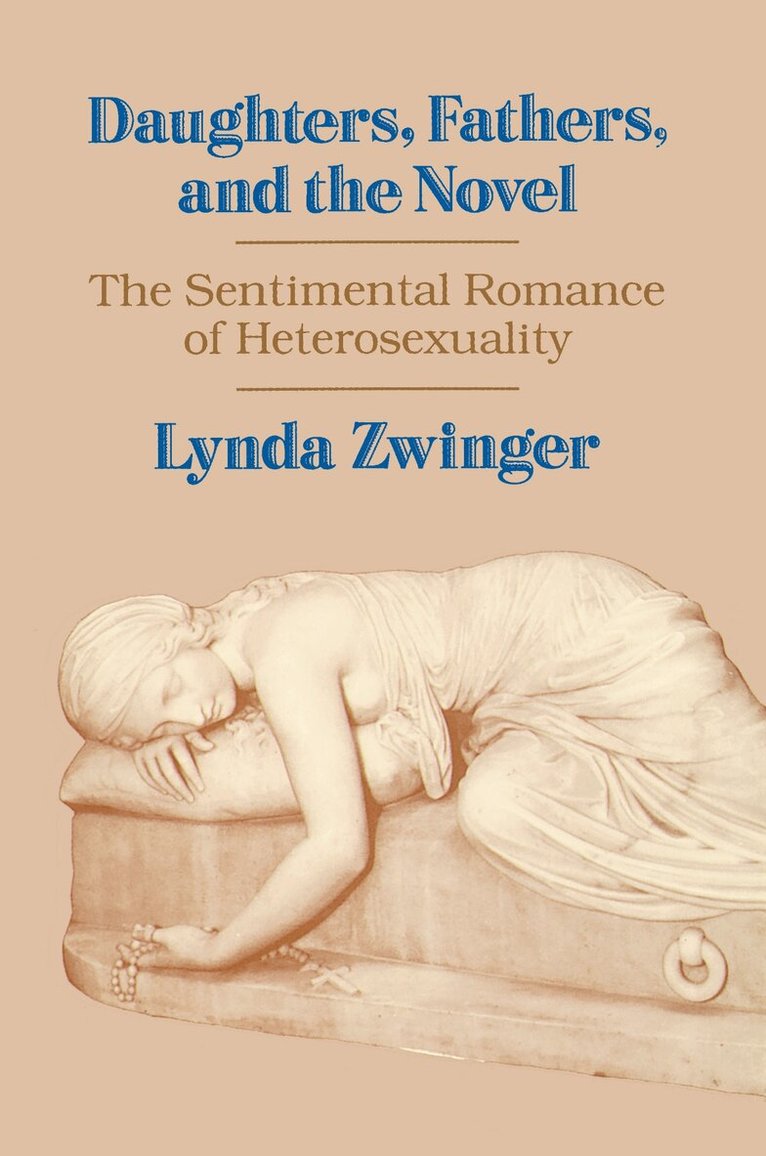
Daughters, Fathers, and the Novel is a provocative study of the father-daughter story - a relatively neglected dimension of the family romance. It has important implications for the history of the novel, for our understanding of key texts in that history, and for theories concerning the representation of gender, family relations, and heterosexuality in Western culture. In the English and American novel, argues Zwinger, the ""good woman"" is a father's daughter and constructed to the very particular specifications of an omnipresent and unvoiced paternal desire. Zwinger supports her case with an analysis of both ""high brow"" and ""low brow"" novels and with brilliant textual analyses of five novels in particular: ""Clarissa Harlowe"", ""Dombey and Son"", ""Little Women"", ""The Golden Bowl"" and ""The Story of O"". In the dominant discourse of Anglo-Saxon culture, the father's daughter figured sentimentally, simultaneously provides alibi and cornerstone to the patriarchal edifices of domesticity and desire. Zwinger's analysis of the sexual politics embodied in the figure of the sentimental daughter raises compelling critical and cultural issues. In her conclusion, Zwinger offers a broad overview of the 19th-century novel, asking what difference it makes when the writer is a daughter. She shows how the daughter's family romance pictures the father as inadequate, ironically requiring the sentimental daughter as patriarchal prop. She develops a useful concept of hysteria and argues that generic ""disorder"" and hysterical ""intrusions"" mark the family romantic novels of Jane Austen, Emily and Charlotte Bronte, and George Eliot. And finally, she makes the case that the daughter's choice to stay home is not necessarily an act of simple complicity: for, by staying home, she comes as close as she can to disrupting the father-daughter romance.
1 808 kr
Skickas inom 10-15 vardagar
Telling in Henry James argues that James's contribution to narrative and narrative theories is a lifelong exploration of how to "tell," but not, as Douglas has it in "The Turn of the Screw" in any "literal, vulgar way." James's fiction offers multiple, and often contradictory, reading (in)directions. Zwinger’s overarching contention is that the telling detail is that which cannot be accounted for with any single critical or theoretical lens—that reading James is in some real sense a reading of the disquietingly inassimilable "fictional machinery." The analyses offered by each of the six chapters are grounded in close reading and focused on oddments—textual equivalents to the “particles” James describes as caught in a silken spider web, in a famous analogy used in “The Art of Fiction” to describe the kind of “consciousness” James wants his fiction to present to the reader.Telling in Henry James attends to the sheer fun of James’s wit and verbal dexterity, to the cognitive tune-up offered by the complexities and nuances of his precise and rhythmic syntax, and to the complex and contradictory contrapuntal impact of the language on the page, tongue, and ear.
607 kr
Skickas inom 10-15 vardagar
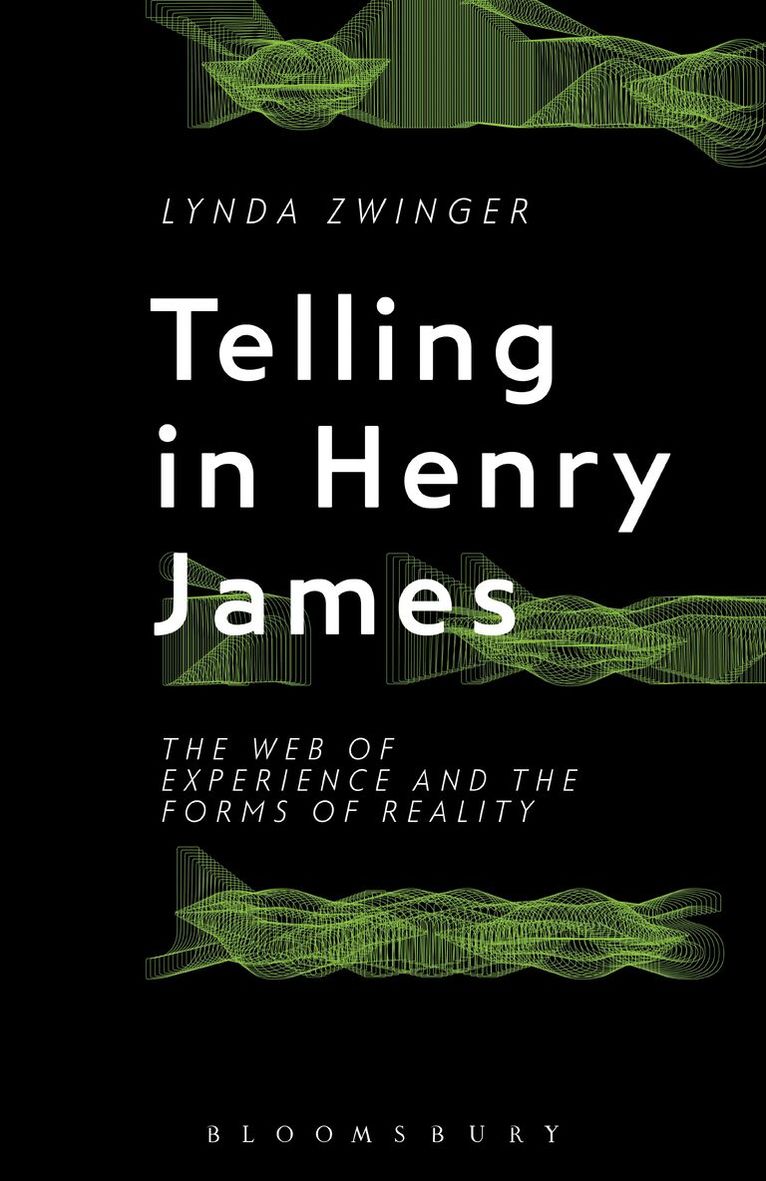
Telling in Henry James argues that James's contribution to narrative and narrative theories is a lifelong exploration of how to "tell," but not, as Douglas has it in "The Turn of the Screw" in any "literal, vulgar way." James's fiction offers multiple, and often contradictory, reading (in)directions. Zwinger’s overarching contention is that the telling detail is that which cannot be accounted for with any single critical or theoretical lens—that reading James is in some real sense a reading of the disquietingly inassimilable "fictional machinery." The analyses offered by each of the six chapters are grounded in close reading and focused on oddments—textual equivalents to the “particles” James describes as caught in a silken spider web, in a famous analogy used in “The Art of Fiction” to describe the kind of “consciousness” James wants his fiction to present to the reader.Telling in Henry James attends to the sheer fun of James’s wit and verbal dexterity, to the cognitive tune-up offered by the complexities and nuances of his precise and rhythmic syntax, and to the complex and contradictory contrapuntal impact of the language on the page, tongue, and ear.
479 kr
Skickas inom 7-10 vardagar
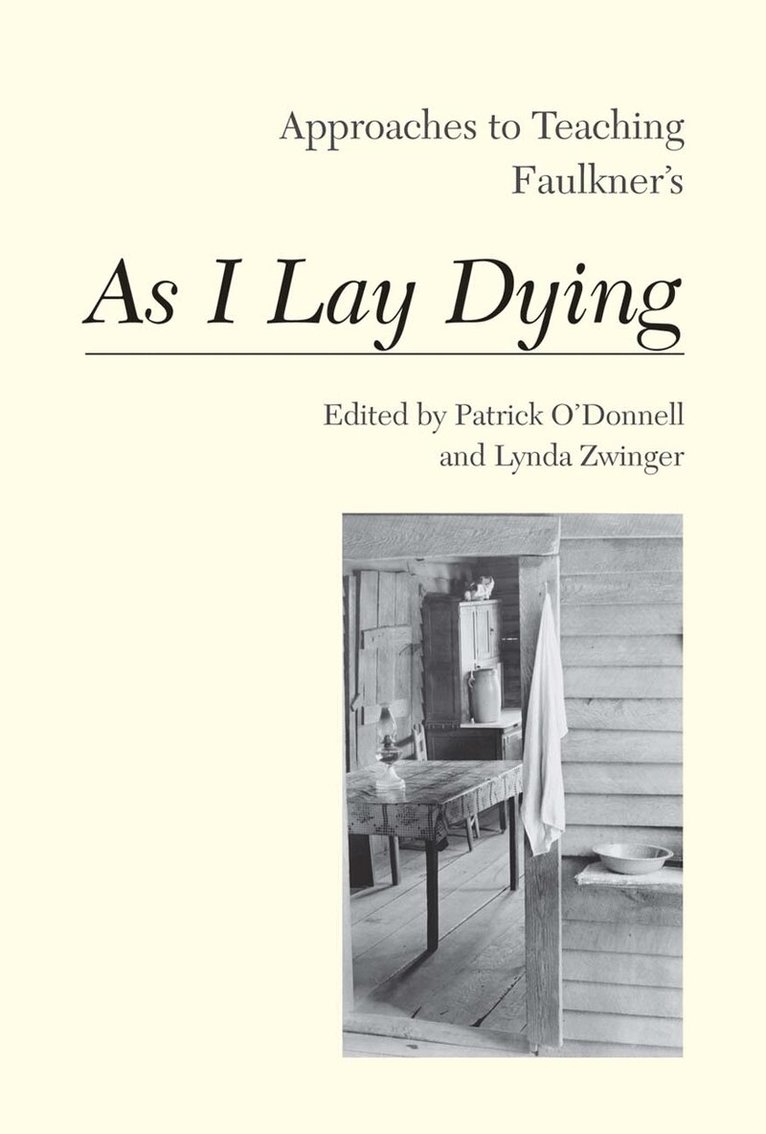
As I Lay Dying is considered by many both the most enigmatic and the most accessible of Faulkner’s major works. It is also the most dramatic; the journey of the Bundrens, a family of poor farmers in the South in the early twentieth century, unfolds like a one-act play, full of natural disaster and human madness. Taught in high school, college, and graduate courses, the novel lends itself to a wide range of interpretations, posing both challenges and opportunities for the instructor.Part 1 of this Approaches volume, “Materials,” offers an extensive guide to reference materials helpful for both reading and teaching As I Lay Dying. In Part 2, “Approaches,” fourteen essays examine the historical, geographic, and cultural aspects of the novel; consider it as a modernist narrative; address such issues as gender, materiality, language, and family dynamics; and discuss the novel in comparative and intertextual terms. Teachers will find suggestions for course design, in-class exercises, and assignments to help students explore a variety of themes, including death and mourning, the role of the mother, work, and the relation between nature and culture.