Lynne Dyer - Böcker
Visar alla böcker från författaren Lynne Dyer. Handla med fri frakt och snabb leverans.
4 produkter
4 produkter
178 kr
Skickas inom 11-20 vardagar
So, what is the significance of the seventeenth-century Sir Thomas Abney to Loughborough, and what is the connection between the young Princess Alexandrina, later to become Queen Victoria, and Loughborough? What is the history of the Bat House, and what is the mysterious Building N on the university campus? Which industry has its last remaining factory in Loughborough? What is the meaning of local words like ‘jitty’ and ‘Ingle Pingle’, and why is Bottleacre Lane so named?Being on the edge of the Charnwood Forest, Loughborough has woods and spinneys in abundance, but there is still plenty of space for allotments and meadows. Watercourses criss-cross the town like arteries, running from the heart of the Charnwood Forest, into the River Soar or the Grand Union Canal, and artificial bodies of water have been created on former industrial sites.In this alphabetical tour around the university market town of Loughborough, the second largest town in Leicestershire after the county town of Leicester, the author invites you to learn about the town’s history through its buildings, structures, streets and thoroughfares; through its firms and local people; and through its features like waterways, woods andfields.With tales of fairs, follies and families, this book dips into some of the most interesting and intriguing parts of Loughborough’s history. But do you agree with Daniel Defoe that Loughborough is a ‘market town ... but of no great note?’ The author sets out to gently persuade you that there is much more to Loughborough than at first might meet the eye.
173 kr
Skickas
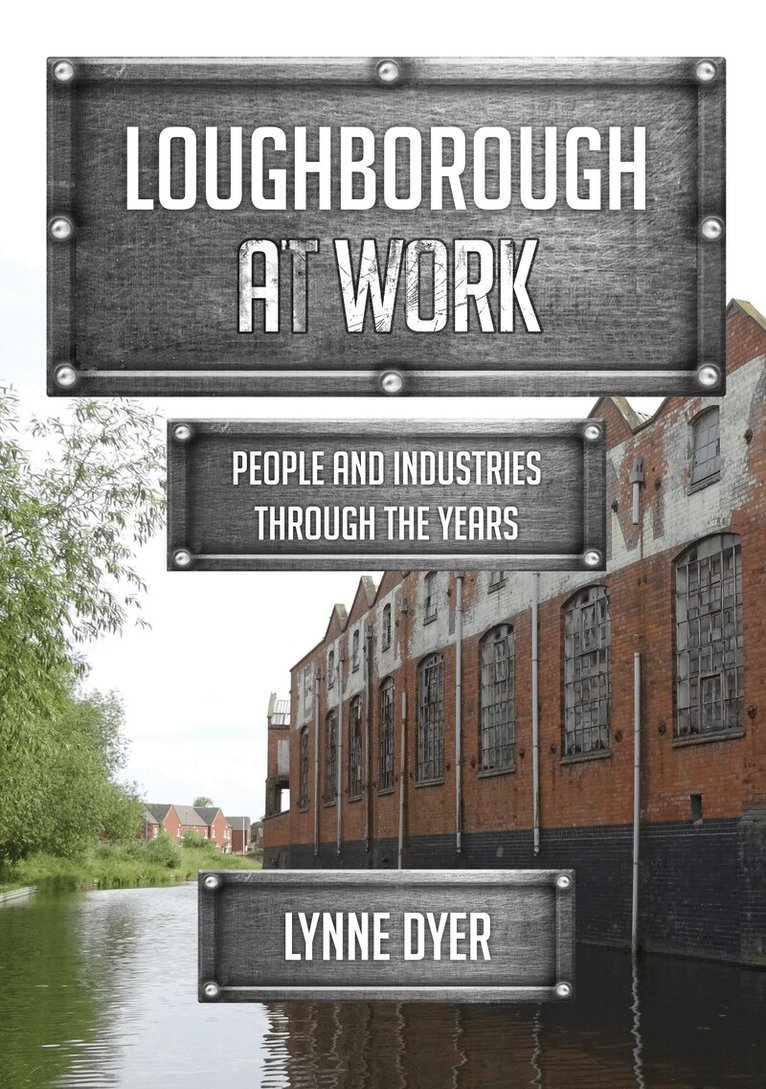
The market and university town of Loughborough has a long, varied and often unexpected history. In the medieval period many people worked the land or provided services necessary for everyday life, such as blacksmithing, millwrighting and stonemasonry. The town’s prosperity was due to its sustained involvement in the woollen industry, while later locals were hugely influential in the Agricultural Revolution. However, the Industrial Revolution changed the landscape, providing new and different employment through the canals and railways as well as large hosiery factories. New industries came to Loughborough, such as bell founding, locomotive manufacturing and electrical generators, and the town’s female munitions workers played an important role during the First World War. In recent decades the town has moved away from manufacturing to retail and education, though the Covid-19 pandemic has made it difficult to predict how work will look here in the future.Loughborough at Work explores the working life of this town in Leicestershire and its people and the trades, businesses and industries that have characterised it through the ages. The book will appeal to all those with an interest in the history of Leicestershire.
146 kr
Skickas
Today, Loughborough is known for its university’s sporting reputation and its industries, but the second-largest town in Leicestershire has a long and varied history. It is believed there is an Iron Age fort on the university campus, and Loughborough is mentioned in the Domesday Book. Loughborough's history is evident in the buildings that stand today in the town. In this book local historian Lynne Dyer investigates these buildings to share the story of Loughborough. The buildings range from the oldest known in the town to some of the newest, and include those occupied by influential figures in Loughborough’s history, showing not only who they were built by and the circumstances leading to their construction but also their significance in the social history of Loughborough. Medieval buildings can be found here such as the parish church, Old Rectory and Guildhall, ancient pubs and a manor house, as well as a wealth of buildings from its industrial past including John Taylor's bell foundry, the Great Central Railway and factories such as the Morris Works. The more recent history of Loughborough includes university buildings and a twenty-first-century mural to replace a partially demolished 1960s car park.Loughborough in 50 Buildings explores the history of this fascinating Leicestershire town through a selection of its most interesting buildings and structures, showing the changes that have taken place here over the years. This book will appeal to all those who live in Loughborough or who have an interest in the town.
178 kr
Skickas inom 11-20 vardagar
The Leicestershire town of Loughborough is a historic market and university town that holds regular markets and an annual street fair, but is also famed for its industrial heritage. It is the home of the world’s largest bell foundry, dating from medieval times but known more recently as John Taylor’s Bellfounders, where the bells for St Paul’s Cathedral, York Minster and many others were cast. Many famous athletes have studied at Loughborough University, including Sebastian Coe and Paula Radcliffe.In this book local author Lynne Dyer reveals the hidden history of Loughborough, from its medieval and industrial past to the present day. Secret Loughborough explores the lesser-known episodes and characters in the history of the town through the centuries. With tales of remarkable people, unusual events and buildings lost or hidden, and fully illustrated throughout, it will appeal to all those with an interest in this Leicestershire town.