M. A. Claussen - Böcker
Visar alla böcker från författaren M. A. Claussen. Handla med fri frakt och snabb leverans.
2 produkter
2 produkter
Del 61 - Cambridge Studies in Medieval Life and Thought: Fourth Series
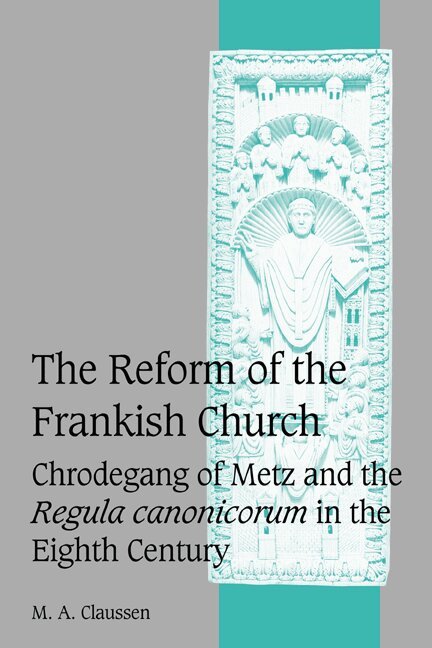
The Reform of the Frankish Church
Chrodegang of Metz and the Regula canonicorum in the Eighth Century
Häftad, Engelska, 2008
507 kr
Skickas inom 7-10 vardagar
Chrodegang of Metz (c. 712-766) was a leading figure of the late Merovingian and early Carolingian Church. Born to one of the principal aristocratic families in Austrasia, he served as referendary of Charles Martel, and was appointed bishop of Metz in the 740s. As bishop, Chrodegang became one of the foremost churchmen in Francia, chairing councils, founding monasteries, and beginning a reform of the lives of the canons of the Metz cathedral. This book is a major study in the English language on Chrodegang, examining his preoccupation with the creation of communities of faith and concord modelled on the early Church. It explores his attempts to unite the Frankish episcopacy, his rule for the cathedral clergy in Metz - the Regula canonicorum - and his introduction of new liturgical practices that sought to transform his see into a hagiopolis, a holy city which provided a model for later Carolingian reform.
Del 61 - Cambridge Studies in Medieval Life and Thought: Fourth Series
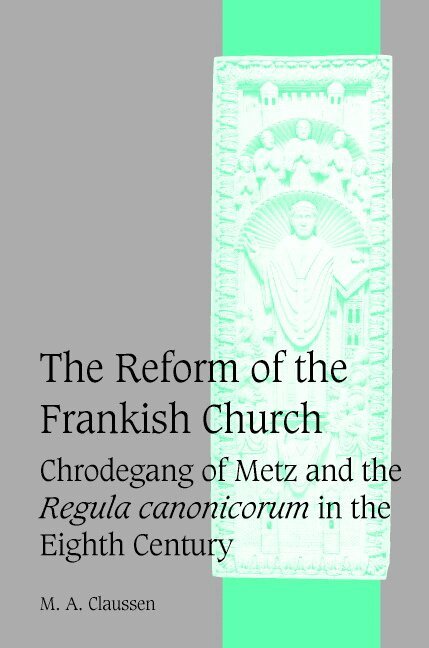
The Reform of the Frankish Church
Chrodegang of Metz and the Regula canonicorum in the Eighth Century
Inbunden, Engelska, 2005
1 442 kr
Skickas inom 7-10 vardagar
Chrodegang of Metz (c. 712-766) was a leading figure of the late Merovingian and early Carolingian Church. Born to one of the principal aristocratic families in Austrasia, he served as referendary of Charles Martel, and was appointed bishop of Metz in the 740s. As bishop, Chrodegang became one of the foremost churchmen in Francia, chairing councils, founding monasteries, and beginning a reform of the lives of the canons of the Metz cathedral. This book is a major study in the English language on Chrodegang, examining his preoccupation with the creation of communities of faith and concord modelled on the early Church. It explores his attempts to unite the Frankish episcopacy, his rule for the cathedral clergy in Metz - the Regula canonicorum - and his introduction of new liturgical practices that sought to transform his see into a hagiopolis, a holy city which provided a model for later Carolingian reform.