M. Todd Bennett - Böcker
Visar alla böcker från författaren M. Todd Bennett. Handla med fri frakt och snabb leverans.
4 produkter
4 produkter
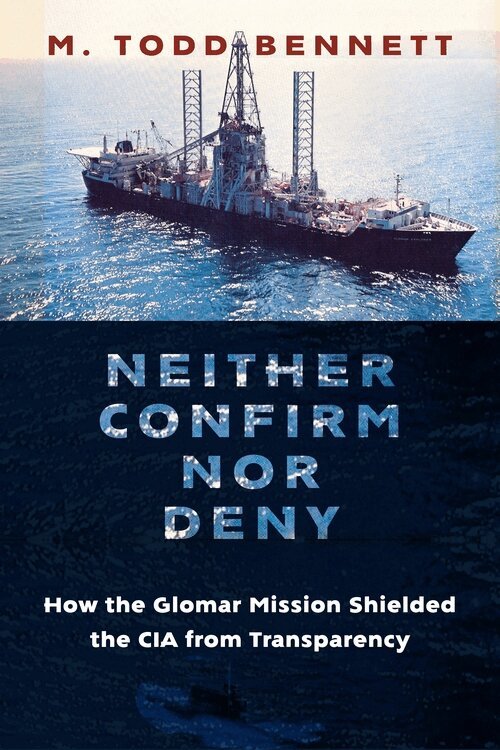
Neither Confirm nor Deny
How the Glomar Mission Shielded the CIA from Transparency
Inbunden, Engelska, 2023
1 147 kr
Skickas inom 7-10 vardagar
Winner, 2024 Book Award, Society for History in the Federal GovernmentIn 1974, the Hughes Glomar Explorer, ostensibly an advanced deep-sea mining vessel owned by reclusive billionaire Howard Hughes, lowered a claw-like contraption to the floor of the Pacific Ocean. This high-tech venture was only a cover story for an even more improbable scheme: a CIA mission to retrieve a sunken Soviet submarine. Like a Jules Verne novel with an Ian Fleming twist, the saga of the Glomar Explorer features underwater espionage, impossible gadgetry, and high-stakes international drama. It also marks a key moment in the history of transparency—and not just for what became known as the Glomar response: “We can neither confirm nor deny. . . . ”M. Todd Bennett plumbs the depths of government secrecy in this new account of the Glomar mission and its consequences. Trawling through recently declassified documents, he explores the logistics, media fallout, and geopolitical significance of one of the most ambitious operations in intelligence history. Glomar, Bennett argues, played a pivotal but underappreciated role in helping the CIA ward off oversight amid a push for transparency and accountability. He reframes the operation’s history to offer an alternative perspective on the 1970s, a decade known for expansive openness, as well as the persistent tension between the demands of democracy and the need for secrecy in foreign policy. Combining keen historical analysis and gripping storytelling, Neither Confirm nor Deny brings to the surface fresh insights into the history of the security state, the politics of intelligence, and the CIA’s relationship with the media and the public.
Neither Confirm nor Deny
How the Glomar Mission Shielded the CIA from Transparency
Häftad, Engelska, 2023
292 kr
Skickas inom 7-10 vardagar
Winner, 2024 Book Award, Society for History in the Federal GovernmentIn 1974, the Hughes Glomar Explorer, ostensibly an advanced deep-sea mining vessel owned by reclusive billionaire Howard Hughes, lowered a claw-like contraption to the floor of the Pacific Ocean. This high-tech venture was only a cover story for an even more improbable scheme: a CIA mission to retrieve a sunken Soviet submarine. Like a Jules Verne novel with an Ian Fleming twist, the saga of the Glomar Explorer features underwater espionage, impossible gadgetry, and high-stakes international drama. It also marks a key moment in the history of transparency—and not just for what became known as the Glomar response: “We can neither confirm nor deny. . . . ”M. Todd Bennett plumbs the depths of government secrecy in this new account of the Glomar mission and its consequences. Trawling through recently declassified documents, he explores the logistics, media fallout, and geopolitical significance of one of the most ambitious operations in intelligence history. Glomar, Bennett argues, played a pivotal but underappreciated role in helping the CIA ward off oversight amid a push for transparency and accountability. He reframes the operation’s history to offer an alternative perspective on the 1970s, a decade known for expansive openness, as well as the persistent tension between the demands of democracy and the need for secrecy in foreign policy. Combining keen historical analysis and gripping storytelling, Neither Confirm nor Deny brings to the surface fresh insights into the history of the security state, the politics of intelligence, and the CIA’s relationship with the media and the public.
433 kr
Skickas inom 10-15 vardagar
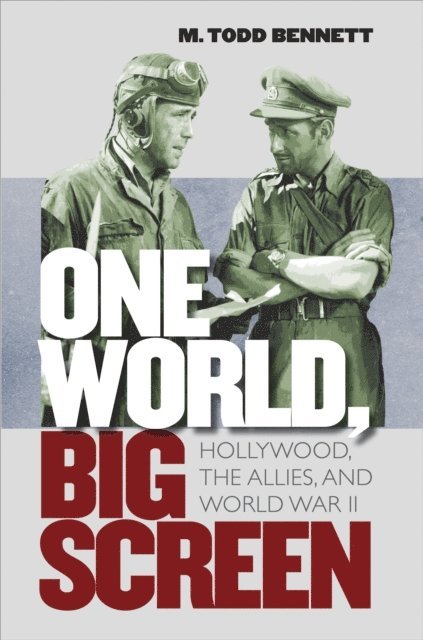
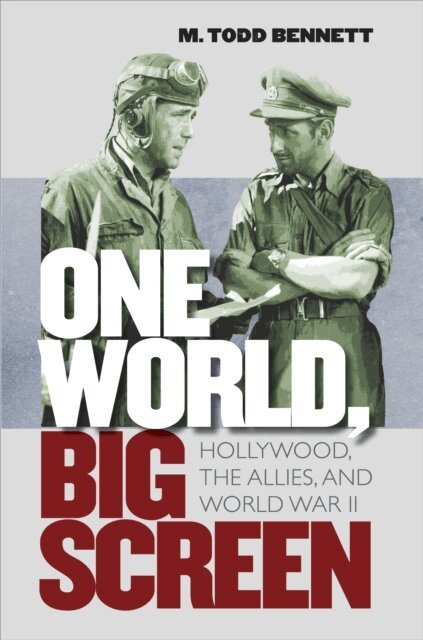
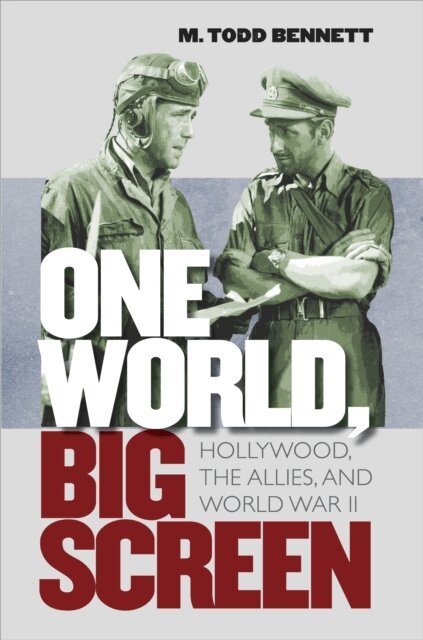
World War II coincided with cinema's golden age. Movies now considered classics were created at a time when all sides in the war were coming to realize the great power of popular films to motivate the masses. Through multinational research, One World, Big Screen reveals how the Grand Alliance-Britain, China, the Soviet Union, and the United States-tapped Hollywood's impressive power to shrink the distance and bridge the differences that separated them. The Allies, M. Todd Bennett shows, strategically manipulated cinema in an effort to promote the idea that the United Nations was a family of nations joined by blood and affection.Bennett revisits Casablanca, Mrs. Miniver, Flying Tigers, and other familiar movies that, he argues, helped win the war and the peace by improving Allied solidarity and transforming the American worldview. Closely analyzing film, diplomatic correspondence, propagandists' logs, and movie studio records found in the United States, the United Kingdom, and the former Soviet Union, Bennett rethinks traditional scholarship on World War II diplomacy by examining the ways that Hollywood and the Allies worked together to prepare for and enact the war effort.
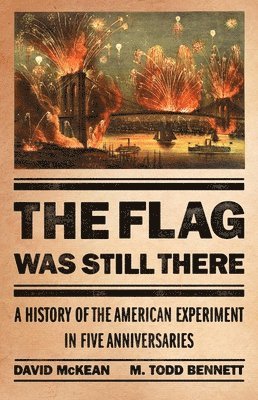
The Flag Was Still There
A History of the American Experiment in Five Anniversaries
Inbunden, Engelska, 2026
314 kr
Kommande
A clear-eyed yet hopeful history of the United States, revisiting the state of the union every fifty years since America's birthAmerica is the rare country that was founded on an idea, and it was a truly radical idea for its time: the belief that the people of a country could govern themselves.The Flag Was Still There offers a unique new narrative of the American Experiment. By focusing on five remarkable years-1776, 1826, 1876, 1926, and 1976-and with an eye to America's 250th birthday, David McKean and M. Todd Bennett explore how the United States has sustained its founding idea. Each of these moments found the United States at an inflection point between progress and backlash. The centennial saw a country still struggling to confront the Civil War's legacy, culminating in the betrayal of Reconstruction and the birth of the Jim Crow era. In 1926, virulent nativism was at a peak, and a reascendant Ku Klux Klan marched on Washington. The bicentennial was marked by economic turmoil, post-Watergate political malaise, and the still-fresh wounds of the Vietnam War. America has yet to fully realize its founding principles. But as The Flag Was Still There reminds us, Americans have always striven to defend, renew, and extend the nation's promise-an idealism that continues to this day.