M.A. Meyers – författare
Visar alla böcker från författaren M.A. Meyers. Handla med fri frakt och snabb leverans.
6 produkter
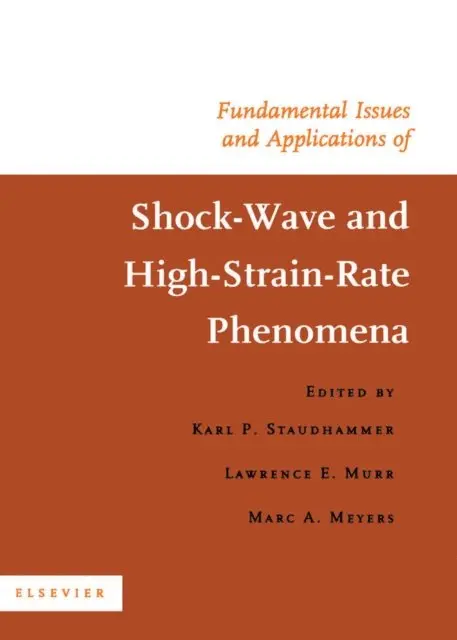
Fundamental Issues and Applications of Shock-Wave and High-Strain-Rate Phenomena
Av K.P. Staudhammer, L.E. Murr m. fl.
Inbunden, 2001
4049 kr
Lägg i varukorg
This book contains the proceedings of EXPLOMETT 2000, International Conference on Fundamental Issues and Applications of Shock-Wave and High-Strain-Rate Phenomena, held in Albuquerque, New Mexico, 2000; the fifth in the EXPLOMETT quinquennial series which began in Albuquerque in 1980. The book is …
Fundamental Issues and Applications of Shock-Wave and High-Strain-Rate Phenomena
Av M.A. Meyers, L.E. Murr m. fl.
E-bok, 2001
4103 kr
Lägg i varukorg
This book contains the proceedings of EXPLOMET™ 2000, International Conference on Fundamental Issues and Applications of Shock-Wave and High-Strain-Rate Phenomena, held in Albuquerque, New Mexico, 2000; the fifth in the EXPLOMET™ quinquennial series which began in Albuquerque in 1980.The book is …
Iatrogenic Gastrointestinal Complications
Av G.G. Ghahremani, M.A. Meyers
E-bok, 2012
755 kr
Lägg i varukorg
The purpose of this series of volumes is to present a comprehensive view of the complications that result from the use of acceptable diagnostic and therapeutic procedures. Individual volumes will deal with iatrogenic complications involving (1) the alimentary system, (2) the urinary system, (3) the …
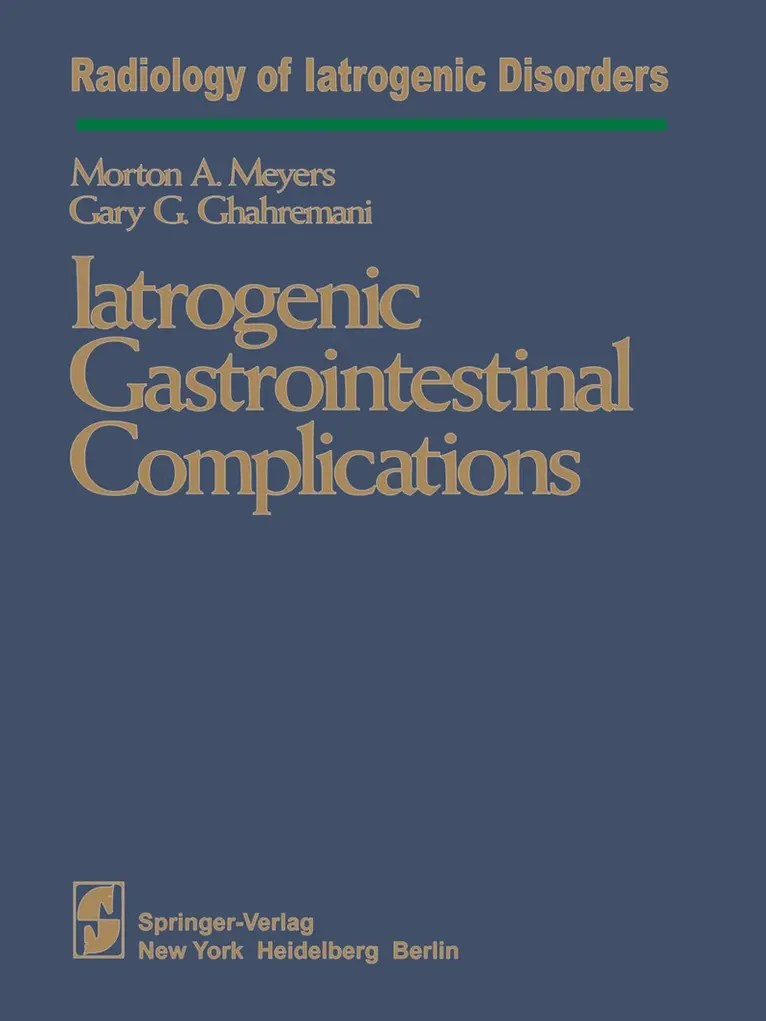
Iatrogenic Gastrointestinal Complications
Av M.A. Meyers, G.G. Ghahremani
Häftad, 2011
568 kr
Lägg i varukorg
The purpose of this series of volumes is to present a comprehensive view of the complications that result from the use of acceptable diagnostic and therapeutic procedures. Individual volumes will deal with iatrogenic complications involving (1) the alimentary system, (2) the urinary system, (3) the …
Dynamic Radiology of the Abdomen
Normal and Pathologic Anatomy
Av M.A. Meyers
E-bok, 2013
1209 kr
Lägg i varukorg
Dynamic Radiology of the Abdomen
Normal and Pathologic Anatomy
Av M.A. Meyers
E-bok, 2013
1209 kr
Lägg i varukorg