Madeleine Yue Dong - Böcker
Visar alla böcker från författaren Madeleine Yue Dong. Handla med fri frakt och snabb leverans.
4 produkter
4 produkter
441 kr
Kommande
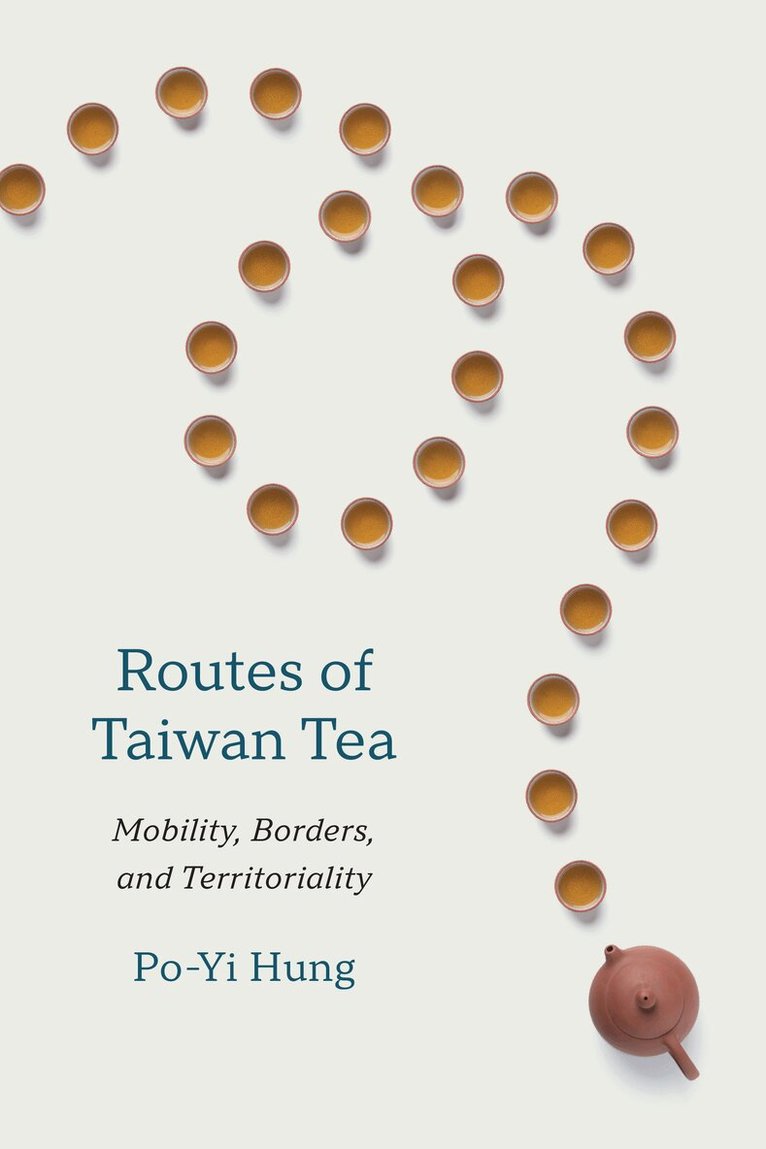
Demonstrates how a popular commodity has reshaped borders, traditions, and geopolitics From misty mountain oolongs to the global boba boom, Taiwan’s teas carry far more than flavor. They embody contested borders, evolving identities, and the complexities of nationhood. Routes of Taiwan Tea traces tea varieties, processing expertise, and merchants across Taiwan and Southeast Asia to reveal how a simple leaf has become a force in global politics. Drawing on decades of fieldwork and extensive archival research, Po-Yi Hung delves deep into the history Taiwan’s tea industry, from its roots in the Qing empire to its role in modern food nationalism. Hung shows how advocacy for Taiwanization—the movement to recover and celebrate the island’s unique history and culture—occurs not only within Taiwan’s food scenes but also through cross-border exchanges. Oolong cultivation in Thailand’s highlands and bubble tea’s rise in Vietnam demonstrate how tea acts as a nonhuman agent, fostering connections and unsettling conventional notions of sovereignty. Through these routes, tea becomes more than agriculture; it becomes an instrument of diplomacy, a marker of authenticity, and a symbol of cultural pride. Offering a fresh perspective on Taiwan’s geopolitical positioning, Routes of Taiwan Tea redefines how borders are imagined and lived. It is an essential contribution to food studies, political geography, and East and Southeast Asian studies, illuminating how everyday practices like drinking tea shape global relations.
501 kr
Skickas inom 7-10 vardagar
Is modernity in non-Western societies always an “alternative” modernity, a derivative copy of an “original modernity” that began in the West? No, answer the contributors to this book, who then offer an absorbing set of case studies from modern China to make their point. By focusing on people’s ordinary routines of working, eating, going to school, and traveling, the authors examine the notion of modernity as it has been staged in the minute details of Chinese life.Essays explore people’s basic search for food, water, and lighting during the late-Qing -- early republican era; contradictory attitudes toward women and the violence of foot-binding; the role of Chinese scientists in promoting a shift to modern, nationalistic discourses; the growing popularity of savings banks among urban Chinese in the early twentieth century; the transnational and national identities of returned overseas Chinese in Xiamen, Fujian Province; and middle-class “Shanghai travelers” who imagined themselves as cosmopolitan consumers.Looking at the post-Mao reform era of the late twentieth century, contributors explore the theme of “revaluation” – that is, the way China’s move into global capitalism is commoditizing goods and services that previously were not for sale, from domestic labor to recycling and water resources, in an increasingly consumer-oriented society.
Del 8 - Asia: Local Studies / Global Themes
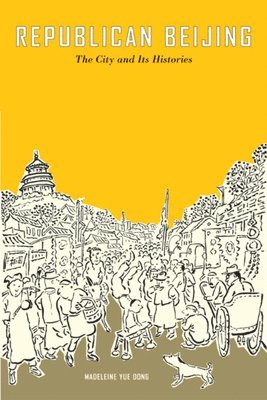
Republican Beijing
The City and Its Histories
Inbunden, Engelska, 2003
695 kr
Skickas inom 7-10 vardagar
Old Beijing has become a subject of growing fascination in contemporary China since the 1980s. While physical remnants from the past are being bulldozed every day to make space for glass-walled skyscrapers and towering apartment buildings, nostalgia for the old city is booming. Madeleine Yue Dong offers the first comprehensive history of Republican Beijing, examining how the capital acquired its identity as a consummately "traditional" Chinese city. For residents of Beijing, the heart of the city lay in the labor-intensive activities of "recycling," a primary mode of material and cultural production and circulation that came to characterize Republican Beijing. An omnipresent process of recycling and re-use unified Beijing's fragmented and stratified markets into one circulation system. These material practices evoked an air of nostalgia that permeated daily life. Paradoxically, the "old Beijing" toward which this nostalgia was directed was not the imperial capital of the past, but the living Republican city. Such nostalgia toward the present, the author argues, was not an empty sentiment, but an essential characteristic of Chinese modernity.
516 kr
Skickas inom 3-6 vardagar
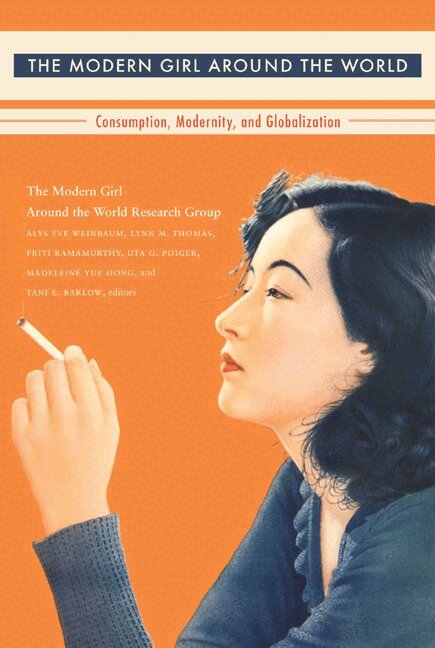
During the 1920s and 1930s, in cities from Beijing to Bombay, Tokyo to Berlin, Johannesburg to New York, the Modern Girl made her sometimes flashy, always fashionable appearance in city streets and cafes, in films, advertisements, and illustrated magazines. Modern Girls wore sexy clothes and high heels; they applied lipstick and other cosmetics. Dressed in provocative attire and in hot pursuit of romantic love, Modern Girls appeared on the surface to disregard the prescribed roles of dutiful daughter, wife, and mother. Contemporaries debated whether the Modern Girl was looking for sexual, economic, or political emancipation, or whether she was little more than an image, a hollow product of the emerging global commodity culture. The contributors to this collection track the Modern Girl as she emerged as a global phenomenon in the interwar period. Scholars of history, women’s studies, literature, and cultural studies follow the Modern Girl around the world, analyzing her manifestations in Germany, Australia, China, Japan, France, India, the United States, Russia, South Africa, and Zimbabwe. Along the way, they demonstrate how the economic structures and cultural flows that shaped a particular form of modern femininity crossed national and imperial boundaries. In so doing, they highlight the gendered dynamics of interwar processes of racial formation, showing how images and ideas of the Modern Girl were used to shore up or critique nationalist and imperial agendas. A mix of collaborative and individually authored chapters, the volume concludes with commentaries by Kathy Peiss, Miriam Silverberg, and Timothy Burke.Contributors: Davarian L. Baldwin, Tani E. Barlow, Timothy Burke, Liz Conor, Madeleine Yue Dong, Anne E. Gorsuch, Ruri Ito, Kathy Peiss, Uta G. Poiger, Priti Ramamurthy, Mary Louise Roberts, Barbara Sato, Miriam Silverberg, Lynn M. Thomas, Alys Eve Weinbaum