Magali Sarfatti Larson - Böcker
Visar alla böcker från författaren Magali Sarfatti Larson. Handla med fri frakt och snabb leverans.
7 produkter
7 produkter
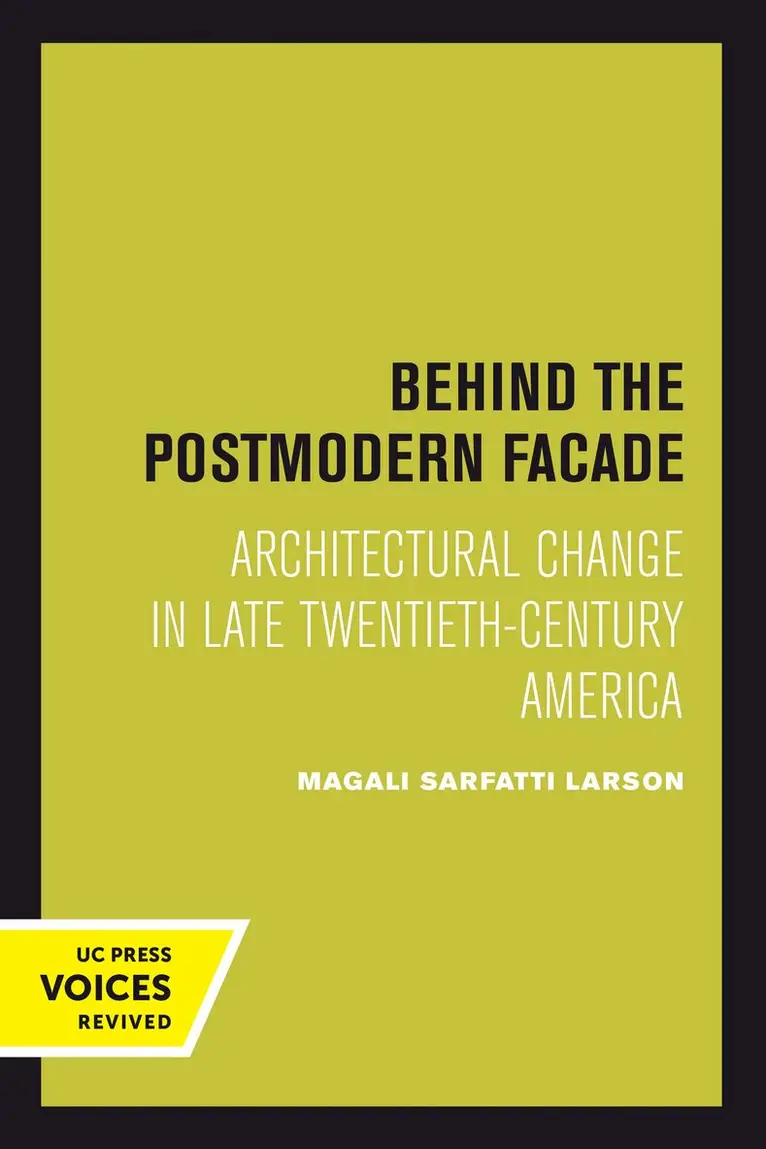
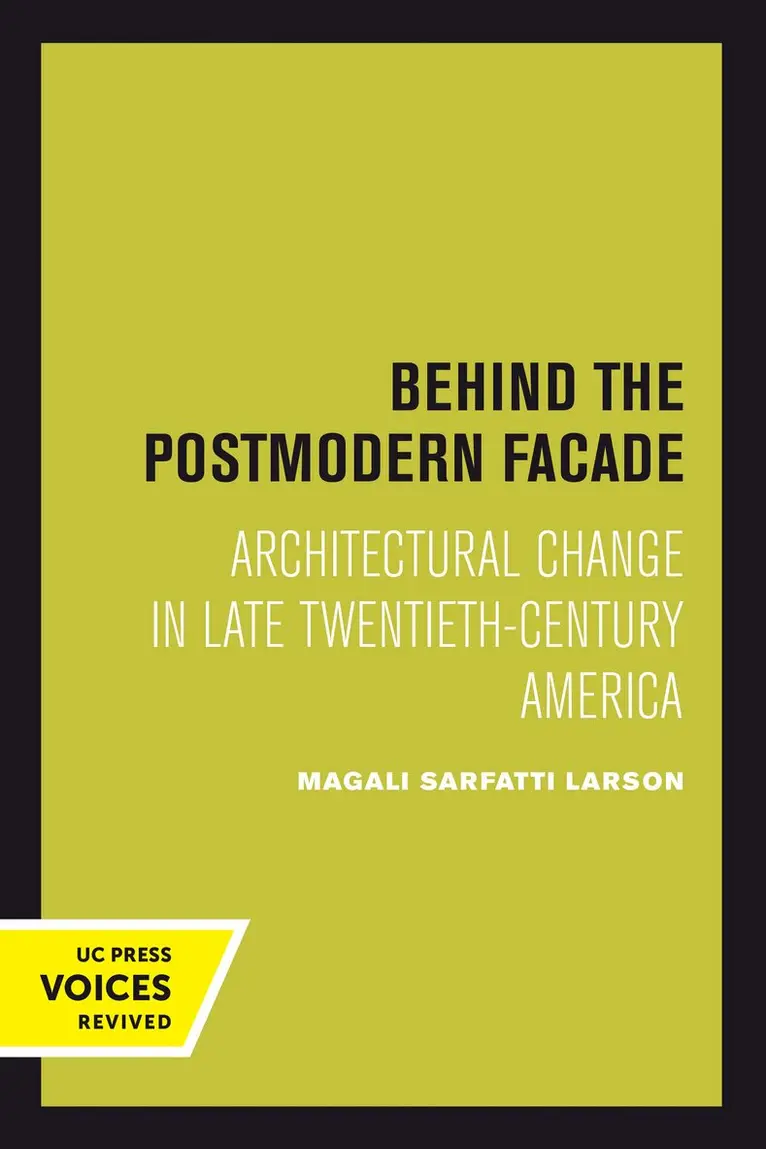
Behind the Postmodern Facade
Architectural Change in Late Twentieth-Century America
Häftad, Engelska, 2018
684 kr
Skickas inom 3-6 vardagar
Magali Larson's comprehensive study explores how architecture "happens" and what has become of the profession in the postmodern era. Drawing from extensive interviews with pivotal architects—from Philip Johnson, who was among the first to introduce European modernism to America, to Peter Eisenman, identified with a new "deconstructionist" style—she analyzes the complex tensions that exist between economic interest, professional status, and architectural product. She investigates the symbolic awards and recognition accorded by prestigious journals and panels, exposing the inner workings of a profession in a precarious social position. Larson captures the struggles around status, place, and power as architects seek to redefine their very purpose in contemporary America. The author's novel approach in synthesizing sociological research and theory proposes nothing less than a new cultural history of architecture. This is a ground-breaking contribution to the study of culture and the sociology of knowledge, as well as to architectural and urban history. This title is part of UC Press's Voices Revived program, which commemorates University of California Press’s mission to seek out and cultivate the brightest minds and give them voice, reach, and impact. Drawing on a backlist dating to 1893, Voices Revived makes high-quality, peer-reviewed scholarship accessible once again using print-on-demand technology. This title was originally published in 1993 with a paperback edition in 1995.
811 kr
Skickas inom 3-6 vardagar
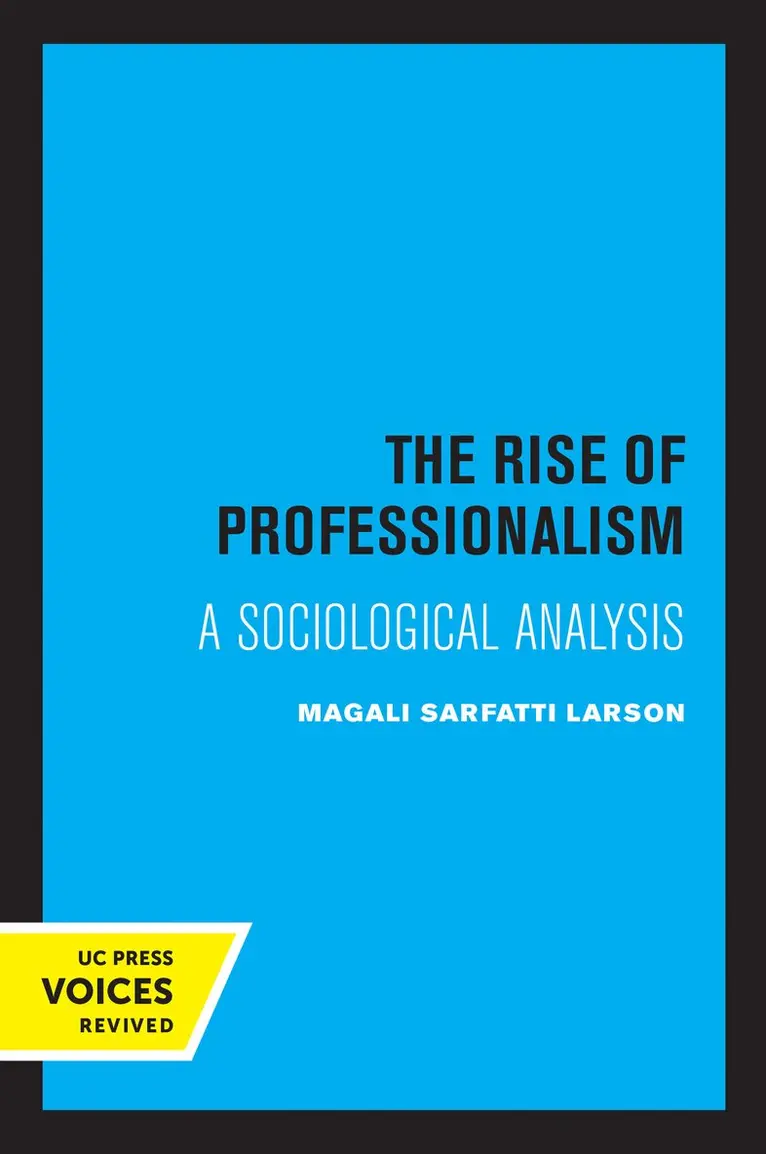
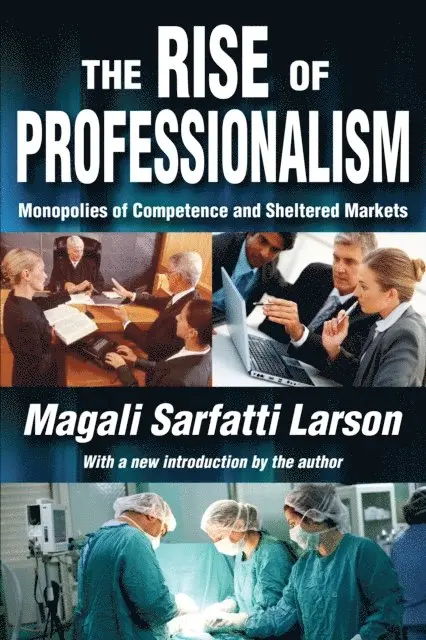
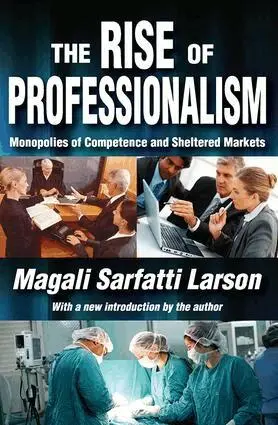
The Rise of Professionalism offers a penetrating reconstruction of how “the professions” emerged as distinctive power formations in modern capitalist societies. Magali Sarfatti Larson dismantles functionalist and ideal‐typical accounts that naturalize professional prestige by invoking disinterested service and esoteric knowledge. Drawing on Freidson’s practice-centered sociology and Gramsci’s theory of intellectuals, Larson reframes professionalization as a historical project: the collective construction of market shelter and social closure that translates scarce expertise into monopoly rents, jurisdictional control, and middle-class status. Through a comparative analysis centered on England and the United States—the “purer” laboratories of laissez-faire—she traces how associations, credentialing systems, and claims to autonomy were negotiated with state and elite patrons, how educational institutions became engines of stratification, and why self-regulation insulates professions while binding them to political authority. By distinguishing market control from collective mobility—and showing how they converge in the organization of knowledge and the regulation of entry—Larson provides a general model that travels across law and medicine to aspiring occupations while excluding nonmarket corps (military, clergy).Equally important is the book’s long view of structural change. Larson shows how the liberal-capitalist figure of the free practitioner gives way to the salaried specialist in corporate and bureaucratic settings, even as the professional ideal persists—and hardens—into an ideology that legitimates inequality and occupational closure. Case materials, historical synthesis, and theoretical argument cohere into a powerful explanation of why professionals resist union identities, how client status reciprocally stratifies practitioners, and what happens to professional authority under “revolutionary” social change. Essential for scholars of stratification, labor and occupations, sociology of knowledge, STS, policy and higher education, and historians of medicine, law, and engineering, The Rise of Professionalism remains the canonical sociological analysis of how expertise becomes property—and why that settlement continues to organize the contemporary social order.This title is part of UC Press's Voices Revived program, which commemorates University of California Press’s mission to seek out and cultivate the brightest minds and give them voice, reach, and impact. Drawing on a backlist dating to 1893, Voices Revived makes high-quality, peer-reviewed scholarship accessible once again using print-on-demand technology. This title was originally published in 1977.
1 469 kr
Skickas inom 3-6 vardagar
The Rise of Professionalism offers a penetrating reconstruction of how “the professions” emerged as distinctive power formations in modern capitalist societies. Magali Sarfatti Larson dismantles functionalist and ideal‐typical accounts that naturalize professional prestige by invoking disinterested service and esoteric knowledge. Drawing on Freidson’s practice-centered sociology and Gramsci’s theory of intellectuals, Larson reframes professionalization as a historical project: the collective construction of market shelter and social closure that translates scarce expertise into monopoly rents, jurisdictional control, and middle-class status. Through a comparative analysis centered on England and the United States—the “purer” laboratories of laissez-faire—she traces how associations, credentialing systems, and claims to autonomy were negotiated with state and elite patrons, how educational institutions became engines of stratification, and why self-regulation insulates professions while binding them to political authority. By distinguishing market control from collective mobility—and showing how they converge in the organization of knowledge and the regulation of entry—Larson provides a general model that travels across law and medicine to aspiring occupations while excluding nonmarket corps (military, clergy).Equally important is the book’s long view of structural change. Larson shows how the liberal-capitalist figure of the free practitioner gives way to the salaried specialist in corporate and bureaucratic settings, even as the professional ideal persists—and hardens—into an ideology that legitimates inequality and occupational closure. Case materials, historical synthesis, and theoretical argument cohere into a powerful explanation of why professionals resist union identities, how client status reciprocally stratifies practitioners, and what happens to professional authority under “revolutionary” social change. Essential for scholars of stratification, labor and occupations, sociology of knowledge, STS, policy and higher education, and historians of medicine, law, and engineering, The Rise of Professionalism remains the canonical sociological analysis of how expertise becomes property—and why that settlement continues to organize the contemporary social order.This title is part of UC Press's Voices Revived program, which commemorates University of California Press’s mission to seek out and cultivate the brightest minds and give them voice, reach, and impact. Drawing on a backlist dating to 1893, Voices Revived makes high-quality, peer-reviewed scholarship accessible once again using print-on-demand technology. This title was originally published in 1977.
Behind the Postmodern Facade
Architectural Change in Late Twentieth-Century America
Inbunden, Engelska, 2024
1 513 kr
Skickas inom 3-6 vardagar
Magali Larson's comprehensive study explores how architecture "happens" and what has become of the profession in the postmodern era. Drawing from extensive interviews with pivotal architects—from Philip Johnson, who was among the first to introduce European modernism to America, to Peter Eisenman, identified with a new "deconstructionist" style—she analyzes the complex tensions that exist between economic interest, professional status, and architectural product. She investigates the symbolic awards and recognition accorded by prestigious journals and panels, exposing the inner workings of a profession in a precarious social position. Larson captures the struggles around status, place, and power as architects seek to redefine their very purpose in contemporary America. The author's novel approach in synthesizing sociological research and theory proposes nothing less than a new cultural history of architecture. This is a ground-breaking contribution to the study of culture and the sociology of knowledge, as well as to architectural and urban history. This title is part of UC Press's Voices Revived program, which commemorates University of California Press’s mission to seek out and cultivate the brightest minds and give them voice, reach, and impact. Drawing on a backlist dating to 1893, Voices Revived makes high-quality, peer-reviewed scholarship accessible once again using print-on-demand technology. This title was originally published in 1993 with a paperback edition in 1995.
432 kr
Skickas inom 3-6 vardagar
2 306 kr
Skickas inom 10-15 vardagar
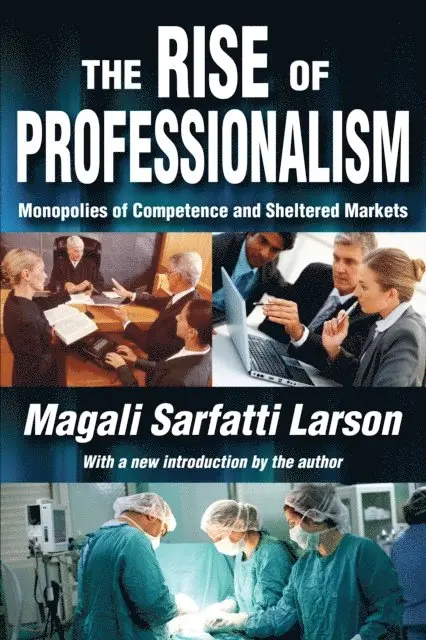
What gave rise to our modern conceptions of professional status, and how did particular professions gain their privileged status? Magali Sarfatti Larson shows how our present conception and acceptance of profession was shaped in the liberal phase of capitalism.Larson argues that professionalization was both a response to the extension of market relations and a movement for the conquest of collective social status by sectors of the bourgeoisie. By comparing the development of various professions in England and the United States during the first part of the nineteenth century, the author gives concrete historical illustration to the multiple relations professions form within their society.Larson examines the new conditions of professionalization in the phase of corporate capitalism, drawing on a number of historical and sociological sources. While professions began as a mode of autonomous work organization, many credentialed occupations aspire to professionalize in order to shelter the labor markets in which they work. Larson argues that the idea of profession can function as a form of ideological control and concludes that today professionalism works against many of the values that had been historically vested in it. This classic book, complete with a new introduction that brings the work into the twenty-first century, is timely and should be read by all interested in the history and development of organizational life.
697 kr
Skickas inom 10-15 vardagar
What gave rise to our modern conceptions of professional status, and how did particular professions gain their privileged status? Magali Sarfatti Larson shows how our present conception and acceptance of profession was shaped in the liberal phase of capitalism.Larson argues that professionalization was both a response to the extension of market relations and a movement for the conquest of collective social status by sectors of the bourgeoisie. By comparing the development of various professions in England and the United States during the first part of the nineteenth century, the author gives concrete historical illustration to the multiple relations professions form within their society.Larson examines the new conditions of professionalization in the phase of corporate capitalism, drawing on a number of historical and sociological sources. While professions began as a mode of autonomous work organization, many credentialed occupations aspire to professionalize in order to shelter the labor markets in which they work. Larson argues that the idea of profession can function as a form of ideological control and concludes that today professionalism works against many of the values that had been historically vested in it. This classic book, complete with a new introduction that brings the work into the twenty-first century, is timely and should be read by all interested in the history and development of organizational life.