Maksim Hanukai - Böcker
Visar alla böcker från författaren Maksim Hanukai. Handla med fri frakt och snabb leverans.
3 produkter
3 produkter
2 446 kr
Skickas inom 3-6 vardagar
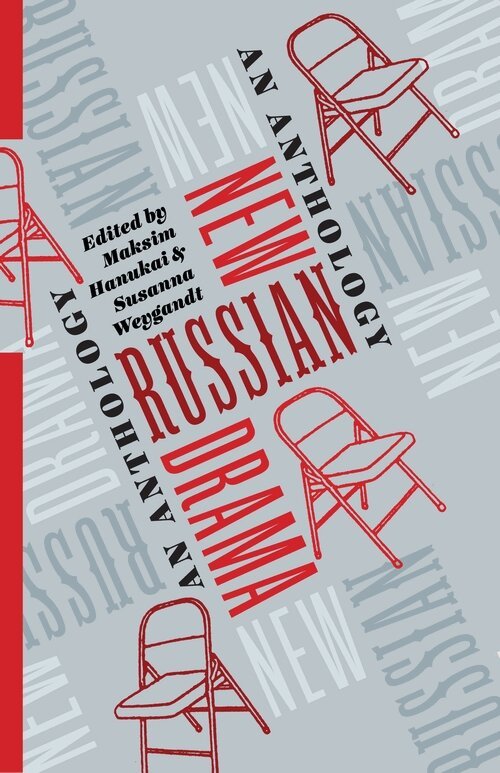
New Russian Drama took shape at the turn of the new millennium—a time of turbulent social change in Russia and the former Soviet republics. Emerging from small playwriting festivals, provincial theaters, and converted basements, it evolved into a major artistic movement that startled audiences with hypernaturalistic portrayals of sex and violence, daring use of non-normative language, and thrilling experiments with genre and form. The movement’s commitment to investigating contemporary reality helped revitalize Russian theater. It also provoked confrontations with traditionalists in society and places of power, making theater once again Russia’s most politicized art form.This anthology offers an introduction to New Russian Drama through plays that illustrate the versatility and global relevance of this exciting movement. Many of them address pressing social issues, such as ethnic tensions and political disillusionment; others engage with Russia’s rich cultural legacy by reimagining traditional genres and canons. Among them are a family drama about Anton Chekhov, a modern production play in which factory workers compose haiku, and a satirical verse play about the treatment of migrant workers, as well a documentary play about a terrorist school siege and a postdramatic “text” that is only two sentences long. Both politically and aesthetically uncompromising, they chart new paths for performance in the twenty-first century. Acquainting English-language readers with these vital works, New Russian Drama challenges us to reflect on the status and mission of the theater.
326 kr
Skickas inom 7-10 vardagar
New Russian Drama took shape at the turn of the new millennium—a time of turbulent social change in Russia and the former Soviet republics. Emerging from small playwriting festivals, provincial theaters, and converted basements, it evolved into a major artistic movement that startled audiences with hypernaturalistic portrayals of sex and violence, daring use of non-normative language, and thrilling experiments with genre and form. The movement’s commitment to investigating contemporary reality helped revitalize Russian theater. It also provoked confrontations with traditionalists in society and places of power, making theater once again Russia’s most politicized art form.This anthology offers an introduction to New Russian Drama through plays that illustrate the versatility and global relevance of this exciting movement. Many of them address pressing social issues, such as ethnic tensions and political disillusionment; others engage with Russia’s rich cultural legacy by reimagining traditional genres and canons. Among them are a family drama about Anton Chekhov, a modern production play in which factory workers compose haiku, and a satirical verse play about the treatment of migrant workers, as well a documentary play about a terrorist school siege and a postdramatic “text” that is only two sentences long. Both politically and aesthetically uncompromising, they chart new paths for performance in the twenty-first century. Acquainting English-language readers with these vital works, New Russian Drama challenges us to reflect on the status and mission of the theater.
1 115 kr
Skickas inom 10-15 vardagar
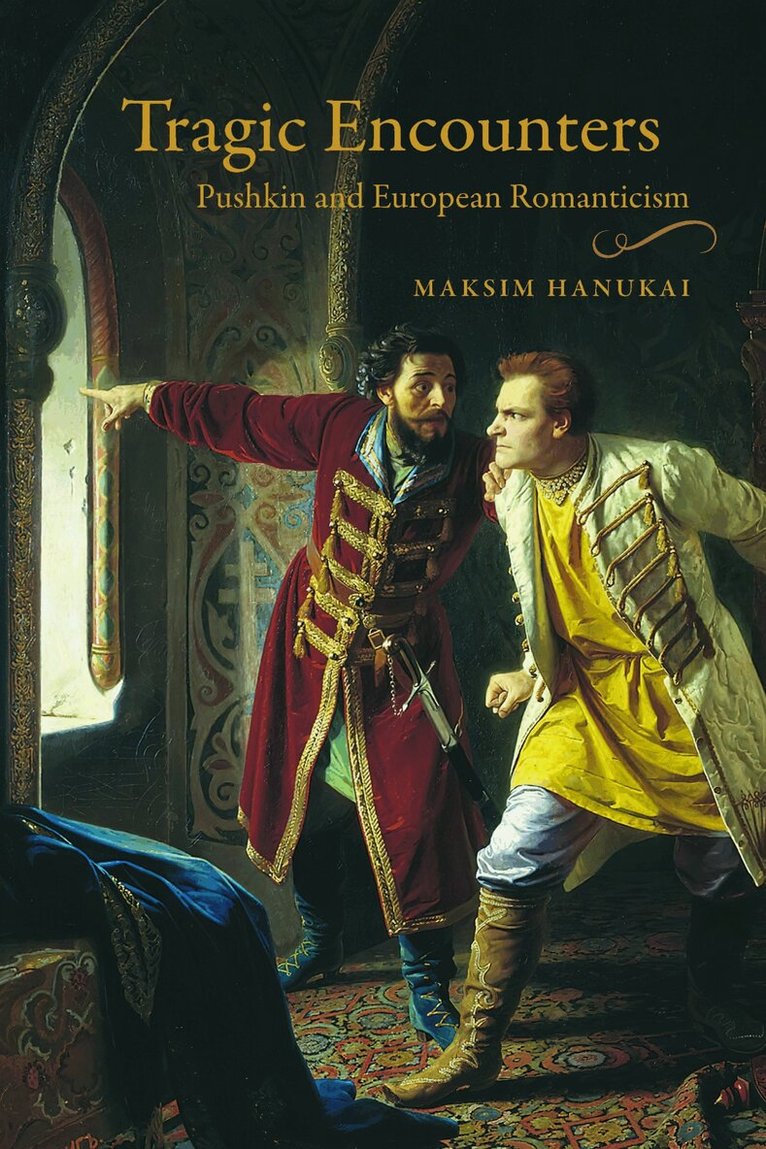
Literary scholars largely agree that the Romantic period altered the definition of tragedy, but they have confined their analyses to Western European authors. Maksim Hanukai introduces a new, illuminating figure to this narrative, arguing that Russia’s national poet, Alexander Pushkin, can be understood as a tragic Romantic poet, although in a different mold than his Western counterparts. Many of Pushkin’s works move seamlessly between the closed world of traditional tragedy and the open world of Romantic tragic drama, and yet they follow neither the cathartic program prescribed by Aristotle nor the redemptive mythologies of the Romantics. Instead, the idiosyncratic and artistically mercurial Pushkin seized upon the newly unstable tragic mode to develop multiple, overlapping tragic visions. Providing new, innovative readings of such masterpieces as The Gypsies, Boris Godunov, The Little Tragedies, and The Bronze Horseman, Hanukai sheds light on an unexplored aspect of Pushkin’s work, while also challenging reigning theories about the fate of tragedy in the Romantic period.