
Malavika Karlekar – författare
Visar alla böcker från författaren Malavika Karlekar. Handla med fri frakt och snabb leverans.
6 produkter
6 produkter
Inbunden, Engelska, 2019
2 269 kr
Skickas inom 10-15 vardagar
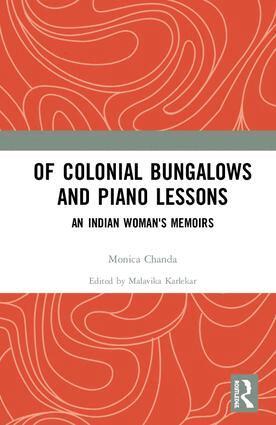
Of Colonial Bungalows and Piano Lessons can be read as a metaphor — as an icon — of the encounter between cultures. The memoir is based on Monica Chanda’s recollections between about 1913 and 1927, of life in Calcutta, districts of undivided Bengal, holidays in Kashmir and in Europe. There is more than a whiff of a Victorian upbringing in the pages. Neither honed in one culture nor fully at home in those practices superimposed by Monica’s father’s professional life as a member of the Indian Civil Service, her dilemma comes through in these writings. While her father, Jnanendra Nath Gupta, was avowedly against formal schooling for girls, he encouraged his daughter to undertake long and at times hazardous journeys by river, rail and road to perfect her skills as a pianist. Though there was an occasional longing for a freer life like that lived by her cousins, yet, Monica also enjoyed the privileges of living in spacious bungalows with a retinue of servants, going on exclusive launch trips down the Ganges, and being invited to parties at Government House and even Buckingham Palace. While there is a tautness palpable in her narration of an encounter with a clearly racist Eurasian sergeant and almost near-encounter with a tiger, Monica’s style avoids hyperbole and dramatic sequences. She presents facts and situations as she saw them — though there are a few times when emotions of love, fear and excitement ripple through the pages of this tightly–woven memoir.Please note: Taylor & Francis does not sell or distribute the Hardback in India, Pakistan, Nepal, Bhutan, Bangladesh and Sri Lanka
Häftad, Engelska, 2007
549 kr
Skickas inom 10-15 vardagar
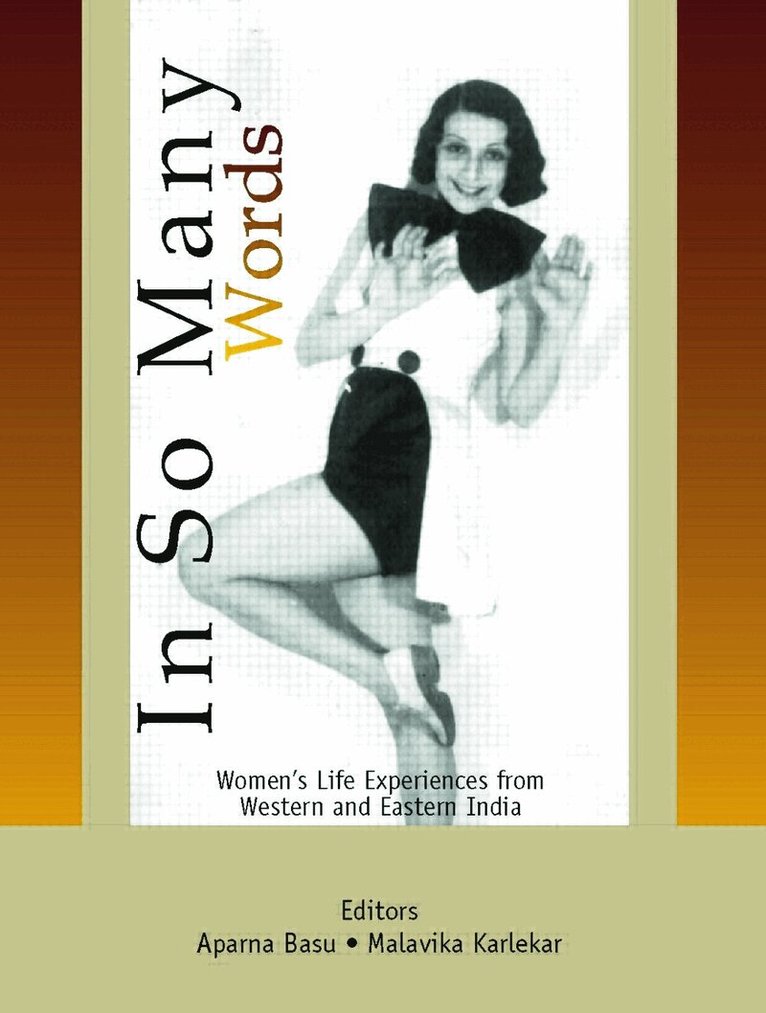
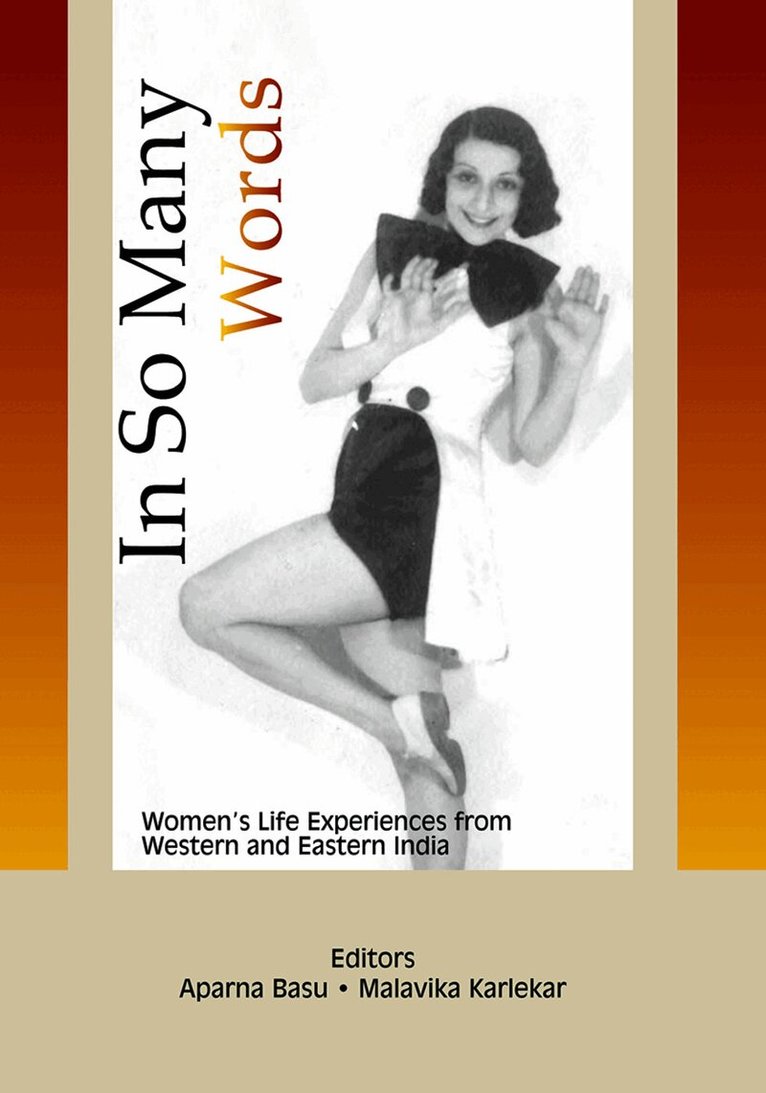
This volume will mark a new trend in dealing with women’s varied experiences of life: individual introductions situate the narrator in a context – and then her voice takes over, with no intervention from the editors (except to provide footnotes wherever necessary).The personal narrative — be it an autobiography, a letter or a diary — has come to be recognised as an acceptable data source in history and social science. Literary critics and students of literature too find considerable use in reading the personal writings of poets, fiction and crime writers. In this book, readings of personal narratives help in painting various images of lives that we can only know at second hand. The mélange includes memoirs, published articles, ‘portraits from memory’, a collection of essays , and an oral interview. In all, the self was the focus. The writings of Sailabala, Li Gotami, and Shakuntala go beyond a recounting of their lives and deal with spiritual and travel experiences. Three of the essays are excerpts from published autobiographies — Sarala Devi Chaudhurani’s Jeevaner Jharapata (Life’s Fallen Leaves), Kalpana Dutt’s Reminiscences and Sailabala Das’s A Look Before and After. Vidyagauri Nilkanth’s writings are essays and a selection of amazingly candid letters exchanged with her husband. Anasuya Sarabahi’s is an interview in Gujarati with niece Gira and Monica’s a selection from an unpublished memoir. Li Gotami, whose original name was Rutty Petit, travelled to Manasarovar, and a few of the magazine articles on this amazing journey have been reproduced here. Whichever form a woman chooses, writing about her self, is emancipatory; she may be a person who has so far received little attention from the family or the world. Or she may be one who is a well-known public figure – yet little is known about her childhood. So she writes about many selves – life is not about one coherent self but rather one of many lives and experiences. In other words, the pen gives woman agency – she moves out from under the shroud of victim hood and becomes one who can write about her lives. The volume also has some carefully chosen photographs, gleaned from personal collections, so far a neglected area of use in academic study. These provide an important visual context to the many worlds that the women inhabited.
Häftad, Engelska, 2024
664 kr
Skickas inom 10-15 vardagar
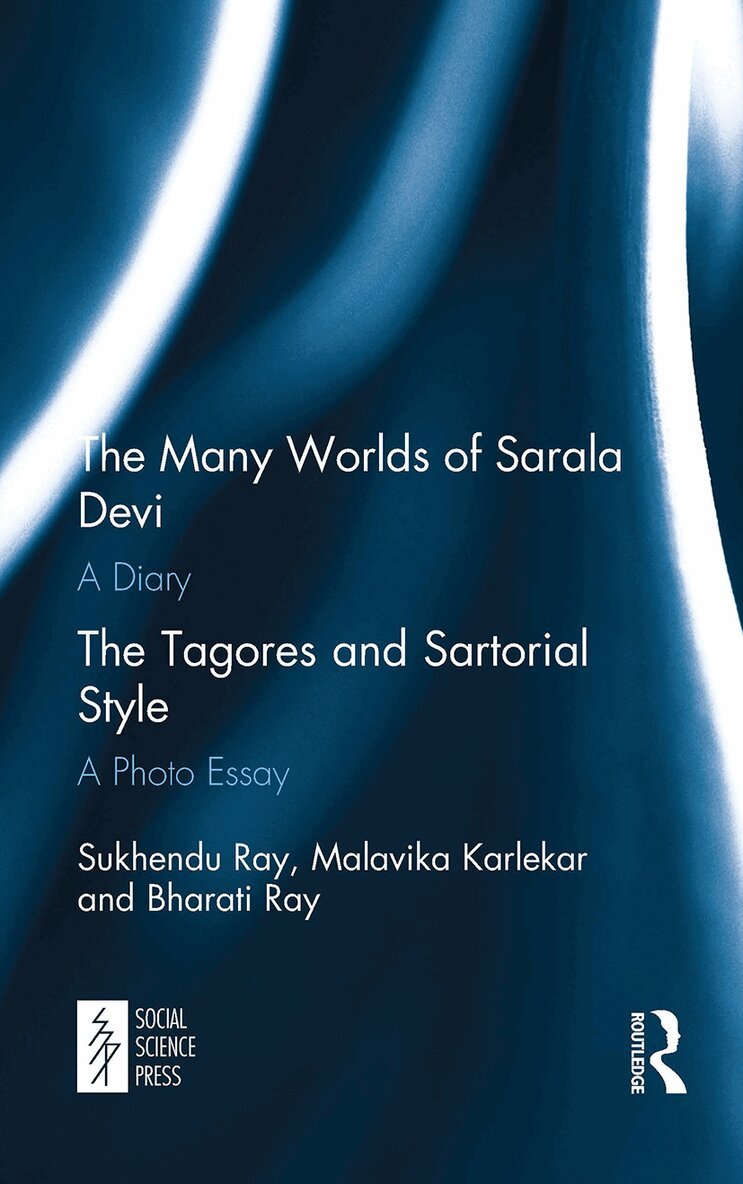
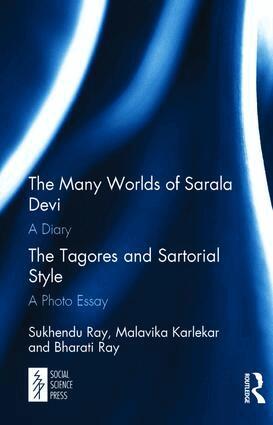
This charming book The Many Worlds of Sarala Devi and The Tagores and Sartorial Styles, as the titles suggest, contain two separate but related writings on the Tagores. The Tagores were a pre-eminent family which became synonymous with the cultural regeneration of India, specifically of Bengal, in the nineteenth century. The first writing is a sensitive translation of Sarala Devis memoirs from the Bengali, Jeevaner Jharapata, by Sukhendu Ray. It is the first autobiography written by a nationalist woman leader of India. Sarala Devi was Rabindranath Tagores niece and had an unusual life. The translation unfolds, among other things, what it was like to grow up in a big affluent house Jorasanko, that had more than 116 inmates and a dozen cooks! The second writing by Malavika Karlekar is a photo essay, creatively conceived, visually reflecting the social and cultural trends of the times, through styles of dress, jewellery and accoutrements. The modern style of wearing a sari was introduced by Jnanadanandini Devi, a member of the Tagore family. The introduction by the well-known historian, Bharati Ray, very perceptively captures the larger context of family, marriage, womens education and politics of the time which touched Sarala Devis life. She points out that if memoirs are a kind of social history then womens diaries record social influences not found in official accounts and are therefore, a rich source of documentation.
Häftad, Engelska, 2024
664 kr
Skickas inom 10-15 vardagar
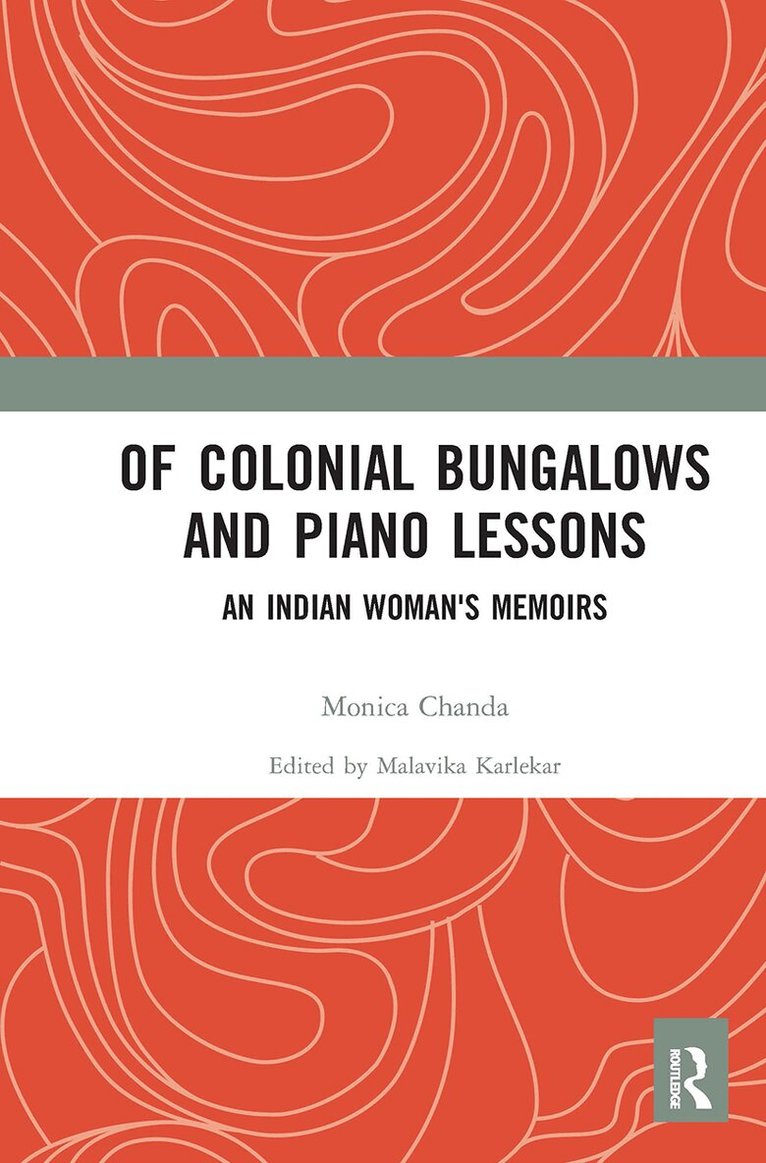
Of Colonial Bungalows and Piano Lessons can be read as a metaphor — as an icon — of the encounter between cultures. The memoir is based on Monica Chanda’s recollections between about 1913 and 1927, of life in Calcutta, districts of undivided Bengal, holidays in Kashmir and in Europe. There is more than a whiff of a Victorian upbringing in the pages. Neither honed in one culture nor fully at home in those practices superimposed by Monica’s father’s professional life as a member of the Indian Civil Service, her dilemma comes through in these writings. While her father, Jnanendra Nath Gupta, was avowedly against formal schooling for girls, he encouraged his daughter to undertake long and at times hazardous journeys by river, rail and road to perfect her skills as a pianist. Though there was an occasional longing for a freer life like that lived by her cousins, yet, Monica also enjoyed the privileges of living in spacious bungalows with a retinue of servants, going on exclusive launch trips down the Ganges, and being invited to parties at Government House and even Buckingham Palace. While there is a tautness palpable in her narration of an encounter with a clearly racist Eurasian sergeant and almost near-encounter with a tiger, Monica’s style avoids hyperbole and dramatic sequences. She presents facts and situations as she saw them — though there are a few times when emotions of love, fear and excitement ripple through the pages of this tightly–woven memoir.Please note: Taylor & Francis does not sell or distribute the Hardback in India, Pakistan, Nepal, Bhutan, Bangladesh and Sri Lanka
Inbunden, Engelska, 2017
2 107 kr
Skickas inom 10-15 vardagar
This volume will mark a new trend in dealing with women’s varied experiences of life: individual introductions situate the narrator in a context – and then her voice takes over, with no intervention from the editors (except to provide footnotes wherever necessary).The personal narrative — be it an autobiography, a letter or a diary — has come to be recognised as an acceptable data source in history and social science. Literary critics and students of literature too find considerable use in reading the personal writings of poets, fiction and crime writers. In this book, readings of personal narratives help in painting various images of lives that we can only know at second hand. The mélange includes memoirs, published articles, ‘portraits from memory’, a collection of essays , and an oral interview. In all, the self was the focus. The writings of Sailabala, Li Gotami, and Shakuntala go beyond a recounting of their lives and deal with spiritual and travel experiences. Three of the essays are excerpts from published autobiographies — Sarala Devi Chaudhurani’s Jeevaner Jharapata (Life’s Fallen Leaves), Kalpana Dutt’s Reminiscences and Sailabala Das’s A Look Before and After. Vidyagauri Nilkanth’s writings are essays and a selection of amazingly candid letters exchanged with her husband. Anasuya Sarabahi’s is an interview in Gujarati with niece Gira and Monica’s a selection from an unpublished memoir. Li Gotami, whose original name was Rutty Petit, travelled to Manasarovar, and a few of the magazine articles on this amazing journey have been reproduced here. Whichever form a woman chooses, writing about her self, is emancipatory; she may be a person who has so far received little attention from the family or the world. Or she may be one who is a well-known public figure – yet little is known about her childhood. So she writes about many selves – life is not about one coherent self but rather one of many lives and experiences. In other words,
Inbunden, Engelska, 2017
2 269 kr
Skickas inom 10-15 vardagar
This charming book The Many Worlds of Sarala Devi and The Tagores and Sartorial Styles, as the titles suggest, contain two separate but related writings on the Tagores. The Tagores were a pre-eminent family which became synonymous with the cultural regeneration of India, specifically of Bengal, in the nineteenth century. The first writing is a sensitive translation of Sarala Devis memoirs from the Bengali, Jeevaner Jharapata, by Sukhendu Ray. It is the first autobiography written by a nationalist woman leader of India. Sarala Devi was Rabindranath Tagores niece and had an unusual life. The translation unfolds, among other things, what it was like to grow up in a big affluent house Jorasanko, that had more than 116 inmates and a dozen cooks! The second writing by Malavika Karlekar is a photo essay, creatively conceived, visually reflecting the social and cultural trends of the times, through styles of dress, jewellery and accoutrements. The modern style of wearing a sari was introduced by Jnanadanandini Devi, a member of the Tagore family. The introduction by the well-known historian, Bharati Ray, very perceptively captures the larger context of family, marriage, womens education and politics of the time which touched Sarala Devis life. She points out that if memoirs are a kind of social history then womens diaries record social influences not found in official accounts and are therefore, a rich source of documentation.