Malcolm Batten - Böcker
Visar alla böcker från författaren Malcolm Batten. Handla med fri frakt och snabb leverans.
41 produkter
41 produkter
178 kr
Skickas
The larger bus operators, whether municipal or company owned, have traditionally trained their own new drivers. Normally older vehicles from the fleet were retained and adapted for training, adorned with ‘L’ plates. In earlier days they would usually just retain fleet livery. Sometimes they might receive a separate livery, to warn other road users. When the National Bus Company introduced corporate liveries of red or green for its fleets, many of their constituent companies used yellow for their training and service vehicles. Then, as recruitment became more difficult from around the 1980s, colourful liveries with invitational recruitment slogans tended to appear and this has continued since. Rather surprisingly, companies often bought in buses for training from other companies rather than converting their own, and these might be types not otherwise represented in their fleet.This book looks at a variety of training vehicles from around the country over the last fifty years, including examples that have survived into preservation.
178 kr
Skickas inom 11-20 vardagar
On 11 August 1968 BR bade farewell to standard gauge steam with the famous Fifteen Guinea Special. A steam ban was placed barring all steam trains from running over BR metals.The main line steam ban was soon to come to an end. In October 1971 King class 6000 King George V passed through Kensington Olympia with the Bulmers Cider Pullman coaches as part of an eight-day trial tour. A list of approved routes for steam-hauled excursion trains was drawn up. This was to comprise less busy provincial lines, where any such operations were less likely to disrupt normal traffic. Gradually, the routes available to working steam were extended. On 1 March 1979 King George V hauled a special train from London Paddington to Didcot, but the main breakthrough year was 1985. This was when regular steam excursions began running from Marylebone to Stratford on Avon.There are now steam excursions from London almost every week of the year, and this wonderful collection of images documents the story since that fateful day in August 1968.
178 kr
Skickas
In the days before privatisation, many bus companies adapted old buses for a variety of specialist uses as service vehicles. Using the skills and ingenuity of their workshops, buses might become, among other things, stores vans, tree loppers or uniform stores. Trolleybuses may have been converted to tower wagons to maintain the overhead wires. Some bus operators converted old buses to towing lorries to rescue broken down vehicles. Others preferred ex-military trucks such as the AEC Matador. These came with somewhat austere cabs, but here again the body shop would often come up with a custom-built body using various bus parts. Buses would also be adapted to serve as information offices or publicity buses, promoting such things as holiday tours or special ticket offers.Since privatisation, such practices have died out for a variety of reasons. Expensive, in-house workshops have largely been closed. Construction and Use Regulations have been tightened up. Emissions zone restrictions may limit the use of older less clean engines in city centres. Furthermore the modern low-floor rear-engine buses are probably less suited to such conversions. Companies will use the services of specialist commercial bus and truck rescue services rather than retaining their own towing vehicles.This book looks at a variety of service vehicles from around the country over the last fifty years, including examples that have survived into preservation.
178 kr
Skickas
What happens to old buses at the end of their career, when they are replaced by newer vehicles? Some inevitably go to scrap, especially if they have been cannibalised for spares. Some see further service with other bus companies. A few lucky ones pass directly into preservation. But many find further employment with so-called ‘Non-PSV’ users; some of these may continue to carry passengers, perhaps as works transport or for a community group. Some may be used for driver training. However, others will be converted to fulfil a whole variety of roles – catering or hospitality vehicles; advertising promotional vehicles; ambulances; mobile homes; playbuses; horseboxes; vehicle transporters, and more.This book looks at a variety of old buses and coaches and the varied roles they have fulfilled over the last fifty years.
178 kr
Skickas inom 11-20 vardagar
The London to Brighton Historic Commercial Vehicle run is one of the premier events in the calendar for preserved commercial vehicle owners and enthusiasts alike. First held in 1962, this annual event has continued to feature every year since. Until 2019 it was traditionally held on the first Sunday in May, with vehicles traveling from London to Brighton where they line up on Marina Drive for judging and prize-giving in the afternoon. There is a rolling minimum age limit of twenty-five years, but vehicles may date back to the very origins of the internal combustion engine, while steam-powered traction engines and wagons are also included.Malcolm Batten first visited Brighton for the run in 1971, and has been back each year without exception. In this book, some of the highlights of the years 1971 to 1995 are showcased. This period saw the run sponsored in turn by Foden, Wincanton Transport and then Scania.
172 kr
Skickas
The London to Brighton Historic Commercial Vehicle run is one of the premier events in the calendar for preserved commercial vehicle owners and enthusiasts alike. First held in 1962, this annual event has continued to feature every year since. Until 2019 traditionally held on the first Sunday in May, vehicles travel from London the approximately 60 miles to Brighton where they line up on Marina Drive for judging and prizegiving in the afternoon. There is a rolling minimum age limit of twenty-one years, but vehicles may date back to the very origins of the internal combustion engine, while steam-powered traction engines and wagons are also included.Malcolm Batten first visited Brighton for the run in 1971, and has been back every year it has been held since then. In this second book he features some of the highlights of the years from 1996 to the 60th anniversary run in 2022.
178 kr
Skickas
The first standard gauge heritage steam railway in Britain, the Bluebell Railway, opened in 1960. Since then, over eighty have opened to the public. While each of these has its individual characteristics, nearly all are former British railways branch lines or parts of secondary routes, closed either under the Beeching axe or under subsequent cutbacks.The six-mile-long Epping Ongar Railway is different and unique. Despite its location in rural Essex, this was not part of the British Rail network at closure but was an electrified section of the London Underground. Its rundown and closure was a protracted affair spanning twenty-five years. On closure it was earmarked to become a heritage line, but it would be another eighteen years before it re-opened in its current guise with steam and diesel traction.This book tells its story up to the re-opening in 2012 and of the ten years of progress since then.
178 kr
Skickas
London’s docks were once the busiest in Britain. They had developed piecemeal from the beginning of the nineteenth century as the existing riverside wharves became too congested and pilfering became rife. Dock systems were built on both sides of the Thames.The largest group, ‘The Royals’ comprising the Royal Victoria, Royal Albert and King George V Docks, created the greatest enclosed dock area in the world. Changes in cargo handling methods such as containerisation led to all new developments being concentrated at Tilbury from the late 1960s, and the closure of the London docks, along with nearly all of the private riverside wharves and canal wharves. The London Docklands Development Corporation was set up to redevelop the dock sites.So what replaced the docks, and what remains to remind us of what was there before? This book follows the Thames Path, which has opened up much of what was once a largely hidden world, from London Bridge to Greenwich to examine the changes and the heritage that remains on both sides of the river. Also included is the Regent’s Canal, which took goods onwards into London and linked to the Midlands, and the sewer network that makes use of the Thames.
172 kr
Skickas
London’s docks were once the busiest in Britain. They had developed piecemeal from the beginning of the nineteenth century as the existing riverside wharves became too congested and pilfering became rife. Dock systems were built on both sides of the Thames.The largest group, ‘The Royals’ comprising the Royal Victoria, Royal Albert and King George V docks, created the greatest enclosed dock area in the world. Changes in cargo handling methods, such as containerisation, led to all new developments being concentrated at Tilbury from the late 1960s and the closure of the London docks, along with nearly all of the private riverside wharves and canal wharves. The London Docklands Development Corporation was set up to redevelop the dock sites.So what replaced the docks, and what remains to remind us of what was there before? This book follows the Thames Path, which has opened up much of what was once a largely hidden world, from Greenwich to Rainham and Erith to examine the changes and the heritage that remains on both sides of the river. Also included is the network of rivers, canals and sewers in East London that linked into and made use of the Thames. Finally, it looks at Tilbury on the north bank, where the docks are now concentrated, and Gravesend on the south side, a town with long maritime connections to London.
172 kr
Skickas
Traffic congestion has become a major problem in many of England’s towns and cities. Historic locations, in particular, have road layouts that predate the internal combustion engine and are not suited to the volume of traffic from residents, delivery trucks and tourists. Parking space is at a premium and competing for land with offices, shops and housing use. An added consideration in recent years has been air quality. Many towns and cities have introduced Park & Ride schemes with out-of-town car parks served by frequent bus links to the centre. These are usually sponsored by the local authority and the vehicles used on the services will frequently have a dedicated livery to promote the service.Malcolm Batten takes a look at some of the Park & Ride buses that have worked in selected English towns and cities since the 1970s.
178 kr
Skickas inom 11-20 vardagar
When London first applied as a contender to stage the 2012 Olympic Games, there was cynical speculation as to whether the transport infrastructure could cope should it win. During the bidding process for 2012, Transport for London, the capital’s transport strategy provider, did its bit to promote the application with buses and Stratford station displaying prominent ‘Back the Bid’ slogans.There was a ‘can-do’ mentality among transport management on this occasion, and in this book Malcolm Batten looks at the preparation and delivery of the Olympic and Paralympic games by London’s transport providers. The transport legacy is also examined here, with previously unpublished photographs celebrating a landmark achievement in the history of London transport.
173 kr
Skickas inom 11-20 vardagar
The borough of Newham in East London was largely built up from the 1800s onwards. Early industry on the river included tide mills and the Royal Docks and their ancillary services provided employment. Large areas of housing also followed the building of the railways with new industries and commerce developing in the area. Transport is still conspicuous in the landscape, not least at Stratford. The municipal pride of this era can be seen in the civic buildings in centres such as East Ham and elsewhere, as well as the public utilities. Culture and recreation, and places of worship, are also in evidence in buildings around the borough and the regeneration of recent decades following the closure of the docks and the 2012 London Olympics also define Newham.Newham in 50 Buildings explores the history of this fascinating area of East London through a selection of its most interesting buildings and structures, showing the changes that have taken place over the years. The book will appeal to all those who live in Newham or who have an interest in the area.
178 kr
Skickas
When bus and coach manufacturers or bodybuilders brought out a new design, they would usually provide a demonstration vehicle for would-be purchasers to try out before buying. These vehicles would later be sold off after a few years and were sometimes snapped up by small companies that might not have been able to afford the cost of a new vehicle.Some of the larger companies would buy a small selection of vehicles by different makers to compare in service before deciding on which type to standardise on for mass purchase. Other innovative companies might rebuild existing vehicles in their own workshops in an attempt to improve their performance or extend their life, or to try out new ideas.This book looks at a variety of demonstration vehicles, on display, in use, and after being sold off, as well as vehicles that were bought experimentally or modified extensively during their service life.
178 kr
Skickas
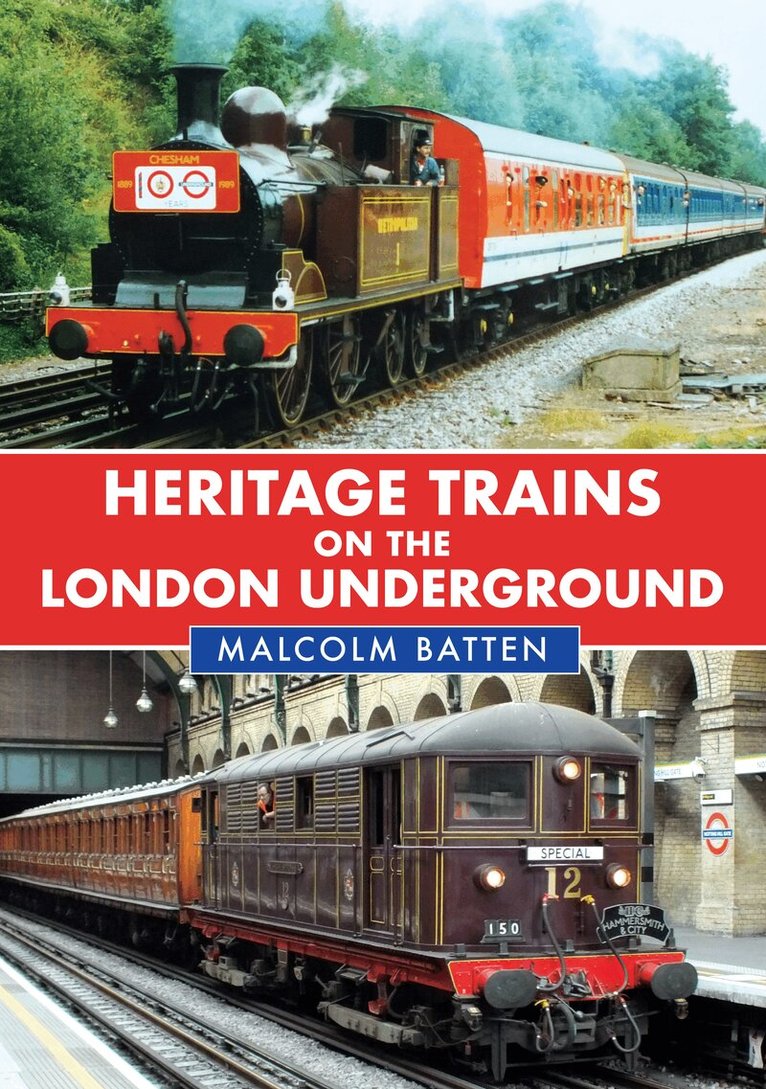
The busy London Underground may seem an unlikely location for heritage train operation, especially involving steam. However, this was the world’s first Underground railway network, and the original sections were built to main line gauge using steam traction. London Transport and its successor London Underground Ltd have been acutely aware of the significance of this and have strived to preserve and present their heritage. Over the decades, open days and special trains operated over parts of the system. This included the running of steam-, diesel- and electric-hauled trains for the public to ride on, while at the same time maintaining the normal level of Underground train service on these lines. These special trains ran not only in the open-air outer sections of the network, but even on occasion through the cut-and-cover tunnel sections of central London.New signalling systems mean that this is unlikely to happen again, but the London Transport Museum continues to offer a programme of exhibitions, guided history tours and open days at the Acton museum depot.This book looks back at the principal events since 1963.
178 kr
Skickas
Nowadays, the European coach market is dominated by a few manufacturers whose products are sold across the Continent and beyond. It wasn’t always like this. From the end of the Second World War until the late 1960s, virtually all buses and coaches bought by British operators were British made. Until the 1960s, it was rare for European coaches to enter Britain. However, the introduction of roll-on, roll-off car ferries changed all that, and later the opening of the Channel Tunnel offered another rail-based route from the Continent to Britain.Lavishly illustrated throughout, this book looks at European-owned tourist coaches visiting Britain from the 1970s onwards; British and European-owned coaches on scheduled international services; and the early days of European chassis or bodywork with British operators.
172 kr
Skickas
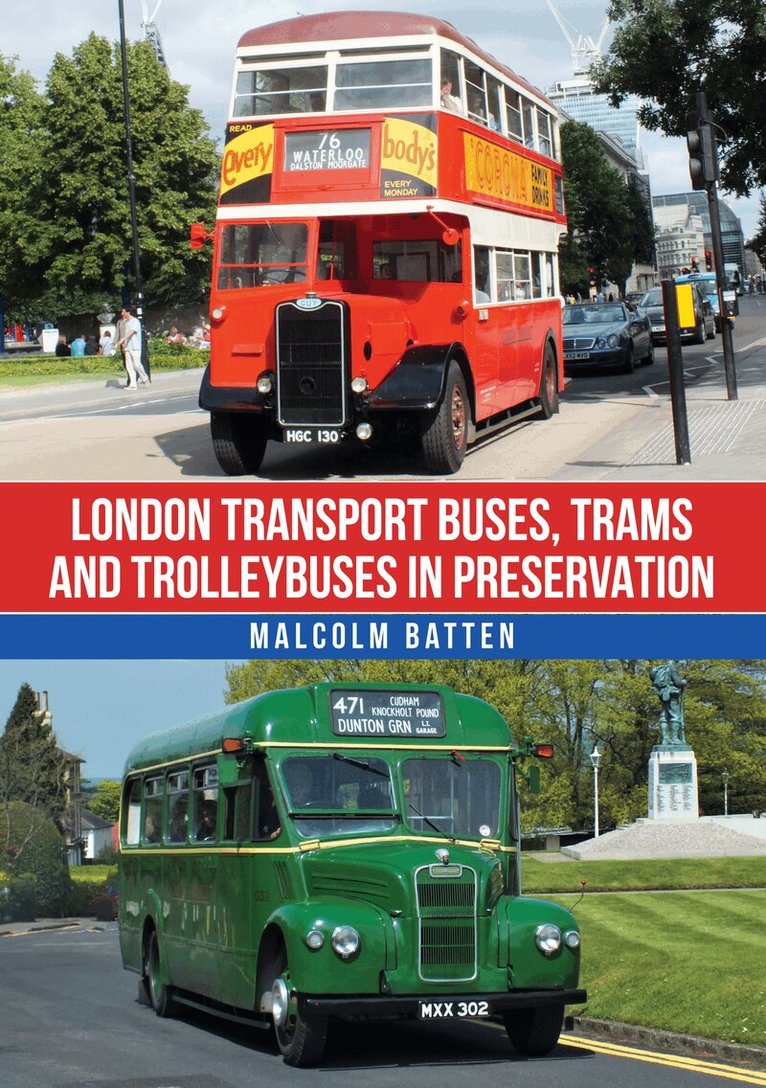
When London Transport was formed in 1933 it became the world’s largest municipal transport undertaking, peaking at some 9,000 buses, trams and trolleybuses. London Transport inherited a small selection of historic vehicles that had been retained for preservation and continued this process of retention and display, leading eventually to the establishment of the London Transport Museum. With the growth of private preservation from the 1950s, it is no surprise that there are now more ex-London Transport vehicles preserved than from any other company and that these can be regularly seen both static and active at heritage and museum sites and at many enthusiast-themed events.
178 kr
Skickas
The steam lorry (or wagon, as it was more commonly known) developed in Britain alongside the internal combustion engine truck. Its heyday was between 1900 and the early 1930s. But there could be only one winner, and by the mid-1930s, with the adoption of the more efficient diesel engine and with punitive legislation passed, the end was in sight for steam.There had been two main manufacturers of steam wagons and eventually both turned to diesel. Other makers had already switched or fallen by the wayside. By 1960, the commercial life of these wagons had almost come to an end, but hundreds have survived into preservation to tell their story.Malcolm Batten explores the history of these remarkable vehicles through a host of previously unpublished images and informative captions.
173 kr
Skickas
The term ‘steam roller’ has become part of the English language, rather like Biro or Hoover. Steam rollers themselves began to be made during the 1860s. It was Thomas Aveling who perfected the most common three-point design with a wide steerable roll at the front and a roll either side at the rear. His company, Aveling & Porter, became the largest manufacturer of steam rollers, although most other traction-engine builders also produced designs, some quite innovative.Steam rollers were the last type of steam-powered road vehicle in general use, some remaining in service until the mid-1960s. Consequently, many hundreds have survived into preservation and can regularly be seen at rallies and other events.This book illustrates many of the examples from different makers that can be seen in Britain and details their history into preservation.
178 kr
Skickas
When double-deck motorbuses were first introduced they were all open-top, like the horse buses that preceded them. Roofs were not permitted until the 1920s, but once they were the vagaries of the British climate dictated that they would normally be fitted. However, when the sun did shine, what could be nicer than a trip along the seafront with the sea air in your nostrils and ruffling your hair? Therefore, many seaside towns introduced seasonal open-top services. Many of these towns had their own municipally-owned bus fleets. Elsewhere, the liveries of company fleets such as Southdown, Devon General and Crosville could be found. As the services were seasonal it did not justify buying new vehicles for such work. Instead, older buses nearing the end of their life would be converted. An alternative option from the 1960s was to buy new vehicles fitted with a detachable roof, meaning that the buses could be utilised all year round, with the roof off during the summer and back on at other times. Ordinarily, one would have needed to visit the resorts to photograph these buses, but once a year most of them came together for the annual Epsom Derby horse race in June. The buses would be hired out to bring corporate guests to the racecourse and would then be lined up to act as grandstand viewpoints around the circuit.This book features seaside open-top buses in operation around England and Wales, starting at Southend-on-Sea and then working clockwise around the coast. Views at the Epsom Derby and some of the vehicles that have entered preservation are also featured.
178 kr
Skickas
While bus services in Britain have generally been in decline since the heady days of the early 1950s, there has been one area of bus operation that has seen significant growth. There has been a boom in overseas tourists to Britain’s historic towns and cities with the advent of cheaper long-haul flights and budget European airlines, along with the Channel Tunnel.Bus companies started to offer tours of these towns and cities, often using open-top buses. This idea was not new. London Transport had an existing Round London Sightseeing Tour which had been started in 1951 for the Festival of Britain. In 1972 open-top buses were hired in as an experiment, this proving successful and services were expanded rapidly.In Scotland, Edinburgh Corporation Transport had a long tradition of sightseeing tours. Elsewhere, sightseeing tours took off in such locations as Bath, York, Oxford and Cambridge. As tourists came all year round it became viable to operate separate vehicles and even invest in new buses. New developments included Hop-on-Hop-off tours and tours with taped commentaries in a variety of languages. New specialist companies began to emerge. Guide Friday started up in a small way at Stratford-upon-Avon and spread nationwide. They were replaced by the City Sightseeing brand started by Ensignbus which operates internationally.Malcolm Batten offers a fascinating photographic tour of the sightseeing buses of Britain.
178 kr
Skickas
The Routemaster bus has become synonymous with London and is recognised the world over. Although fewer were built than of the preceding RT type, their uniqueness and longevity made them instantly identifiable as the typical London bus. First conceived as a replacement for the trolleybuses, the prototype was unveiled in 1954. Main production did not start until 1959 but they would then continue to serve London’s passengers until 2005. From the 1980s, they began to be withdrawn from London, but many found further use with bus companies throughout Britain and beyond.Now, seventy years since the prototype first emerged, some Routemasters can still be found on sightseeing work in London. Others are in use for such purposes as corporate hospitality, film work and wedding hires, while hundreds survive in preservation. This book celebrates this iconic symbol of London through a collection of outstanding images and informative captions.
173 kr
Kommande
The London Borough of Newham was created in 1965 by the merger of the County Borough Councils of East Ham and West Ham. At first, industry was concentrated on the banks of the River Lea (or Lee). The coming of the railways coupled with the rise of new technologies in the Victorian era, and legislation prohibiting many of the smellier and noisier industries from operating within London, led to the rapid growth of industry and population within Newham from the 1840s onwards. The area grew rich from industry, with famous names such as Tate & Lyle and Trebor Sweets, railway engineering at Stratford and the docks. Marshland south of Plaistow and East Ham was drained to create the docks and the industrial areas of Canning Town and Silvertown, the latter named after a local entrepreneur. Much of this industry fell into decline from the late twentieth century. When the docks closed in 1981 and relocated to Tilbury, the London Docklands Development Corporation was set up to regenerate the Docklands area with London City Airport and a new University of East London campus taking their place, and retail became the major employer in the area. Following hosting the 2012 London Olympic and Paralympic Games, the Olympic Park area of Stratford has since been redeveloped with new cultural and educational facilities.Newham at Work explores the working life of this borough in London and its people and the industries that have characterised it through the years. This book will appeal to all those with an interest in the history of Newham.
168 kr
Skickas
While there are thousands of preserved commercial vehicles, there can be few that evoke such public excitement as fire-fighting vehicles. The sight of a vintage fire engine parading around the ring at a rally event can be a stirring one, with the crew (often fire-fighters themselves) in period uniforms with brass helmets gleaming and the bell clanging as the vehicle proceeds. Sometimes the crew may demonstrate a turntable ladder being extended to its full height or the hose reels being deployed, although modern Health & Safety regulations mean that it is unlikely that a demonstration of extinguishing a fire can take place. Fire brigades were established in the nineteenth century, just as mechanised road transport was beginning. Thus, their history can be told through the fire-fighting vehicles that have survived into preservation, and this book tells the story. In Britain, these vehicles were all British-built until recently. However, European and American practices are also featured through vehicles that have visited these shores or have been preserved here.Malcolm Batten explores the history of these remarkable vehicles through a host of previously unpublished images and informative captions.
178 kr
Kommande
An important part of the market for commercial vehicles was the municipal or local-authority sector. These authorities had responsibilities for such services as maintaining roads, street lighting, refuse collection and education. They also managed the fire brigades and ambulance services in their areas. Many towns and cities had their own municipally owned public transport, often initially with trams then later trolleybuses or buses.All of this gave rise to a range of specialist vehicles, at first horse-drawn and then on to steam and motorised. These ranged from road rollers to gully emptiers, dustcarts to mobile libraries. There were tower wagons to maintain streetlights and the overhead wiring for trams and trolleybuses. Many of these vehicles have survived to pass into preservation. The trams, buses, fire engines and steam rollers will often display the name and livery of their original owner. But other vehicles, such as vans and lorries rarely do so, and may have been modified or rebodied subsequently, so giving little clue to their history.This book showcases a diverse range of vehicles that were all originally operated by municipal authorities and later preserved through a vibrant collection of previously unpublished images.
178 kr
Kommande
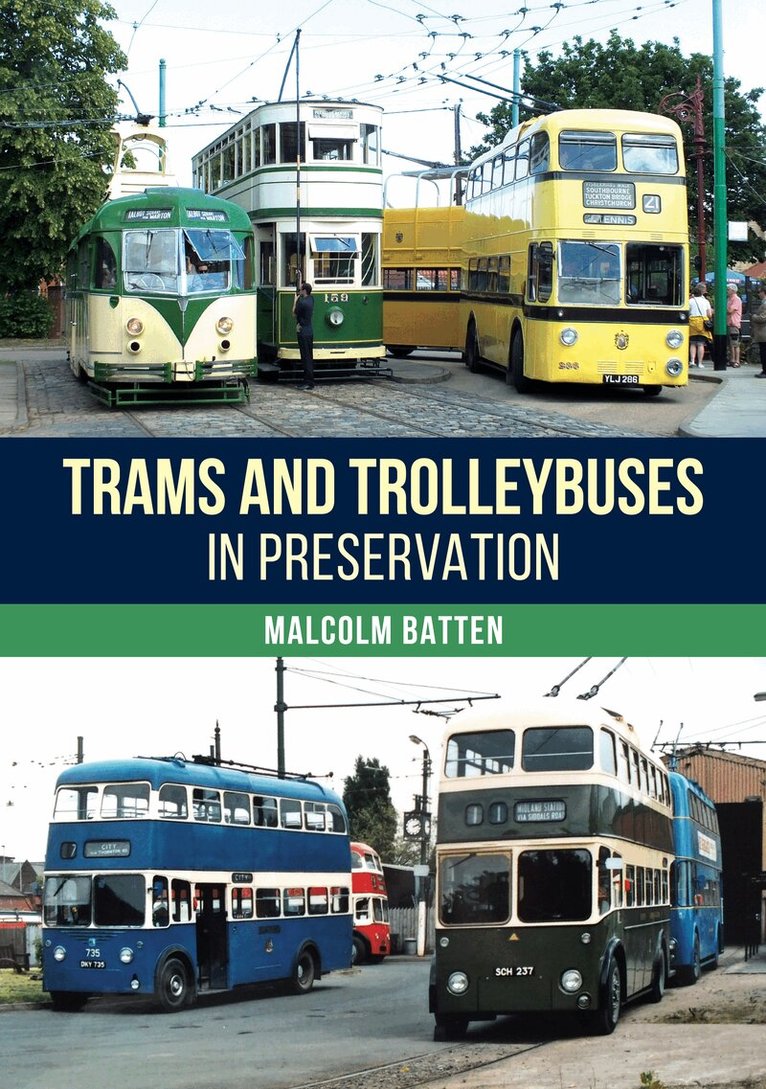
Nowadays, with concerns about air quality in our town centres, many new cars, vans and buses are hybrid or fully electric. However, over a century ago zero-emission public transport dominated our towns and cities in the form of electric trams and trolleybuses. Yet, in the post-war era these fell out of favour and were replaced by diesel buses. Now trams have made a comeback in some cities, although trolleybuses no longer operate in Britain.Many examples of trams and trolleybuses have survived into preservation. There are even a handful of specialist museum sites where wiring has been installed so that these vehicles can once again operate, while many examples can be found on static display in other museum collections.Malcolm Batten presents a fascinating selection of the vehicles preserved and locations where trams and trolleybuses can be found at work or on display.
Shipping on the Thames and the Port of London During the 1940s 1980s
A Pictorial History
Inbunden, Engelska, 2022
328 kr
Skickas
During the 1970s and 1980s the Port of London, and shipping on the River Thames was in a state of transition. New methods of cargo handling, in particular the introduction of containers and Roll-on, Roll-off vehicle ferries called for new investment and a rethink on the way dock traffic was traditionally managed. As a result, The Port of London Authority decided to run down and close the various London docks and concentrate all new investment downriver at their Tilbury docks.These photographs, along with some from earlier decades, and mostly previously unpublished, are a fascinating insight into this period, when traditional ships and cargo handling methods worked alongside the new technology. Ships designed for carrying cargo in their holds were sometimes adapted to carry containers as deck cargo. There were also shipping types now lost to history, including colliers and sludge boats.Not forgotten are the passenger ships -cruise liners to ferries. The various vessels that serviced the port from tugs to salvage craft and floating cranes. Finally, the heritage craft from traditional Thames Sailing barges to former paddle steamers now adapted as floating pub/restaurants.
381 kr
Skickas
The commercial life of traction engines and steam wagons largely came to an end in the 1950s and early 1960s. It was also at this time that preservation and display in the form of rallies came into being. It is generally acknowledged that the traction engine rally scene has its origins in a race between two engine-owning farmers at Appleford, Berkshire in August 1950\. The rally movement soon grew as area preservation societies were formed. Some of these early societies and rallies continued to flourish and a number of these have now celebrated fifty or more years of activity, albeit not always on the same site throughout. Other rallies flourished for a while but then ceased for varying reasons. There have also been a number of one-off' events.The initial concept of rallies has developed over the years. Instead of just ring events many now try to incorporate working areas where the different types of engines can be demonstrated doing the tasks for which they were built.This book features a number of these rallies, starting with some of the early events of the 1950s and 1960s. Then a few one-off' events are featured, followed by looking at some of the rallies that no longer take place, and finishing with examples of those that are still flourishing. It aims to show something of the individual character of each rally, and some of the highlights of events that the author has visited over the last fifty years.
Border Towns Buses of London Country Transport (North of the Thames) 1969-2019
Inbunden, Engelska, 2024
306 kr
Skickas
London Transport was created in 1933 with monopoly powers. Not only did it have exclusive rights to run bus (and tram and trolleybus) services in the Greater London area, it also ran services in a Country Area all around London. Green Line express services linked the country towns to London and in most cases across to other country towns the other side of the metropolis. This country area extended north as far as Hitchin, east to Brentwood, south to Crawley and west to Windsor.But what of the towns at the edge of the country area? Here the green London Transport buses would meet the bus companies whose operations extended across the rest of the counties of Essex, Bedfordshire, Buckinghamshire etc. In some cases the town was at a node where more than one company worked in. At Luton there was a municipal fleet. Elsewhere, such as at Aylesbury there were local independent operators who had a share in the town services.It would all change from 1970 when the London Transport Country Area was transferred to the National Bus Company to form a new company named London Country Bus Services. This would later be split into four separate companies. Deregulation in 1985 and privatisation in the 1990s led to further changes in the names and ownership of bus companies. Consolidation since then has seen the emergence of national bus groups – Stagecoach, First Group, Arriva and Go-Ahead replacing the old names and liveries. But retrenchment by these companies has given an opportunity for new independent companies to fill the gaps.This book takes the form of an anti-clockwise tour around the perimeter of the London Country area, north of the Thames featuring a number of key towns starting at Tilbury and ending at High Wycombe, illustrating some of the many changes to bus companies that have occurred.
381 kr
Skickas
London Transport was created in 1933 with monopoly powers. Not only did it have exclusive rights to run bus (and tram and trolleybus) services in the Greater London area, it also ran services in a Country Area all around London. Green Line express services linked the country towns to London and in most cases across to other country towns the other side of the metropolis. This country area extended north as far as Hitchin, east to Brentwood, south to Crawley and west to Windsor.But what of the towns at the edge of the country area? Here the green London Transport buses would meet the bus companies whose operations extended across the rest of the counties of Berkshire, Surrey, Kent etc. In some cases the town was at a node where more than one company worked in. Elsewhere, such as at Guildford there were local independent operators who had a share in the town services.It would all change from 1970 when the London Transport Country Area was transferred to the National Bus Company to form a new company named London Country Bus Services. This would later be split into four separate companies. Deregulation in 1985 and privatisation in the 1990s led to further changes in the names and ownership of bus companies. Consolidation since then has seen the emergence of national bus groups – Stagecoach, First Group, Arriva and Go-Ahead replacing the old names and liveries. But retrenchment by these companies has given an opportunity for new independent companies to fill the gaps.This book takes the form of an anti-clockwise tour around the perimeter of the London Country area, south of the Thames featuring a number of key towns starting at Slough and Windsor and ending at Gravesend, illustrating some of the many changes to bus companies that have occurred.
168 kr
Skickas inom 11-20 vardagar
The East London bus scene in 1969 was one of contrast. This was London’s industrial heartland with the River Thames bankside dominated by docks, power stations and heavy industry, including the massive Ford Motor works at Dagenham. Inland, dense inner city housing gave way to terraces and vast council estates as you travelled eastwards. The red buses of London Transport held a monopoly relieved only by the Green Line coach routes also run by London Transport. However, in the outer reaches of the Greater London Council area there was a remarkable overlap as London Transport’s red buses delved deep into Essex while the Eastern National buses from Essex ran deep into London Transport territory.Twenty years later, much had changed. The docks and power stations had closed and the London Docklands Development Corporation was transforming the old docks into Docklands. Changes in the bus industry saw London Transport split up in 1970, then from 1985 deregulation led to routes being tendered out and new operators taking them over. This book tells the story of the change in the East London bus scene in the 1970s and 1980s