Malcolm Dick - Böcker
Visar alla böcker från författaren Malcolm Dick. Handla med fri frakt och snabb leverans.
8 produkter
8 produkter
912 kr
Skickas inom 7-10 vardagar
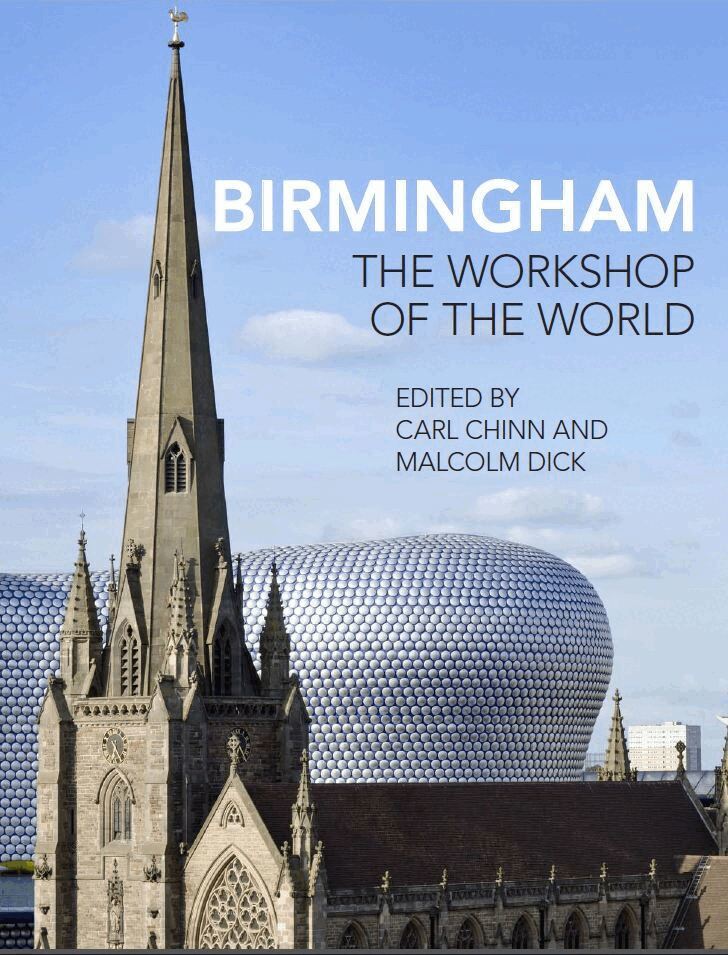
Birmingham is a city with an extraordinarily diverse achievement in fields as varied as science, industry, politics, education, medicine, printing and the arts. Labels such as the ‘first industrial city’, ‘city of a thousand trades’, ‘the best-governed city in the world’ and ‘the youngest city in Europe’ have been applied to the town. This new publication, the first major history of Birmingham since the 1970s, is published to commemorate the 850th anniversary of Birmingham’s market charter in 1166, an event which marked the first step in the rise of Birmingham as a commercial and industrial powerhouse. Authored by scholars, but written for a general readership, this detailed, accessible and richly illustrated book is both a definitive reference work and a readable account of a diverse, culturally rich and high-achieving city. Many aspects of the history of Birmingham are presented for the first time outside academic publications: its diverse people’s history, a rich prehistoric and Roman past, the rise of Birmingham in medieval and early modern times, the evolution of an innovative system of education, a varied experience in art and design and an extraordinary printing history. The book covers economic and political themes and new approaches to the history of society and culture. It is illustrated with many images which have never before been published either in books or on the web. The result is a visually stunning and factually illuminating book which will appeal to many kinds of people.
322 kr
Skickas inom 7-10 vardagar
Birmingham is a city with an extraordinarily diverse achievement in fields as varied as science, industry, politics, education, medicine, printing and the arts. Labels such as the ‘first industrial city’, ‘city of a thousand trades’, ‘the best-governed city in the world’ and ‘the youngest city in Europe’ have been applied to the town. This new publication, the first major history of Birmingham since the 1970s, is published to commemorate the 850th anniversary of Birmingham’s market charter in 1166, an event which marked the first step in the rise of Birmingham as a commercial and industrial powerhouse. Authored by scholars, but written for a general readership, this detailed, accessible and richly illustrated book is both a definitive reference work and a readable account of a diverse, culturally rich and high-achieving city. Many aspects of the history of Birmingham are presented for the first time outside academic publications: its diverse people’s history, a rich prehistoric and Roman past, the rise of Birmingham in medieval and early modern times, the evolution of an innovative system of education, a varied experience in art and design and an extraordinary printing history. The book covers economic and political themes and new approaches to the history of society and culture. It is illustrated with many images which have never before been published either in books or on the web. The result is a visually stunning and factually illuminating book which will appeal to many kinds of people.
Del 7 - Eighteenth Century Worlds
John Baskerville
Art and Industry in the Enlightenment
Inbunden, Engelska, 2017
1 965 kr
Skickas inom 7-10 vardagar
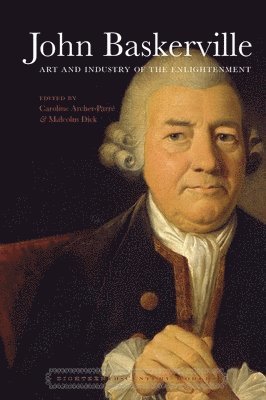
This book is concerned with the eighteenth-century typographer, printer, industrialist and Enlightenment figure, John Baskerville (1707-75). Baskerville was a Birmingham inventor, entrepreneur and artist with a worldwide reputation who made eighteenth-century Birmingham a city without typographic equal, by changing the course of type design. Baskerville not only designed one of the world’s most historically important typefaces, he also experimented with casting and setting type, improved the construction of the printing-press, developed a new kind of paper and refined the quality of printing inks. His typographic experiments put him ahead of his time, had an international impact and did much to enhance the printing and publishing industries of his day. Yet despite his importance, fame and influence many aspects of Baskerville’s work and life remain unexplored and his contribution to the arts, industry, culture and society of the Enlightenment are largely unrecognized. Moreover, recent scholarly research in archaeology, art and design, history, literary studies and typography, is leading to a fundamental reassessment of many aspects of Baskerville’s life and impact, including his birthplace, his work as an industrialist, the networks which sustained him and the reception of his printing in Britain and overseas. The last major, but inadequate publication of Baskerville dates from 1975. Now, forty years on, the time is ripe for a new book. This interdisciplinary approach provides an original contribution to printing history, eighteenth-century studies and the dissemination of ideas.
1 965 kr
Skickas inom 7-10 vardagar
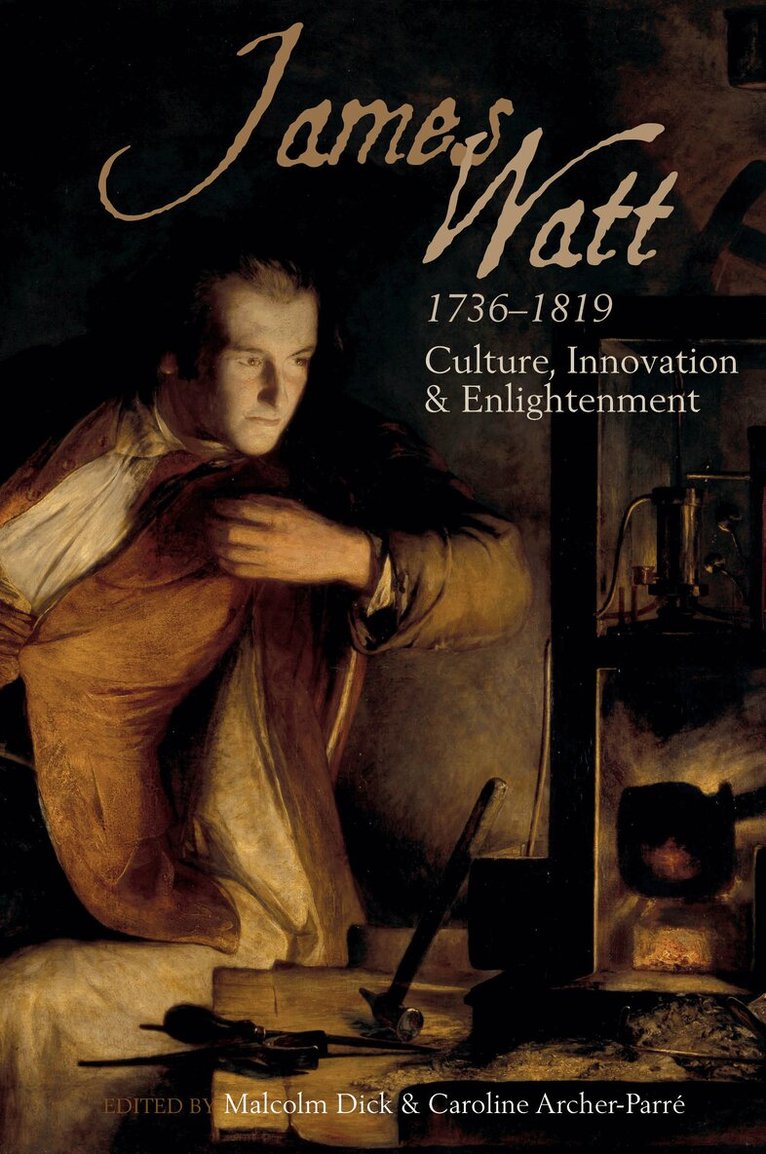
James Watt (1736-1819) was a pivotal figure of the Industrial Revolution. His career as a scientific instrument maker, inventor and engineer was developed in Scotland, his land of birth. His subsequent national and international significance as a scientist, technologist and businessman was formed in the Birmingham area. There, his partnership with Matthew Boulton and the intellectual and personal support of other members of the Lunar Society network, such as Erasmus Darwin, James Keir, William Small and Josiah Wedgwood, enabled him to translate his improvements in steam technology into efficient machines. His pumping and rotative steam engines represent a summit of technological achievement in the late-eighteenth and early-nineteenth centuries. This is the traditional picture of James Watt. After his death, his surviving son, James Watt junior projected his father’s image through commissioning sculptures, medals, paintings and biographies which celebrated his reputation as a ‘great man’ of the Industrial Revolution. In popular historical understanding Watt has also become a hero of modernity, but the context in which he operated and the roles of others in shaping his ideas have been downplayed. This book explores new aspects of his work and evaluates him in his locational, family, social and intellectual contexts.
498 kr
Skickas inom 7-10 vardagar
James Watt (1736-1819) was a pivotal figure of the Industrial Revolution. His career as a scientific instrument maker, inventor and engineer was developed in Scotland, his land of birth. His subsequent national and international significance as a scientist, technologist and businessman was formed in the Birmingham area. There, his partnership with Matthew Boulton and the intellectual and personal support of other members of the Lunar Society network, such as Erasmus Darwin, James Keir, William Small and Josiah Wedgwood, enabled him to translate his improvements in steam technology into efficient machines. His pumping and rotative steam engines represent a summit of technological achievement in the late-eighteenth and early-nineteenth centuries. This is the traditional picture of James Watt. After his death, his surviving son, James Watt junior projected his father’s image through commissioning sculptures, medals, paintings and biographies which celebrated his reputation as a ‘great man’ of the Industrial Revolution. In popular historical understanding Watt has also become a hero of modernity, but the context in which he operated and the roles of others in shaping his ideas have been downplayed. This book explores new aspects of his work and evaluates him in his locational, family, social and intellectual contexts.
Del 10 - Eighteenth Century Worlds
Pen, print and communication in the eighteenth century
Inbunden, Engelska, 2020
2 129 kr
Skickas inom 7-10 vardagar
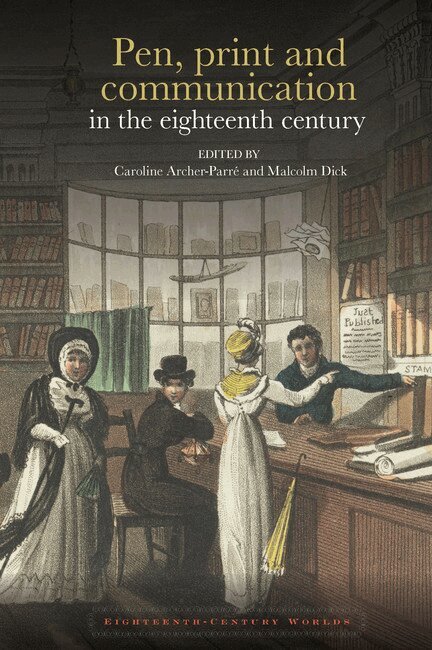
During the eighteenth century there was a growing interest in recording, listing and documenting the world, whether for personal interest and private consumption, or general record and the greater good. Such documentation was done through both the written and printed word. Each genre had its own material conventions and spawned industries which supported these practices. This volume considers writing and printing in parallel: it highlights the intersections between the two methods of communication; discusses the medium and materiality of the message; considers how writing and printing were deployed in the construction of personal and cultural identities; and explores the different dimensions surrounding the production, distribution and consumption of private and public letters, words and texts during the eighteenth-century. In combination the chapters in this volume consider how the processes of both writing and printing contributed to the creation of cultural identity and taste, assisted in the spread of knowledge and furthered personal, political, economic, social and cultural change in Britain and the wider-world. This volume provides an original narrative on the nature of communication and brings a fresh perspective on printing history, print culture and the literate society of the Enlightenment.
Del 7 - Eighteenth Century Worlds
John Baskerville
Art and Industry in the Enlightenment
Häftad, Engelska, 2021
540 kr
Skickas inom 7-10 vardagar
This book is concerned with the eighteenth-century typographer, printer, industrialist and Enlightenment figure, John Baskerville (1707-75). Baskerville was a Birmingham inventor, entrepreneur and artist with a worldwide reputation who made eighteenth-century Birmingham a city without typographic equal, by changing the course of type design. Baskerville not only designed one of the world’s most historically important typefaces, he also experimented with casting and setting type, improved the construction of the printing-press, developed a new kind of paper and refined the quality of printing inks. His typographic experiments put him ahead of his time, had an international impact and did much to enhance the printing and publishing industries of his day. Yet despite his importance, fame and influence many aspects of Baskerville’s work and life remain unexplored and his contribution to the arts, industry, culture and society of the Enlightenment are largely unrecognized. Moreover, recent scholarly research in archaeology, art and design, history, literary studies and typography, is leading to a fundamental reassessment of many aspects of Baskerville’s life and impact, including his birthplace, his work as an industrialist, the networks which sustained him and the reception of his printing in Britain and overseas. The last major, but inadequate publication of Baskerville dates from 1975. Now, forty years on, the time is ripe for a new book. This interdisciplinary approach provides an original contribution to printing history, eighteenth-century studies and the dissemination of ideas.
Del 10 - Eighteenth Century Worlds
Pen, print and communication in the eighteenth century
Häftad, Engelska, 2023
581 kr
Skickas inom 7-10 vardagar
During the eighteenth century there was a growing interest in recording, listing and documenting the world, whether for personal interest and private consumption, or general record and the greater good. Such documentation was done through both the written and printed word. Each genre had its own material conventions and spawned industries which supported these practices. This volume considers writing and printing in parallel: it highlights the intersections between the two methods of communication; discusses the medium and materiality of the message; considers how writing and printing were deployed in the construction of personal and cultural identities; and explores the different dimensions surrounding the production, distribution and consumption of private and public letters, words and texts during the eighteenth-century. In combination the chapters in this volume consider how the processes of both writing and printing contributed to the creation of cultural identity and taste, assisted in the spread of knowledge and furthered personal, political, economic, social and cultural change in Britain and the wider-world. This volume provides an original narrative on the nature of communication and brings a fresh perspective on printing history, print culture and the literate society of the Enlightenment.