Malika Maskarinec - Böcker
Visar alla böcker från författaren Malika Maskarinec. Handla med fri frakt och snabb leverans.
4 produkter
4 produkter
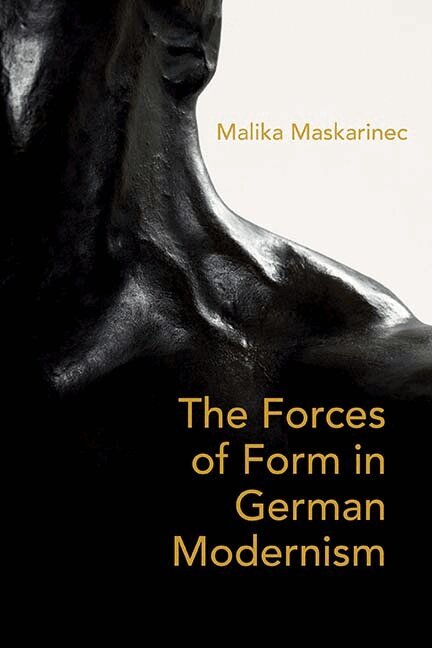
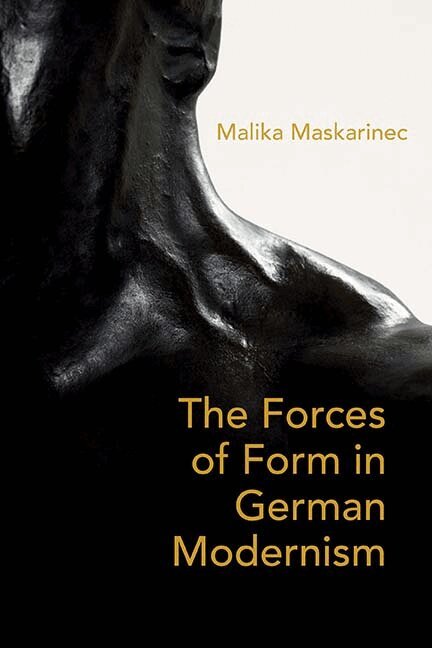
On Weight and the Will
The Forces of Form in German Literature and Aesthetics, 1890–1930
Inbunden, Engelska, 2018
1 480 kr
Skickas inom 10-15 vardagar
On Weight and the Will: The Forces of Form in German Literature and Aesthetics, 1890–1930 charts a modern history of form as emergent from force. Offering a provocative alternative to the imagery of crisis and estrangement that has preoccupied scholarship on modernism, Malika Maskarinec shows that German modernism conceives of human bodies and aesthetic objects as shaped by a contest of conflicting and reciprocally-intensifying forces: the force of gravity and a self-determining will to form. Maskarinec thereby discloses, for the first time, German modernism’s sustained preoccupation with classical mechanics and with how human bodies and artworks resist gravity. Considering canonical artists such as Rodin and Klee, seminal authors such as Kafka and Döblin, and largely neglected thinkers in aesthetics and art history such as those associated with Empathy Aesthetics, Maskarinec unpacks the manifold anthropological and aesthetic concerns and historical lineage embedded in the idea of form as the precarious achievement of uprightness. On Weight and the Will makes a decisive contribution to our understanding of modernism and to contemporary discussions about form, empathy, materiality, and human embodiment.
407 kr
Skickas inom 10-15 vardagar
Allegories of Format examines the significance of format to the literary oeuvre of the nineteenth-century Swiss author, Gottfried Keller (1819–1890), best known for his 1855 novel, Green Henry (Der grüne Heinrich). Malika Maskarinec understands format as the organization of a media object's relationship to a world of objects and persons; format orders a text's contents or, in the case of literature, what it represents. Maskarinec focuses on three formats of growing prominence in nineteenth-century media culture: the collected-works edition, the document, and the periodical. The analysis demonstrates that different fictional worlds, characters, and plots in Keller's literary output allegorize the problems that specific print and paper formats pose to literary ideals of literature as an art form and to ideals of creative authorship. As Allegories of Format shows, attending to format allows for false antitheses inherited from the nineteenth century to be dismantled - between high and trivial literature, between the singular artwork and mass media products, and between creative literary works and the supposedly uncreative writing practices of office work.This book is available as an Open Access volume thanks to funding from the University of Bern/Universität Bern.
1 745 kr
Skickas inom 10-15 vardagar
Allegories of Format examines the significance of format to the literary oeuvre of the nineteenth-century Swiss author, Gottfried Keller (1819–1890), best known for his 1855 novel, Green Henry (Der grüne Heinrich). Malika Maskarinec understands format as the organization of a media object's relationship to a world of objects and persons; format orders a text's contents or, in the case of literature, what it represents. Maskarinec focuses on three formats of growing prominence in nineteenth-century media culture: the collected-works edition, the document, and the periodical. The analysis demonstrates that different fictional worlds, characters, and plots in Keller's literary output allegorize the problems that specific print and paper formats pose to literary ideals of literature as an art form and to ideals of creative authorship. As Allegories of Format shows, attending to format allows for false antitheses inherited from the nineteenth century to be dismantled - between high and trivial literature, between the singular artwork and mass media products, and between creative literary works and the supposedly uncreative writing practices of office work.This book is available as an Open Access volume thanks to funding from the University of Bern/Universität Bern.
1 373 kr
Skickas inom 5-8 vardagar
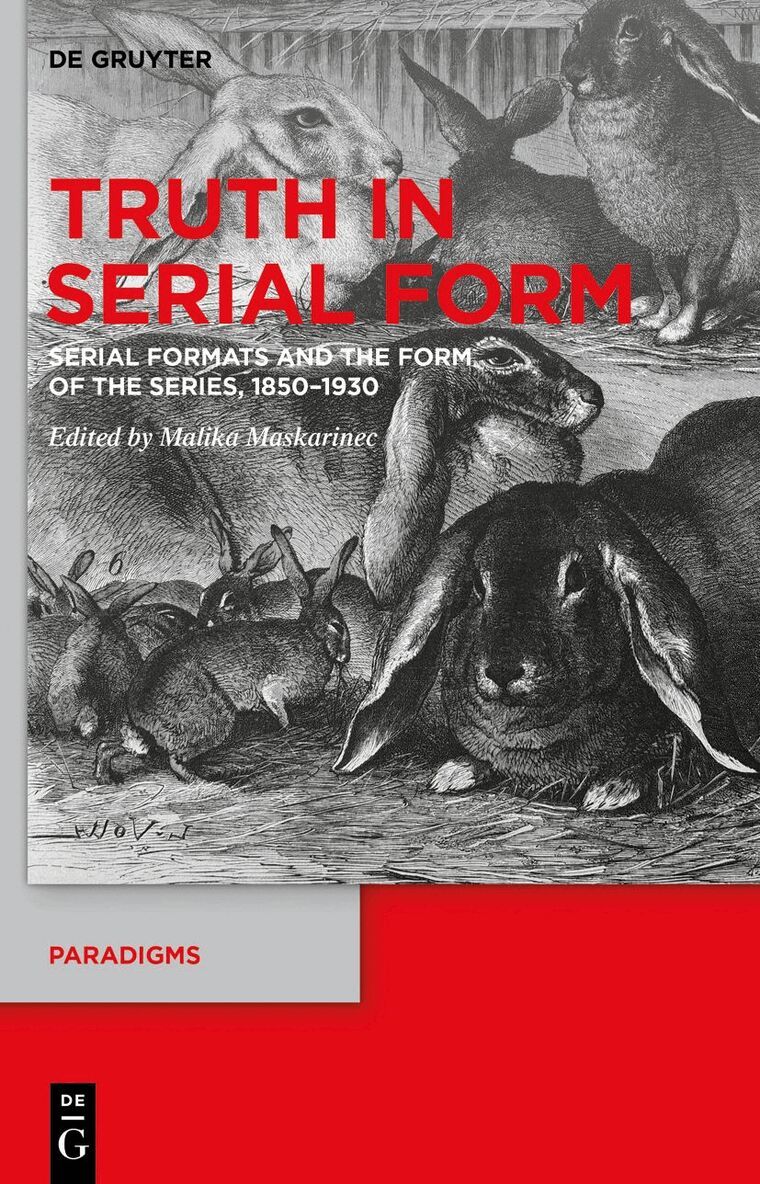
This volume has its starting point in the veritable explosion of serialized formats in all of forms representation, from painting to printing, beginning in the mid nineteenth century and the well-known fascination with series in biology, mathematics, music, art, or literature. The new media culture of the late nineteenth century, very much shaped by these serialized formats, sees itself confronted with questions of truthfulness in new and profound ways, just as perhaps the accelerated rhythm, anonymity, and broadened accessibility of new media today have created new possibilities for the dissemination of misinformation and, conversely, give us cause to interrogate anew our notions of truthfulness. By examining both the formal operations of both aesthetic and scientific objects in a series form, and the historical context of their publication or presentation, the contributions in this volume examine the often strained, but yet immensely productive relationship between the way in which a series negotiates questions of truthfulness: both by reference to the rules established in its series form or by means of its serial format. This volume provides ten detailed cases of the series form from the history of science and journalism, and the history of painting, photography, and literature as well.