
Manfred Man-fat Wu - Böcker
Visar alla böcker från författaren Manfred Man-fat Wu. Handla med fri frakt och snabb leverans.
4 produkter
4 produkter
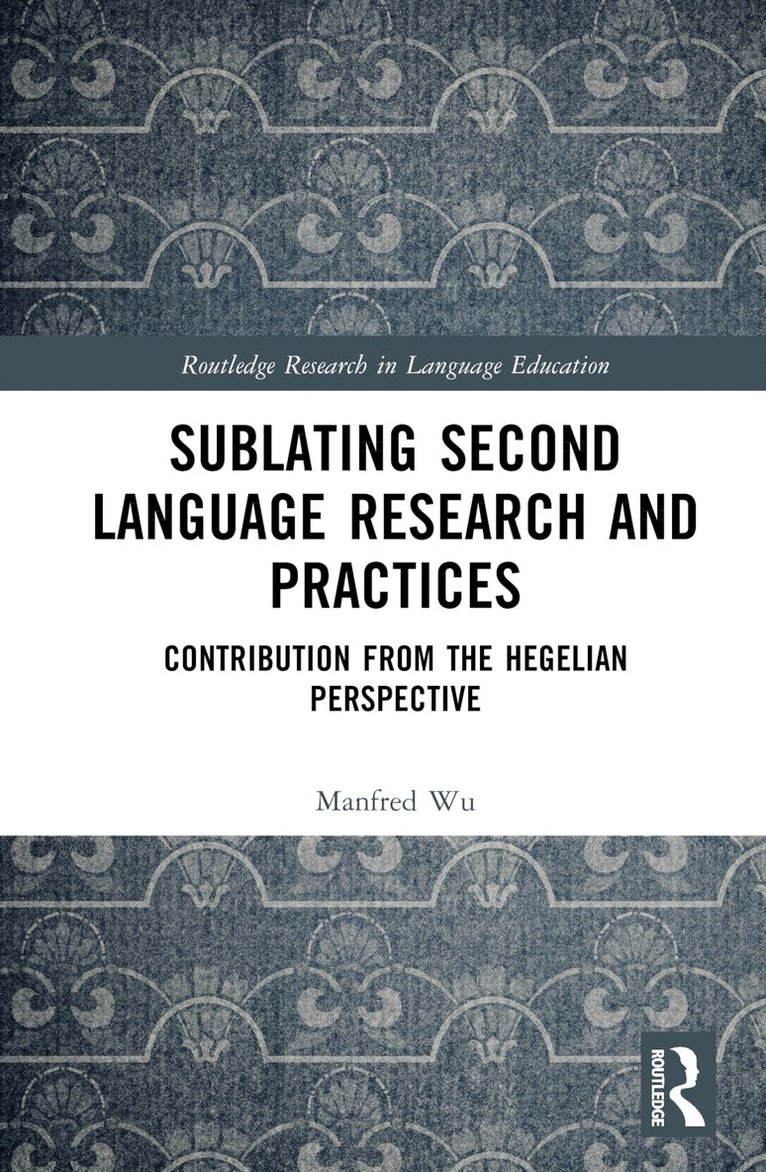
Sublating Second Language Research and Practices
Contribution from the Hegelian Perspective
Inbunden, Engelska, 2023
2 162 kr
Skickas inom 10-15 vardagar
Wu’s book provides an innovative perspective on, and recommendations for, the major aspects of second language (L2) teaching from a Hegelian anthro-philosophical perspective. Language is social in nature and is related to the larger social milieu. Hegelian philosophy of language complements existing research and theories on L2 learning by not only equipping them with a systematic framework but also broadening their scope. In Hegelian philosophy, language not only has its individual and interpersonal dimensions but is also related to the community, society, and morality. The Hegelian perspective also suggests a number of functions of L2 which have either been neglected or rejected by L2 researchers. This book highlights these neglected elements such as intersubjectivity, mutual recognition, universalization and objectivization of inner subjectivity of individuals, as well as moral enhancement. These concepts generate insights on the teaching and learning of L2. Wu’s volume also covers how the Hegelian anthro-philosophical perspective can help to re-interpret research results on L2 learner characteristics that are related to L2 learning to date such as L2 identity and autonomy. The book offers an alternative research paradigm, teaching philosophy, pedagogical implications, and suggestions for scholars, practitioners, and students in the professional field of L2 teaching.
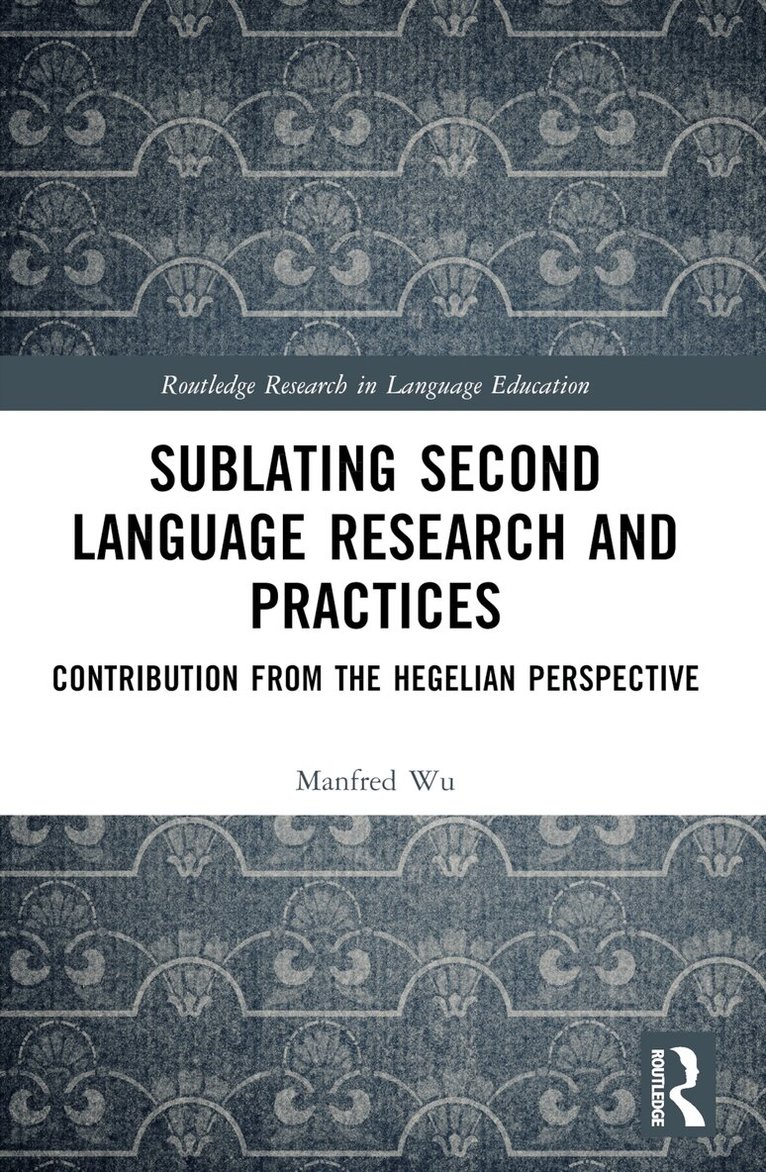
Sublating Second Language Research and Practices
Contribution from the Hegelian Perspective
Häftad, Engelska, 2024
591 kr
Skickas inom 10-15 vardagar
Wu’s book provides an innovative perspective on, and recommendations for, the major aspects of second language (L2) teaching from a Hegelian anthro-philosophical perspective. Language is social in nature and is related to the larger social milieu. Hegelian philosophy of language complements existing research and theories on L2 learning by not only equipping them with a systematic framework but also broadening their scope. In Hegelian philosophy, language not only has its individual and interpersonal dimensions but is also related to the community, society, and morality. The Hegelian perspective also suggests a number of functions of L2 which have either been neglected or rejected by L2 researchers. This book highlights these neglected elements such as intersubjectivity, mutual recognition, universalization and objectivization of inner subjectivity of individuals, as well as moral enhancement. These concepts generate insights on the teaching and learning of L2. Wu’s volume also covers how the Hegelian anthro-philosophical perspective can help to re-interpret research results on L2 learner characteristics that are related to L2 learning to date such as L2 identity and autonomy. The book offers an alternative research paradigm, teaching philosophy, pedagogical implications, and suggestions for scholars, practitioners, and students in the professional field of L2 teaching.

Globalisation and Second Language Identity
Opportunities, Challenges, and the Importance of Morality
Inbunden, Engelska, 2024
481 kr
Skickas inom 7-10 vardagar
Since L2 autonomy - the capacity to control the psychological and socio-cultural dimensions related to L2 learning (Benson, 2001) - is an integral part of L2 identity and contributes to successful language learning, the author considers how to reconceptualise and foster L2 autonomy in the age of globalisation.

Globalisation and Second Language Identity
Opportunities, Challenges, and the Importance of Morality
Häftad, Engelska, 2025
481 kr
Skickas inom 10-15 vardagar
This book focuses on how globalisation influences and affects second language (L2) identity, including both benefits and caveats of globalisation. The author takes a philosophical perspective to the topic, drawing on the theoretical foundations of Kant and Hegel to explore positive and negative impacts of issues related to globalisation such as human rights and identity reconstruction, and argues that morality should be considered as a key component in fostering L2 identity. Since L2 autonomy - the capacity to control the psychological and socio-cultural dimensions related to L2 learning (Benson, 2001) - is an integral part of L2 identity and contributes to successful language learning, the author considers how to reconceptualise and foster L2 autonomy in the age of globalisation. He finds that globalisation has created new challenges and demands for L2 teachers, and explores how far they must transform their identity for effective teaching, including recommendations for the future. This book will be of particular interest to students, teachers and academics in fields including applied linguistics, language education, language teacher training, psycholinguistics, and sociolinguistics, as well as scholars of sociology and philosophy.