
Manuel P. Vargas – författare
Visar alla böcker från författaren Manuel P. Vargas. Handla med fri frakt och snabb leverans.
4 produkter
4 produkter
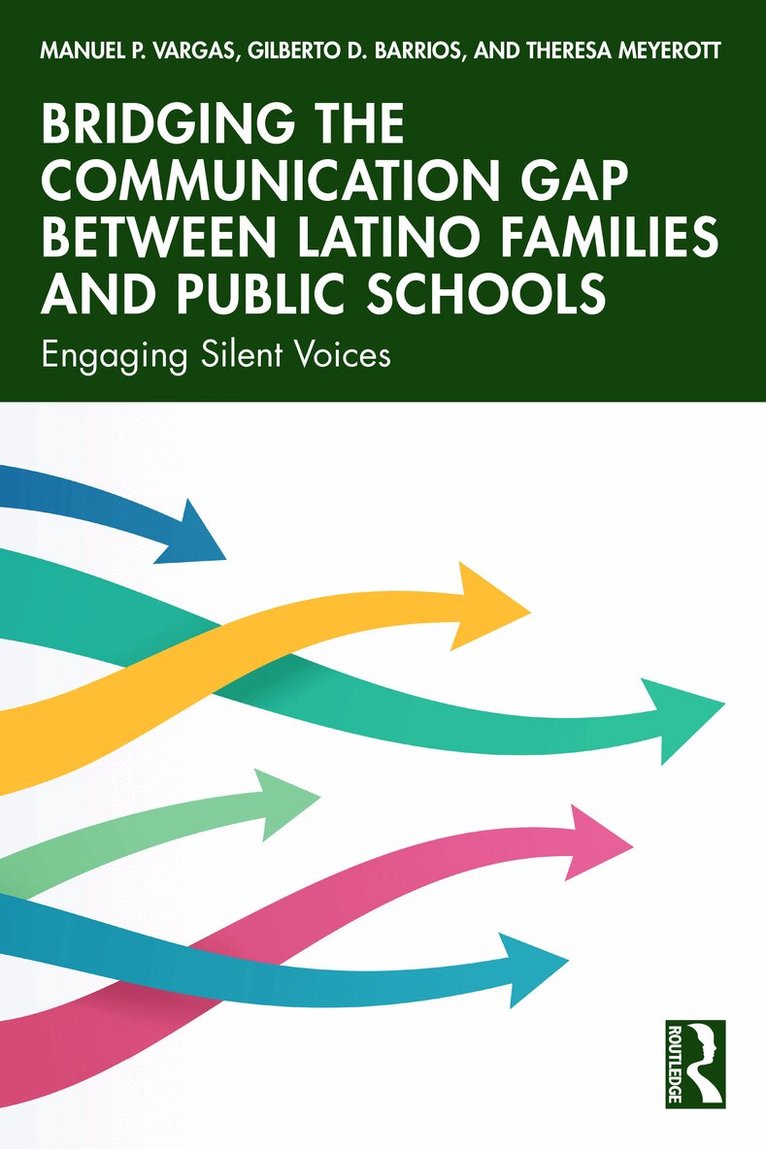
Häftad, Engelska, 2026
568 kr
Skickas inom 10-15 vardagar
This book describes the home-school communication experiences of five Latino families in order to showcase the communication challenges Latino parents, and their children, encounter as they navigate the American education system.As former PK–12 practitioners, now educator-preparation program faculty, the authors contend that there is a clear communication gap between a predominantly White teaching and leadership force—teachers, school principals, and counselors—and the Black and Brown student population. Research findings included in this book demonstrate that Latino/a students remain persistent targets of deficit-thinking beliefs, implicit bias, and low-level academic expectations in school settings, and also that positive interactions with teachers, counselors, and school leaders are connected to student cognitive development, creative thinking, and overall student success. Through the family stories and research findings included in this book, this book makes a case for the far-reaching consequences home-school relations have on the overall educational trajectory of the fastest-growing group of students in the United States—Latino/a students.This book provides teacher educators and pre-service teachers with knowledge from the field and connections to scholarly findings so they may be in a more informed position to enact best policies and practices in order to help Latino/a students thrive.
Inbunden, Engelska, 2026
2 073 kr
Skickas inom 10-15 vardagar
This book describes the home-school communication experiences of five Latino families in order to showcase the communication challenges Latino parents, and their children, encounter as they navigate the American education system.As former PK–12 practitioners, now educator-preparation program faculty, the authors contend that there is a clear communication gap between a predominantly White teaching and leadership force—teachers, school principals, and counselors—and the Black and Brown student population. Research findings included in this book demonstrate that Latino/a students remain persistent targets of deficit-thinking beliefs, implicit bias, and low-level academic expectations in school settings, and also that positive interactions with teachers, counselors, and school leaders are connected to student cognitive development, creative thinking, and overall student success. Through the family stories and research findings included in this book, this book makes a case for the far-reaching consequences home-school relations have on the overall educational trajectory of the fastest-growing group of students in the United States—Latino/a students.This book provides teacher educators and pre-service teachers with knowledge from the field and connections to scholarly findings so they may be in a more informed position to enact best policies and practices in order to help Latino/a students thrive.
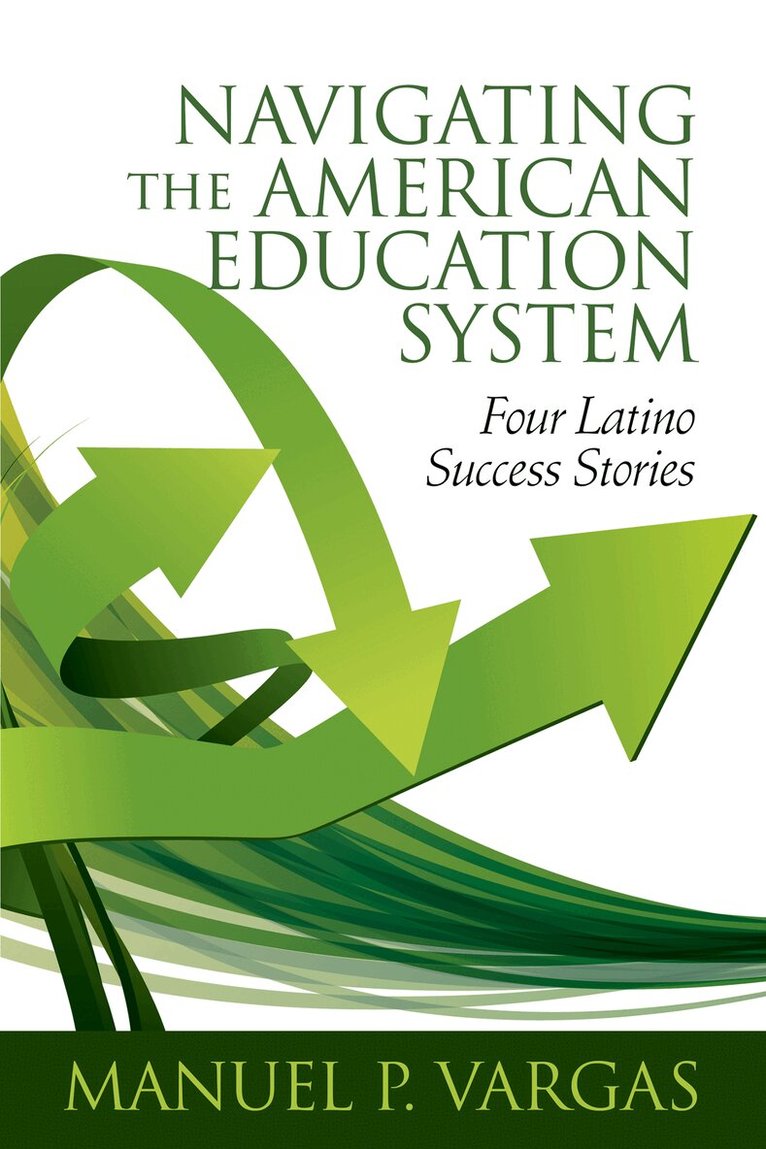
Häftad, Engelska, 2020
524 kr
Skickas inom 5-8 vardagar
Navigating the American Education System: Four Latino Success Stories showcases the educational journey of four Latino/a men and women who navigated the American education system successfully. Their success is significant given the multiple and varied challenges that most Latinos/as encounter throughout the K–20 educational continuum. The purpose of this book is not only to show and tell, but to describe ordinary people attaining extraordinary results, who might also stand as good role models for the youngest- and fastest-growing group—Latinos/as—in this country. Researchers of this topic offer compelling statistics, such as the following projection: Out of 100 Latino/a students, a few more than 50 will finish high school; out of this number, five will enroll in college; and out of the original 100, less than one percent will complete a doctorate. While the causes of low academic attainment for Latinos may vary, including limited financial resources and cultural differences, the lack of Latino role models in K–20 education may be a significant contributing factor.The expression, “You can’t be what you don’t see” is especially applicable to Latino/a students who seldom see people like them in positions of prominence and power in educational environments. Across the country, and in particular in states with high numbers of Latino/a students, as the K–20 student body becomes darker, the teaching and decision-making personnel remain light-skinned. Consequently, the absence of role models for an increasing number of students of color may contribute to low levels of aspiration. Many attempts and existing literature regarding the achievement gap of students of color, especially Latinos/as, seem to have had modest or no impact, even when statistical analysis and sound rationales are provided. On the other hand, the stories included in this book offer an alternative that may have an impact and long-lasting effect in the lives of students of color.Story messages tend to stay longer with us and enable us to make sense of complex situations, such as education, culture, and personality traits—persistence, motivation, resilience. Consequently, the stories in this book become vehicles to learn from real-life examples the abstractions of education, home and school culture, and other factors that contribute to academic success. Furthermore, the stories encourage people to write, tell, and share experiences to address ongoing problems; invite change where change is needed; organize thoughts and seek meaningful solutions; invite us to become cognizant about how our emotions direct our thoughts and “move mountains”; enable us to discover undercurrents that hinder organizational communication; direct us to pay attention to the little things that matter and build trust; awaken the good in people through an invitational approach, as opposed to one that it’s mandated; push us to avoid playing it safe and stick out our emotional necks when dealing with people; seek authentic voices to make room for new thinking; make time for people; and allow our voices to define the values we embrace.
Inbunden, Engelska, 2020
977 kr
Skickas inom 5-8 vardagar
Navigating the American Education System: Four Latino Success Stories showcases the educational journey of four Latino/a men and women who navigated the American education system successfully. Their success is significant given the multiple and varied challenges that most Latinos/as encounter throughout the K–20 educational continuum. The purpose of this book is not only to show and tell, but to describe ordinary people attaining extraordinary results, who might also stand as good role models for the youngest- and fastest-growing group—Latinos/as—in this country. Researchers of this topic offer compelling statistics, such as the following projection: Out of 100 Latino/a students, a few more than 50 will finish high school; out of this number, five will enroll in college; and out of the original 100, less than one percent will complete a doctorate. While the causes of low academic attainment for Latinos may vary, including limited financial resources and cultural differences, the lack of Latino role models in K–20 education may be a significant contributing factor.The expression, “You can’t be what you don’t see” is especially applicable to Latino/a students who seldom see people like them in positions of prominence and power in educational environments. Across the country, and in particular in states with high numbers of Latino/a students, as the K–20 student body becomes darker, the teaching and decision-making personnel remain light-skinned. Consequently, the absence of role models for an increasing number of students of color may contribute to low levels of aspiration. Many attempts and existing literature regarding the achievement gap of students of color, especially Latinos/as, seem to have had modest or no impact, even when statistical analysis and sound rationales are provided. On the other hand, the stories included in this book offer an alternative that may have an impact and long-lasting effect in the lives of students of color.Story messages tend to stay longer with us and enable us to make sense of complex situations, such as education, culture, and personality traits—persistence, motivation, resilience. Consequently, the stories in this book become vehicles to learn from real-life examples the abstractions of education, home and school culture, and other factors that contribute to academic success. Furthermore, the stories encourage people to write, tell, and share experiences to address ongoing problems; invite change where change is needed; organize thoughts and seek meaningful solutions; invite us to become cognizant about how our emotions direct our thoughts and “move mountains”; enable us to discover undercurrents that hinder organizational communication; direct us to pay attention to the little things that matter and build trust; awaken the good in people through an invitational approach, as opposed to one that it’s mandated; push us to avoid playing it safe and stick out our emotional necks when dealing with people; seek authentic voices to make room for new thinking; make time for people; and allow our voices to define the values we embrace.