Marc J. Dunkelman – författare
Visar alla böcker från författaren Marc J. Dunkelman. Handla med fri frakt och snabb leverans.
3 produkter
3 produkter
335 kr
Skickas inom 7-10 vardagar
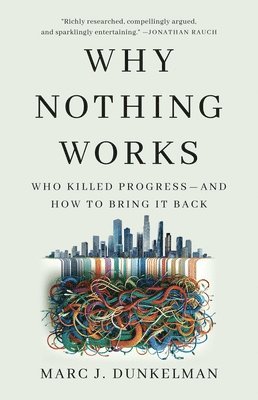
A provocative exploration about the architecture of power, the forces that stifle us from getting things done, and how we can restore confidence in democratically elected government-"the best book to date on the biggest political issue that nobody is talking about" (Matthew Yglesias)America was once a country that did big things-we built the world's greatest rail network, a vast electrical grid, interstate highways, abundant housing, the Social Security system, the Tennessee Valley Authority, and more. But today, even while facing a host of pressing challenges-a housing shortage, a climate crisis, a dilapidated infrastructure-we feel stuck, unable to move the needle. Why?America is today the victim of a vetocracy that allows nearly anyone to stifle progress. While conservatives deserve some blame, progressives have overlooked an unlikely culprit: their own fears of "The Establishment." A half-century ago, progressivism's designs on getting stuff done were eclipsed by a desire to box in government. Reformers put speaking truth to power ahead of exercising that power for good. The ensuing gridlock has pummeled faith in public institutions of all sorts, stifled the movement's ability to deliver on its promises, and, most perversely, opened the door for MAGA-style populism. A century ago, Americans were similarly frustrated-and progressivism pointed the way out. The same can happen again. Marc J. Dunkelman vividly illustrates what progressives must do if they are going to break through today's paralysis and restore, once again, confidence in democratically elected government. To get there, reformers will need to acknowledge where they've gone wrong. Progressivism's success moving forward hinges on the movement's willingness to rediscover its roots.
251 kr
Skickas inom 7-10 vardagar
Americans today find themselves mired in an era of uncertainty and frustration. The nation's safety net is pulling apart under its own weight; political compromise is viewed as a form of defeat; and our faith in the enduring concept of American exceptionalism appears increasingly outdated.But the American Age may not be ending. In The Vanishing Neighbor, Marc J. Dunkelman identifies an epochal shift in the structure of American life—a shift unnoticed by many. Routines that once put doctors and lawyers in touch with grocers and plumbers—interactions that encouraged debate and cultivated compromise—have changed dramatically since the postwar era. Both technology and the new routines of everyday life connect tight-knit circles and expand the breadth of our social landscapes, but they've sapped the commonplace, incidental interactions that for centuries have built local communities and fostered healthy debate.The disappearance of these once-central relationships—between people who are familiar but not close, or friendly but not intimate—lies at the root of America's economic woes and political gridlock. The institutions that were erected to support what Tocqueville called the "township"—that unique locus of the power of citizens—are failing because they haven't yet been molded to the realities of the new American community.It's time we moved beyond the debate over whether the changes being made to American life are good or bad and focus instead on understanding the tradeoffs. Our cities are less racially segregated than in decades past, but we’ve become less cognizant of what's happening in the lives of people from different economic backgrounds, education levels, or age groups. Familiar divisions have been replaced by cross-cutting networks—with profound effects for the way we resolve conflicts, spur innovation, and care for those in need.The good news is that the very transformation at the heart of our current anxiety holds the promise of more hope and prosperity than would have been possible under the old order. The Vanishing Neighbor argues persuasively that to win the future we need to adapt yesterday’s institutions to the realities of the twenty-first-century American community.
209 kr
Kommande
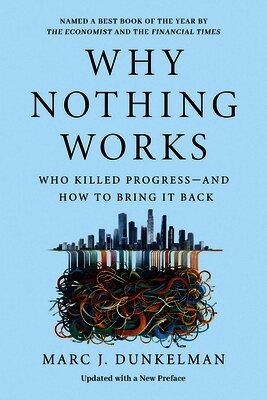
An "astute" and "insightful" (Financial Times) exploration of the forces that keep us from getting things done, and how we can restore confidence in governmentAmerica was once a country that did big things. But today, even while facing a host of pressing challenges-a housing shortage, a climate crisis, dilapidated infrastructure-we feel stuck. As Mark J. Dunkelman reveals, America is the victim of a vetocracy that allows nearly anyone to stifle progress. While conservatives deserve some blame, progressives have overlooked an unlikely culprit: their own fears of "The Establishment." A half century ago, reformers began to put speaking truth to power ahead of exercising that power for good. Now, the ensuing gridlock has pummeled faith in public institutions of all sorts and opened the door for MAGA-style populism. Why Nothing Works uncovers the roots of this predicament, and boldly shows how progressives can once again build a better future for all.