Marc Lange – författare
Visar alla böcker från författaren Marc Lange. Handla med fri frakt och snabb leverans.
15 produkter
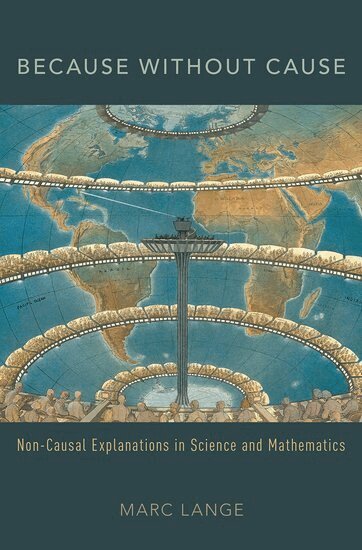
Because Without Cause
Non-Causal Explanations in Science and Mathematics
Av Marc Lange
Inbunden, 2016
2306 kr
Lägg i varukorg
Not all scientific explanations work by describing causal connections between events or the world's overall causal structure. Some mathematical proofs explain why the theorems being proved hold. In this book, Marc Lange proposes philosophical accounts of many kinds of non-causal explanations in …
Because Without Cause
Non-Casual Explanations In Science and Mathematics
Av Marc Lange
E-bok, 2016
569 kr
Lägg i varukorg
Not all scientific explanations work by describing causal connections between events or the world''s overall causal structure. Some mathematical proofs explain why the theorems being proved hold. In this book, Marc Lange proposes philosophical accounts of many kinds of non-causal explanations in …
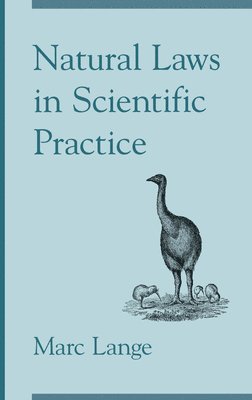
Natural Laws in Scientific Practice
Av Marc Lange
Inbunden, 2000
2444 kr
Lägg i varukorg
Laws of nature have long been thought to have special significance for aspects of scientific reasoning such as counterfactual conditionals, inductive projections, and scientific explanations. But the laws' distinctive roles in scientific reasoning have proved notoriously difficult to identify …
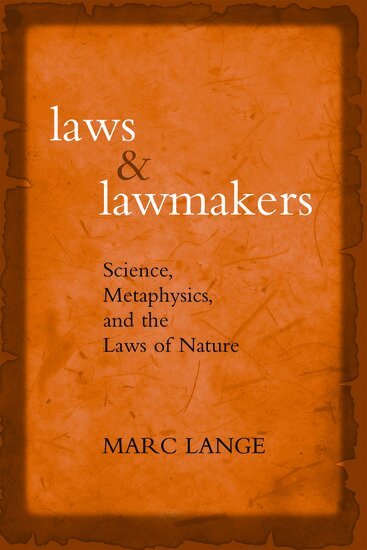
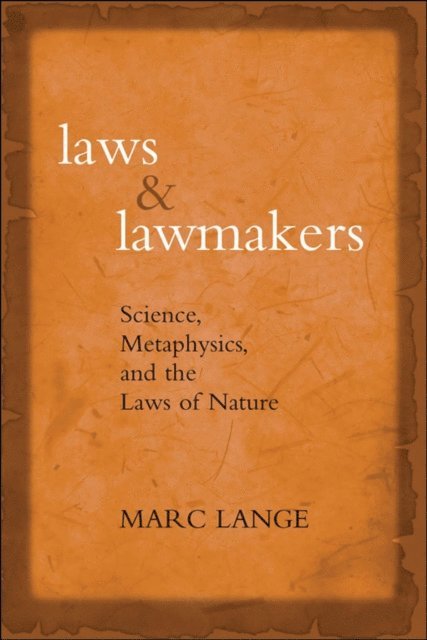
Laws and Lawmakers Science, Metaphysics, and the Laws of Nature
Av Marc Lange
Inbunden, 2009
1790 kr
Lägg i varukorg
Laws of nature have long puzzled philosophers. What distinguishes laws from facts about the world that do not rise to the level of laws? How can laws be contingent and nevertheless necessary? In this brief, accessible study, Lange offers provocative and original answers to these questions. He …
Laws and Lawmakers
Science, Metaphysics, and the Laws of Nature
Av Marc Lange
Häftad, 2009
667 kr
Lägg i varukorg
Laws of nature have long puzzled philosophers. What distinguishes laws from facts about the world that do not rise to the level of laws? How can laws be contingent and nevertheless necessary? In this brief, accessible study, Lange offers provocative and original answers to these questions. He …
Natural Laws in Scientific Practice
Av Marc Lange
Häftad, 2007
1253 kr
Lägg i varukorg
It is often presumed that the laws of nature have special significance for scientific reasoning. But the laws' distinctive roles have proven notoriously difficult to identify--leading some philosophers to question if they hold such roles at all. This study offers original accounts of the roles that …
Natural Laws in Scientific Practice
Av Marc Lange
E-bok, 2000
603 kr
Lägg i varukorg
It is often presumed that the laws of nature have special significance for scientific reasoning. But the laws'' distinctive roles have proven notoriously difficult to identify--leading some philosophers to question if they hold such roles at all. This study offers original accounts of the roles …
Because Without Cause
Non-Casual Explanations In Science and Mathematics
Av Marc Lange
Häftad, 2020
821 kr
Lägg i varukorg
Not all scientific explanations work by describing causal connections between events or the world's overall causal structure. Some mathematical proofs explain why the theorems being proved hold. In this book, Marc Lange proposes philosophical accounts of many kinds of non-causal explanations in …
Laws and Lawmakers
Science, Metaphysics, and the Laws of Nature
Av Marc Lange
E-bok, 2009
457 kr
Lägg i varukorg
What distinguishes laws of nature from ordinary facts? What are the "lawmakers": the facts in virtue of which the laws are laws? How can laws be necessary, yet contingent? Lange provocatively argues that laws are distinguished by their necessity, which is grounded in primitive subjunctive facts, …
Laws and Lawmakers
Science, Metaphysics, and the Laws of Nature
Av Marc Lange
E-bok, 2009
514 kr
Lägg i varukorg
What distinguishes laws of nature from ordinary facts? What are the "lawmakers": the facts in virtue of which the laws are laws? How can laws be necessary, yet contingent? Lange provocatively argues that laws are distinguished by their necessity, which is grounded in primitive subjunctive facts, …
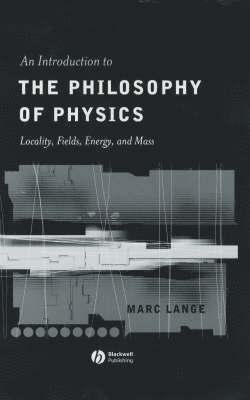
Introduction to the Philosophy of Physics
Locality, Fields, Energy, and Mass
Av Marc Lange
Inbunden, 2002
1597 kr
Lägg i varukorg
This book combines physics, philosophy, and history in a radical new approach to introducing the philosophy of physics. It leads the reader through several central problems in the philosophy of physics by tracing their connections to a single issue: whether a cause must be spatiotemporally local to …
Introduction to the Philosophy of Physics
Locality, Fields, Energy, and Mass
Av Marc Lange
Häftad, 2002
482 kr
Lägg i varukorg
This book combines physics, philosophy, and history in a radical new approach to introducing the philosophy of physics. It leads the reader through several central problems in the philosophy of physics by tracing their connections to a single issue: whether a cause must be spatiotemporally local to …
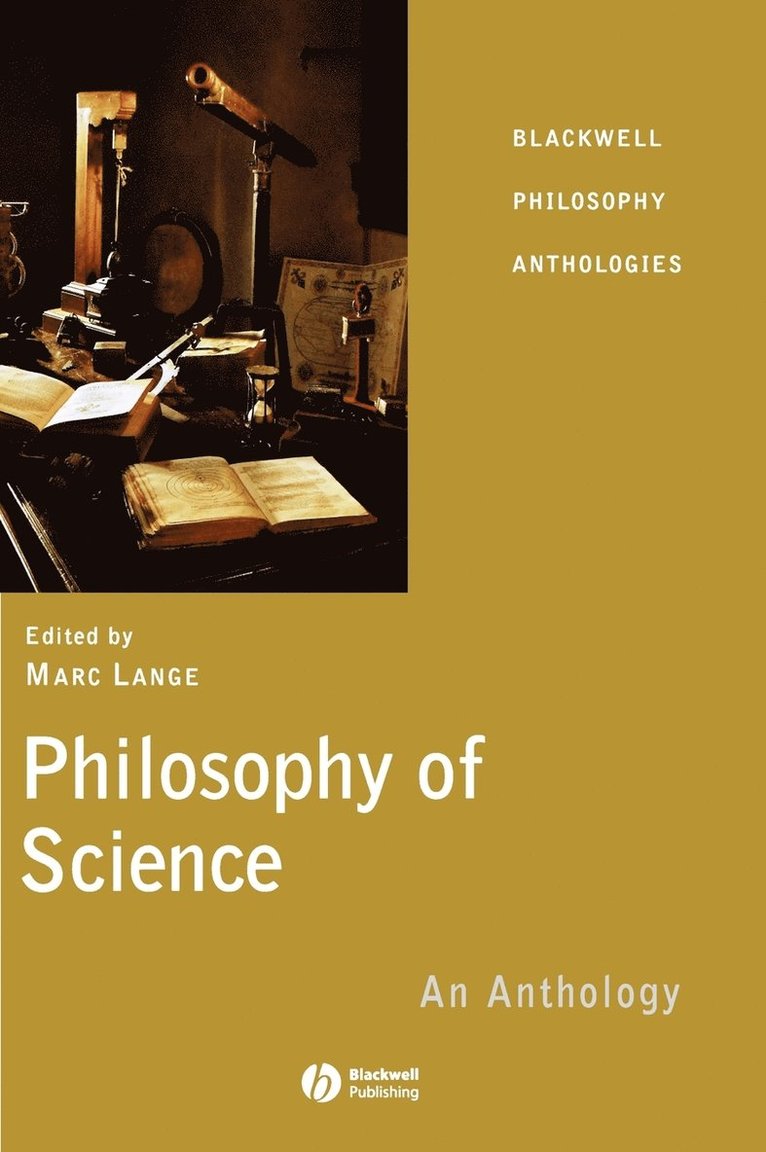
Philosophy of Science
An Anthology
Av Lange, Marc Lange
Inbunden, 2006
1561 kr
Lägg i varukorg
Philosophy of Science: An Anthology assembles some of the finest papers in the philosophy of science since 1945, showcasing enduring classics alongside important and innovative recent work. Introductions by the editor highlight connections between selections, and contextualize the articles Nine …
Philosophy of Science
An Anthology
Av Marc Lange, Marc Lange
Häftad, 2006
608 kr
Lägg i varukorg
Philosophy of Science: An Anthology assembles some of the finest papers in the philosophy of science since 1945, showcasing enduring classics alongside important and innovative recent work. Introductions by the editor highlight connections between selections, and contextualize the articles Nine …