Marc Waelkens – författare
Visar alla böcker från författaren Marc Waelkens. Handla med fri frakt och snabb leverans.
5 produkter
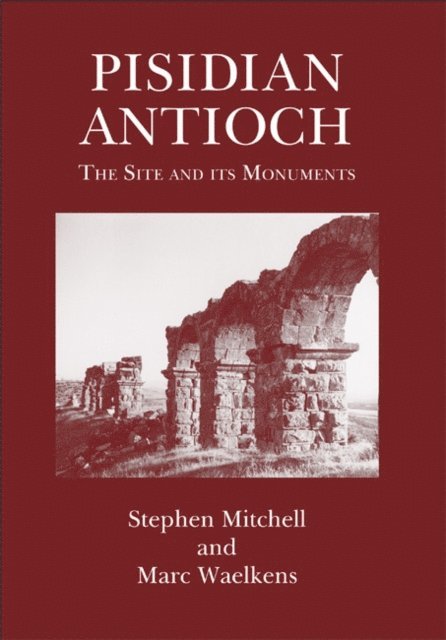
Pisidian Antioch
The Site and its Monuments
Av Marc Waelkens, Stephen Mitchell
E-bok, 1998
1007 kr
Lägg i varukorg
The city of Pisidian Antioch was founded in the hellenistic period by the Seleucids, in what is now south-west Turkey. Under the emperor Augustus it became the most important Roman colony of the eastern empire. The city flourished until the sixth century AD. It has left dramatic and extensive …
Classical Marble: Geochemistry, Technology, Trade
Av N. Herz, Marc Waelkens
Häftad, 2010
4590 kr
Lägg i varukorg
Marble in Ancient Greece and Rome: Geology, Quarries, Commerce, Artifacts Marble remains the sine qua non raw material of the an cient Greeks and Romans. Beginning in the Bronze Age sculptu re began in marble and throughout classical times the most im portant statues, reliefs, monuments and …
Classical Marble: Geochemistry, Technology, Trade
Av Marc Waelkens, N. Herz
E-bok, 2013
6167 kr
Lägg i varukorg
Marble in Ancient Greece and Rome: Geology, Quarries, Commerce, Artifacts Marble remains the sine qua non raw material of the an cient Greeks and Romans. Beginning in the Bronze Age sculptu re began in marble and throughout classical times the most im portant statues, reliefs, monuments and …
Sagalassos V
Report on the Survey and Excavation Campaigns of 1996 and 1997
Av L. Loots, Marc Waelkens m. fl.
Häftad, 2000
319 kr
Tillfälligt slut
Sagalassos, once the metropolis of the Western Taurus range (Pisidia, Turkey), was only thoroughly surveyed in 1884 and 1885 by an Austrian team directed by K. Lanckoronski. In 1986-1989 this work was resumed by a British-belgian team co-directed by Dr. Stephen Mitchell (University College of …
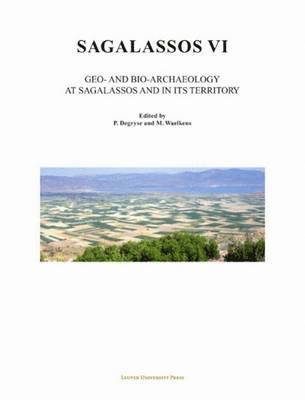
Sagalassos VI
Geo- and Bio-Archaeology in the Territory of Sagalassos
Av Patrick Degryse, Marc Waelkens
Häftad, 2008
313 kr
Tillfälligt slut
Since 1990, the ancient city of Sagalassos in southwestern Turkey has been the focus of an interdisciplinary archaeological research project coordinated by the Katholieke Universiteit Leuven. The papers collected in this volume reveal how the meticulous systematic and interdisciplinary …