Marcel Tyrell - Böcker
Visar alla böcker från författaren Marcel Tyrell. Handla med fri frakt och snabb leverans.
4 produkter
4 produkter
1 164 kr
Skickas inom 5-8 vardagar
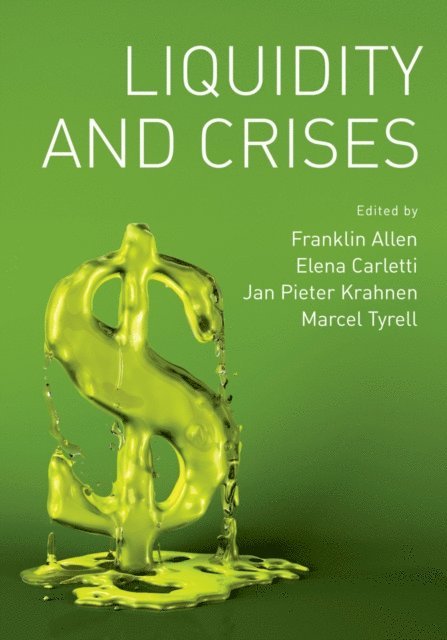
Financial crises have been pervasive for many years. Their frequency in recent decades has been double that of the Bretton Woods Period (1945-1971) and the Gold Standard Era (1880-1993), comparable only to the period during the Great Depression. Nevertheless, the financial crisis that started in the summer of 2007 came as a great surprise to most people. What initially was seen as difficulties in the U.S. subprime mortgage market, rapidly escalated and spilled over first to financial markets and then to the real economy. The crisis changed the financial landscape worldwide and its full costs are yet to be evaluated. One important reason for the global impact of the 2007-2009 financial crisis was massive illiquidity in combination with an extreme exposure of many financial institutions to liquidity needs and market conditions. As a consequence, many financial instruments could not be traded anymore, investors ran on a variety of financial institutions particularly in wholesale markets, financial institutions and industrial firms started to sell assets at fire sale prices to raise cash, and central banks all over the world injected huge amounts of liquidity into financial systems. But what is liquidity and why is it so important for firms and financial institutions to command enough liquidity? This book brings together classic articles and recent contributions to this important field of research. It is divided into five parts. These are (i) liquidity and interbank markets; (ii) the public provision of liquidity and regulation; (iii) money, liquidity and asset prices; (iv) contagion effects; (v) financial crises and currency crises. The aim is to provide a comprehensive coverage of role of liquidity in financial crises.
909 kr
Skickas inom 5-8 vardagar
Financial crises have been pervasive for many years. Their frequency in recent decades has been double that of the Bretton Woods Period (1945-1971) and the Gold Standard Era (1880-1993), comparable only to the period during the Great Depression. Nevertheless, the financial crisis that started in the summer of 2007 came as a great surprise to most people. What initially was seen as difficulties in the U.S. subprime mortgage market, rapidly escalated and spilled over first to financial markets and then to the real economy. The crisis changed the financial landscape worldwide and its full costs are yet to be evaluated.One important reason for the global impact of the 2007-2009 financial crisis was massive illiquidity in combination with an extreme exposure of many financial institutions to liquidity needs and market conditions. As a consequence, many financial instruments could not be traded anymore, investors ran on a variety of financial institutions particularly in wholesale markets, financial institutions and industrial firms started to sell assets at fire sale prices to raise cash, and central banks all over the world injected huge amounts of liquidity into financial systems. But what is liquidity and why is it so important for firms and financial institutions to command enough liquidity? This book brings together classic articles and recent contributions to this important field of research. It is divided into five parts. These are (i) liquidity and interbank markets; (ii) the public provision of liquidity and regulation; (iii) money, liquidity and asset prices; (iv) contagion effects; (v) financial crises and currency crises. The aim is to provide a comprehensive coverage of role of liquidity in financial crises.
499 kr
Skickas inom 10-15 vardagar
Die ZU|Schriften bewegen sich im Rahmen der Unterscheidung von Komplexität und Kontingenz, um die Überlegung diskutieren zu können, dass jede soziale Umgebung ein vernetzter, komplexer Zusammenhang ist, der sich in ein verstehbares und bearbeitbares, orientierendes Format bringen und dabei die kontingente Selektivität dieses Formats mitreflektieren, sich also organisieren muss, um handlungsfähig zu sein und kritikfähig zu bleiben. Der vorliegende Band nimmt diese Überlegung als Frage nach der Möglichkeit ernst, Freiheit und Demokratie zu verbinden. Ist Demokratie eine Form komplexer Freiheit, das heißt vor allem: wird Freiheit durch Demokratie ermöglicht?Begriffsfragen bestimmen zunächst das Problem einer Freiheit genauer, die komplex ist, weil sie eingeschränkt ist, ohne festgelegt zu sein. Den Herausforderungen, die sich aus dieser spezifisch modernen Freiheitsform ergeben, gehen Verständigungsfragen und Machtfragen nach; sie suchen nach den Formen der Freiheit in demokratisch verfassten Ordnungen und sehen sich auch die politischen Risiken an, die durch ein Wechselspiel von Vereinfachung und Verkomplizierung in massenmedialen Öffentlichkeiten, rechtlichen Verfahren und hierarchischen Organisationen entstehen können. Kann die Komplexität der sozialen Welt so sehr anwachsen, dass Ordnungsbedürfnisse unbefriedigt bleiben? Kann die Kontingenz der sozialen Ordnung zu derart überfordernden Ungewissheiten und Unsicherheiten führen, dass nostalgische Blindheiten wie Zukunftsversprechen begrüßt werden?
Kapitalmärkte und Banken
Formen der Informationsverarbeitung als konstitutives Merkmal
Häftad, Tyska, 2003
665 kr
Skickas inom 10-15 vardagar
Marcel Tyrell zeigt, dass das wesentliche Unterscheidungsmerkmal von Kapitalmarkten und Banken ihre Art der Informationsverarbeitung ist: Kapitalmarkte externalisieren Information, d.h., wertbestimmende Informationen uber Kapitalmarkttitel werden durch den Preismechanismus offentlich gemacht. Banken hingegen verarbeiten Informationen uber ihre Kreditnehmer intern, d.h., sie werden zur Losung bzw. zur Abschwachung von Informations- und Anreizproblemen genutzt und bewusst nicht nach aussen gegeben.