Marco Bernini - Böcker
Visar alla böcker från författaren Marco Bernini. Handla med fri frakt och snabb leverans.
2 produkter
2 produkter
1 426 kr
Skickas inom 7-10 vardagar
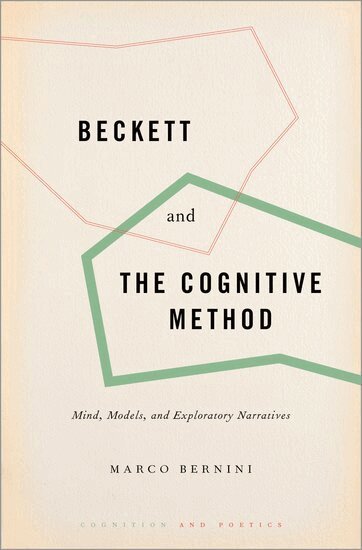
Does literature merely represent cognitive processes, or can it enhance, parallel, or reassess the scientific study of the mind? Beckett and the Cognitive Method argues that Samuel Beckett's narrative work, rather than just expressing or rendering mental states, inaugurates an exploratory use of narrative as an introspective modeling technology. Through a detailed analysis of Beckett's entire corpus and published volumes of letters, this book argues that Beckett pioneered a new method of writing to construct (in a mode analogous to scientific inquiry) models for the exploration of core laws, processes, and dynamics in the human mind.Marco Bernini integrates frameworks from contemporary narrative theory, cognitive sciences, phenomenology, and philosophy of mind to make a case for Beckett's modeling practice. Bernini demonstrates how this modeling applies to a vast array of processes including the (narrative) illusion of a sense of self, the dialogic interaction with memories and felt presences, the synesthetic nature of inner experience and mental imagery, the role of moods and emotions as cognitive drives, and the emergent quality of consciousness. Beckett and the Cognitive Method also reflects on how Beckett's fictional cognitive models are transformed into reading, auditory, or spectatorial experiences generating through narrative devices insights on what the sciences can only discursively report. As such, Bernini argues that literature should be considered a proper exploration of the mind, with its own tools and models for cognitive inquiry.
1 146 kr
Skickas inom 5-8 vardagar
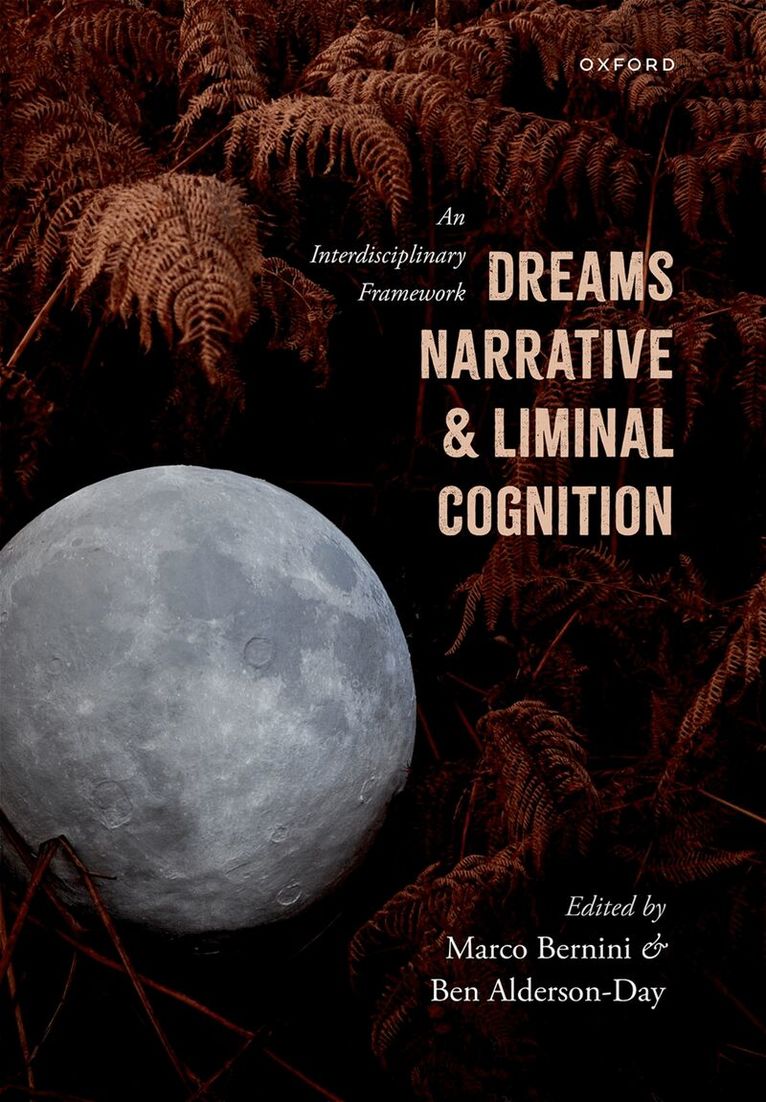
Dreams have been fascinating multiple disciplines for centuries, from philosophy and literature to contemporary cognitive science. Why we dream remains an enduring mystery, but cognitive research on dream has experienced a new wave of interest in recent years. Breakthroughs in the experimental study of dreaming are provoking multiple questions about the experiential qualities of dreams and the potential insights they might disclose for larger issues such as consciousness, the self, and our relationship with reality. How does our enactive and cognitive experience of reality permeate into dreams, and vice-versa? What makes dreams immersive and world-like experiences?? And are dreams narrative experiences, or experiences that we only later narrativize?Dreams, Narrative, and Liminal Cognition answers these questions with an interdisciplinary framework encompassing not just the psychological sciences but the full breadth of the arts, humanities, and social sciences. Driven by the interdisciplinary project, Threshold Worlds, based at Durham University in the autumn of 2020, this volume combines multiple methodologies to chart a more systematic landscape of dream-worlds. This includes co-constructing exploratory models, experimental designs, and phenomenological enquiries, as well as the collaborative interpretation of existing data from dream reports. It covers the themes of narrativity, permeability, immersivity, and reportability through original and interdisciplinary contributions from cognitive scientists, psychiatrists, narrative theorists, philosophers of mind, theologians, and artists.Chapters 1, 3, 5, 7, 8, 9, and 10 of this work are available under the terms of a CC BY-NC-ND 4.0 International open access licence. These parts of the work are free to read on the Oxford Academic platform and offered as a free PDF download from OUP and selected open access locations.