Marco Roscini - Böcker
Visar alla böcker från författaren Marco Roscini. Handla med fri frakt och snabb leverans.
4 produkter
4 produkter
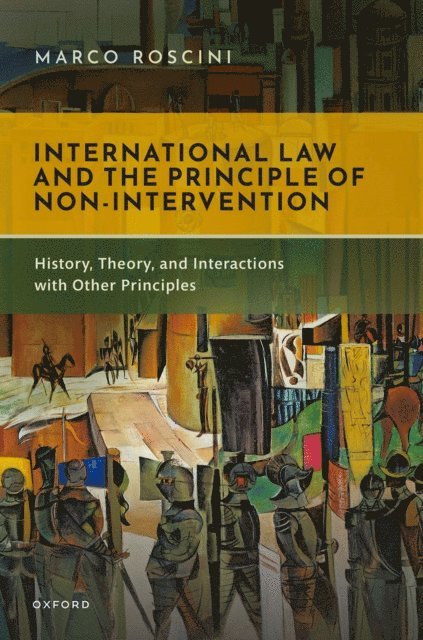
International Law and the Principle of Non-Intervention
History, Theory, and Interactions with Other Principles
Inbunden, Engelska, 2024
2 374 kr
Skickas inom 3-6 vardagar
The principle of non-intervention is one of the most venerable principles of international law. Although not expressly mentioned in the Charter of the United Nations, at least as an inter-state prohibition, the principle currently appears in a plethora of treaties and UN General Assembly resolutions and has been invoked by states of all geographical and political denominations. Despite this, the determination of its exact content has remained an enigma.International Law and the Principle of Non-Intervention: History, Theory, and Interactions with Other Principlessolves this enigma by exploring what constitutes an 'intervention' in international law and when interventions are unlawful. These questions are approached from three different perspectives, which are reflected in the book's structure: historical, theoretical, and systemic. Through a comprehensive survey of primary documents and of over 200 cases of intervention from the mid-18th century to the present day, as well as an extensive literature search, this work provides an in-depth analysis of the principle of non-intervention which links it to fundamental notions of international law, including sovereignty, use of force, self-determination, and human rights protection.
554 kr
Skickas inom 7-10 vardagar
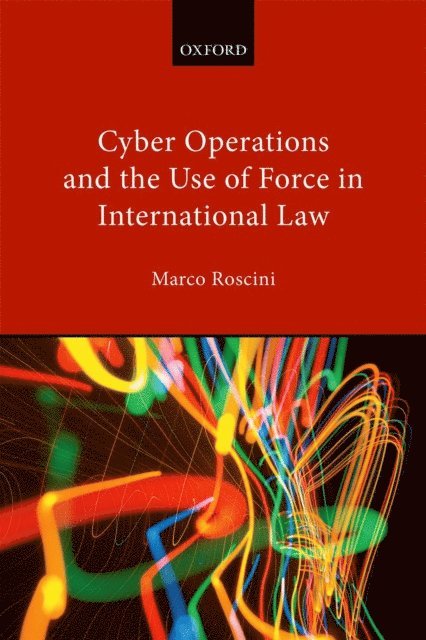
The internet has changed the rules of many industries, and war is no exception. But can a computer virus be classed as an act of war? Does a Denial of Service attack count as an armed attack? And does a state have a right to self-defence when cyber attacked? With the range and sophistication of cyber attacks against states showing a dramatic increase in recent times, this book investigates the traditional concepts of 'use of force', 'armed attack', and 'armed conflict' and asks whether existing laws created for analogue technologies can be applied to new digital developments.The book provides a comprehensive analysis of primary documents and surrounding literature, to investigate whether and how existing rules on the use of force in international law apply to a relatively new phenomenon such as cyberspace operations. It assesses the rules of jus ad bellum and jus in bello, whether based on treaty or custom, and analyses why each rule applies or does not apply to cyber operations. Those rules which can be seen to apply are then discussed in the context of each specific type of cyber operation. The book addresses the key questions of whether a cyber operation amounts to the use of force and, if so, whether the victim state can exercise its right of self-defence; whether cyber operations trigger the application of international humanitarian law when they are not accompanied by traditional hostilities; what rules must be followed in the conduct of cyber hostilities; how neutrality is affected by cyber operations; whether those conducting cyber operations are combatants, civilians, or civilians taking direct part in hostilities. The book is essential reading for everyone wanting a better understanding of how international law regulates cyber combat.
2 138 kr
Skickas inom 5-8 vardagar
The internet has changed the rules of many industries, and war is no exception. But can a computer virus be classed as an act of war? Does a Denial of Service attack count as an armed attack? And does a state have a right to self-defence when cyber attacked? With the range and sophistication of cyber attacks against states showing a dramatic increase in recent times, this book investigates the traditional concepts of 'use of force', 'armed attack', and 'armed conflict' and asks whether existing laws created for analogue technologies can be applied to new digital developments.The book provides a comprehensive analysis of primary documents and surrounding literature, to investigate whether and how existing rules on the use of force in international law apply to a relatively new phenomenon such as cyberspace operations. It assesses the rules of jus ad bellum and jus in bello, whether based on treaty or custom, and analyses why each rule applies or does not apply to cyber operations. Those rules which can be seen to apply are then discussed in the context of each specific type of cyber operation. The book addresses the key questions of whether a cyber operation amounts to the use of force and, if so, whether the victim state can exercise its right of self-defence; whether cyber operations trigger the application of international humanitarian law when they are not accompanied by traditional hostilities; what rules must be followed in the conduct of cyber hostilities; how neutrality is affected by cyber operations; whether those conducting cyber operations are combatants, civilians, or civilians taking direct part in hostilities. The book is essential reading for everyone wanting a better understanding of how international law regulates cyber combat.
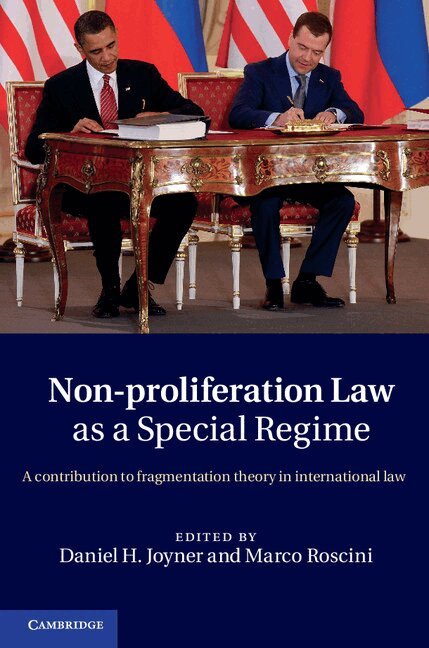
Non-Proliferation Law as a Special Regime
A Contribution to Fragmentation Theory in International Law
Inbunden, Engelska, 2012
648 kr
Skickas inom 7-10 vardagar
The fragmentation of international law is an undeniable phenomenon and one that has met with increasing academic interest. This fragmentation is the result of the progressive expansion of both international legal activity and the subject-matter of international law. This expansion brings with it the risk of conflicting rules, principles and institutions. Non-Proliferation Law as a Special Regime focuses on weapons of mass destruction and aims to identify whether there are specific rules applying to this field that depart from the general rules of international law and the rules of other special regimes, in particular with regard to the law of treaties and the law of state responsibility. In providing a systematic analysis of a substantive area of international law and applying the theory of fragmentation and special regimes, the book contributes to the ongoing debate concerning one of the most topical issues in international law.