Marcus Holmes - Böcker
Visar alla böcker från författaren Marcus Holmes. Handla med fri frakt och snabb leverans.
6 produkter
6 produkter
482 kr
Kommande
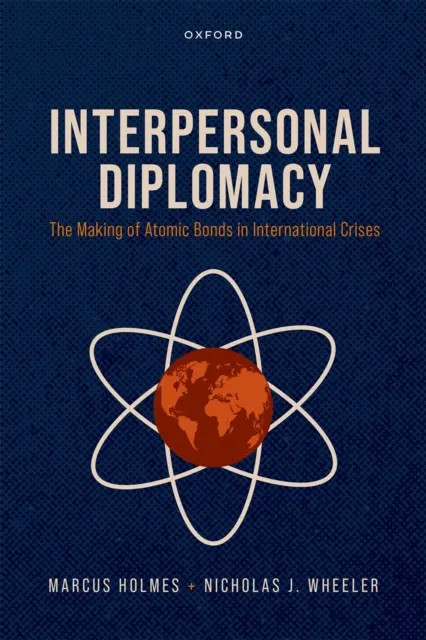
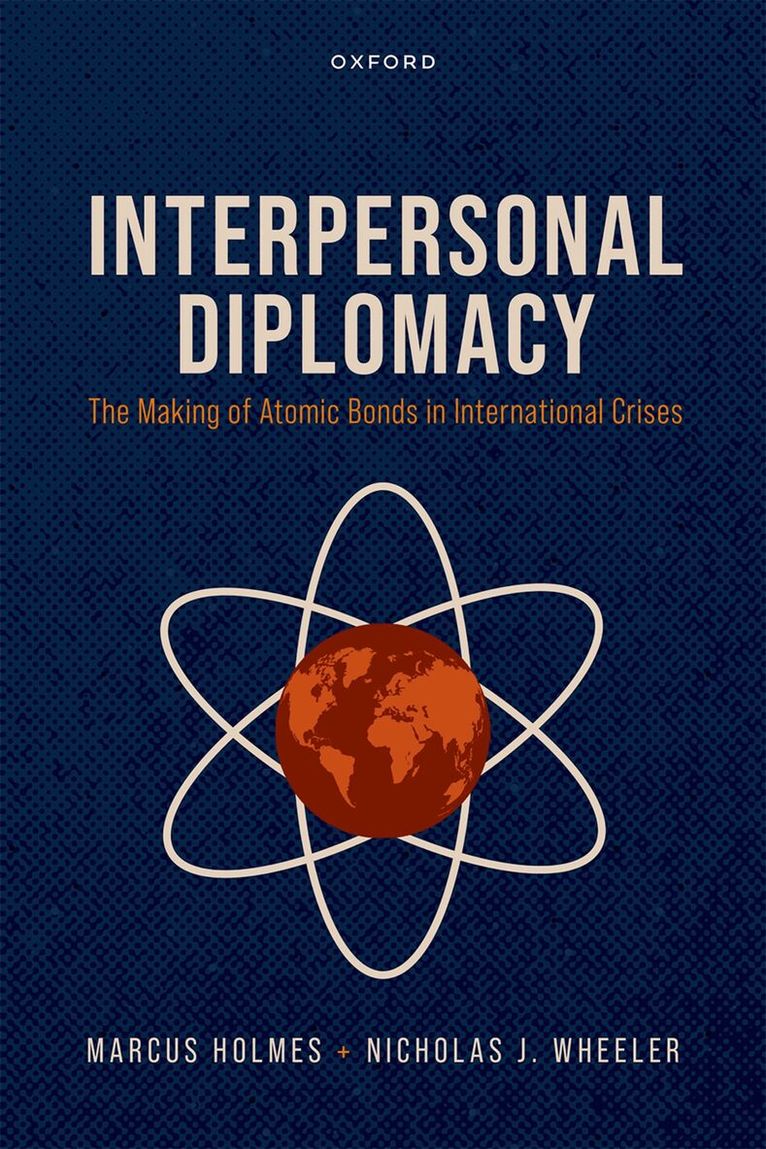
Interpersonal Diplomacy offers a pioneering theory of how emotional connection and trust between world leaders can shape the outcomes of international crises, especially those involving nuclear weapons. Drawing on microsociological theory, particularly Randall Collins' theory of interaction rituals, Holmes and Wheeler show how interpersonal dynamics-such as emotional energy, mutual focus of attention, and bodily co-presence-can foster social bonds that transform adversarial relationships. Challenging dominant structural and psychological explanations of crisis diplomacy, the book demonstrates that leader-to-leader interactions can decisively alter the trajectory of high-stakes confrontations. Through rich case studies-including the relationship between John F. Kennedy and Nikita Khrushchev during the Berlin Crisis and Cuban Missile Crisis, and the interpersonal diplomacy between Indian and Pakistani leaders Rajiv Gandhi, Zia-ul-Haq, Benazir Bhutto, and V.P. Singh, the authors trace how trust was built, tested, and sometimes thwarted. It also explores how leaders may use written communication or virtual technologies to replicate elements of face-to-face diplomacy in contexts where physical meetings are not possible. Timely and theoretically innovative, the book provides scholars and practitioners with a new framework for understanding how human relationships shape the prospects for peace and the future of international order.
428 kr
Skickas inom 7-10 vardagar
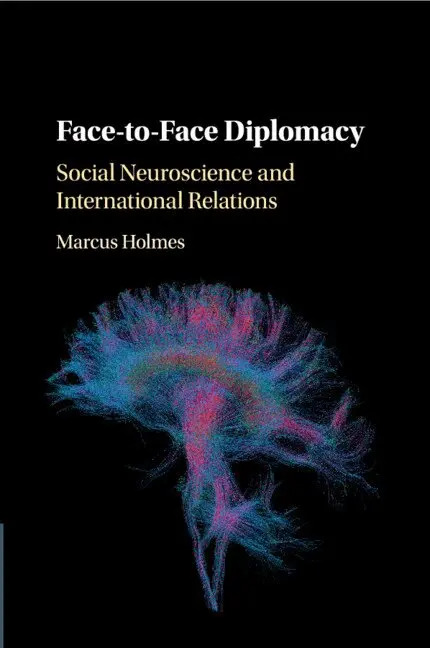
Face-to-face diplomacy has long been the lynchpin of world politics, yet it is largely dismissed by scholars of International Relations as unimportant. Marcus Holmes argues that dismissing this type of diplomacy is in stark contrast to what leaders and policy makers deem as essential and that this view is rooted in a particular set of assumptions that see an individual's intentions as fundamentally inaccessible. Building on recent evidence from social neuroscience and psychology, Holmes argues that this assumption is problematic. Marcus Holmes studies some of the most important moments of diplomacy in the twentieth century, from 'Munich' to the end of the Cold War, and by showing how face-to-face interactions allowed leaders to either reassure each other of benign defensive intentions or pick up on offensive intentions, his book challenges the notion that intentions are fundamentally unknowable in international politics, a central idea in IR theory.
1 192 kr
Skickas inom 7-10 vardagar
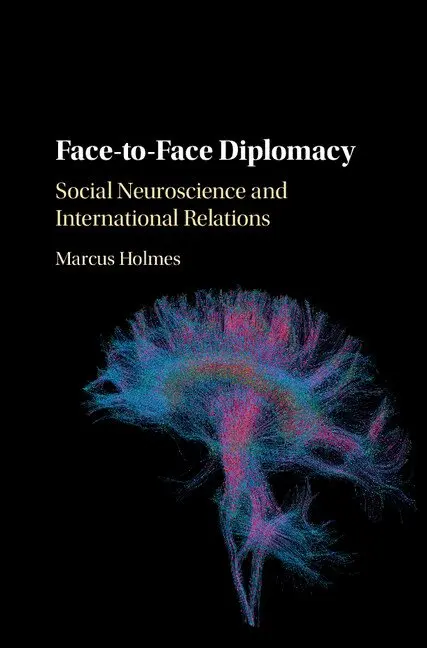
Face-to-face diplomacy has long been the lynchpin of world politics, yet it is largely dismissed by scholars of International Relations as unimportant. Marcus Holmes argues that dismissing this type of diplomacy is in stark contrast to what leaders and policy makers deem as essential and that this view is rooted in a particular set of assumptions that see an individual's intentions as fundamentally inaccessible. Building on recent evidence from social neuroscience and psychology, Holmes argues that this assumption is problematic. Marcus Holmes studies some of the most important moments of diplomacy in the twentieth century, from 'Munich' to the end of the Cold War, and by showing how face-to-face interactions allowed leaders to either reassure each other of benign defensive intentions or pick up on offensive intentions, his book challenges the notion that intentions are fundamentally unknowable in international politics, a central idea in IR theory.
2 238 kr
Skickas inom 10-15 vardagar
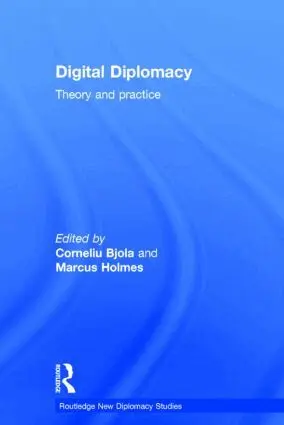
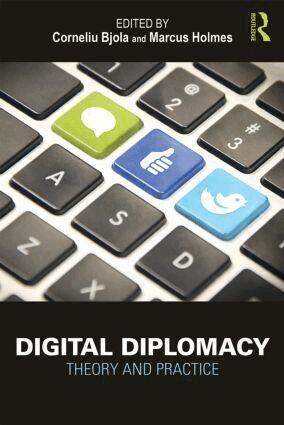
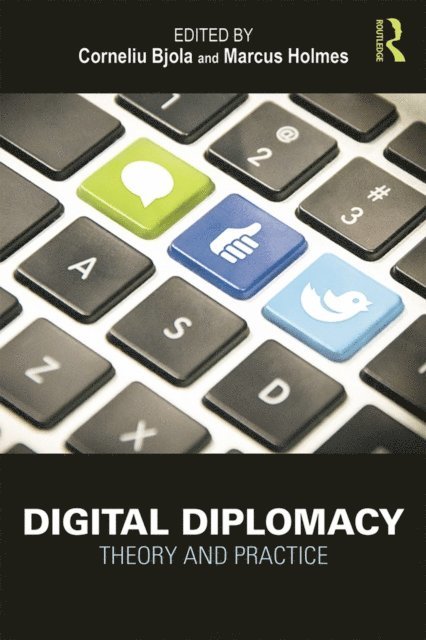
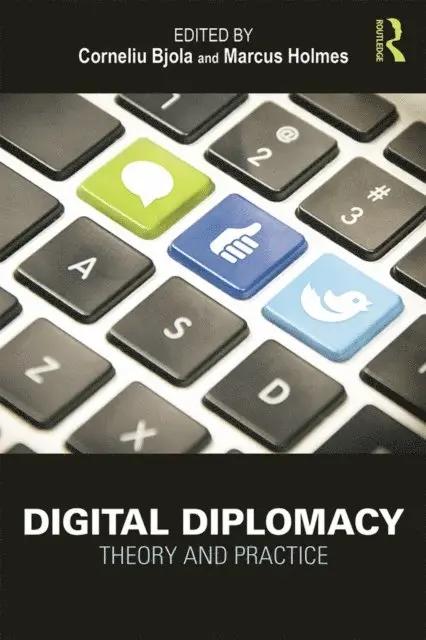
This book analyses digital diplomacy as a form of change management in international politics.The recent spread of digital initiatives in foreign ministries is often argued to be nothing less than a revolution in the practice of diplomacy. In some respects this revolution is long overdue. Digital technology has changed the ways firms conduct business, individuals conduct social relations, and states conduct governance internally, but states are only just realizing its potential to change the ways all aspects of interstate interactions are conducted. In particular, the adoption of digital diplomacy (i.e., the use of social media for diplomatic purposes) has been implicated in changing practices of how diplomats engage in information management, public diplomacy, strategy planning, international negotiations or even crisis management. Despite these significant changes and the promise that digital diplomacy offers, little is known, from an analytical perspective, about how digital diplomacy works. This volume, the first of its kind, brings together established scholars and experienced policy-makers to bridge this analytical gap. The objective of the book is to theorize what digital diplomacy is, assess its relationship to traditional forms of diplomacy, examine the latent power dynamics inherent in digital diplomacy, and assess the conditions under which digital diplomacy informs, regulates, or constrains foreign policy. Organized around a common theme of investigating digital diplomacy as a form of change management in the international system, it combines diverse theoretical, empirical, and policy-oriented chapters centered on international change. This book will be of much interest to students of diplomatic studies, public diplomacy, foreign policy, social media and international relations.
689 kr
Skickas inom 10-15 vardagar
This book analyses digital diplomacy as a form of change management in international politics.The recent spread of digital initiatives in foreign ministries is often argued to be nothing less than a revolution in the practice of diplomacy. In some respects this revolution is long overdue. Digital technology has changed the ways firms conduct business, individuals conduct social relations, and states conduct governance internally, but states are only just realizing its potential to change the ways all aspects of interstate interactions are conducted. In particular, the adoption of digital diplomacy (i.e., the use of social media for diplomatic purposes) has been implicated in changing practices of how diplomats engage in information management, public diplomacy, strategy planning, international negotiations or even crisis management. Despite these significant changes and the promise that digital diplomacy offers, little is known, from an analytical perspective, about how digital diplomacy works. This volume, the first of its kind, brings together established scholars and experienced policy-makers to bridge this analytical gap. The objective of the book is to theorize what digital diplomacy is, assess its relationship to traditional forms of diplomacy, examine the latent power dynamics inherent in digital diplomacy, and assess the conditions under which digital diplomacy informs, regulates, or constrains foreign policy. Organized around a common theme of investigating digital diplomacy as a form of change management in the international system, it combines diverse theoretical, empirical, and policy-oriented chapters centered on international change. This book will be of much interest to students of diplomatic studies, public diplomacy, foreign policy, social media and international relations.
232 kr
Skickas inom 5-8 vardagar