Maren Clegg Hyer - Böcker
Visar alla böcker från författaren Maren Clegg Hyer. Handla med fri frakt och snabb leverans.
13 produkter
13 produkter
1 911 kr
Skickas inom 7-10 vardagar
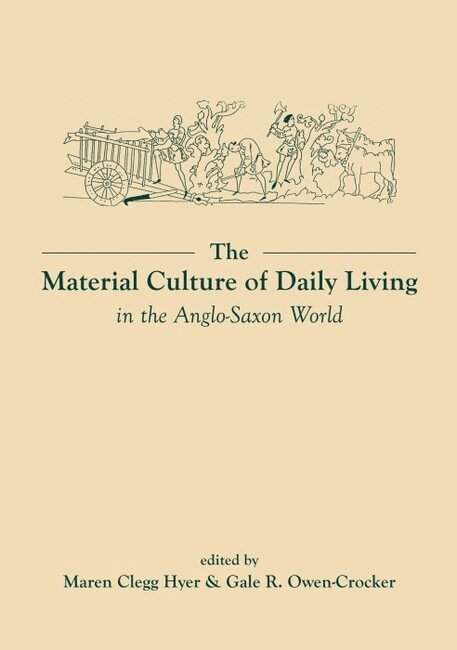
This illustrated book introduces serious students of Anglo-Saxon culture to selected aspects of the realities of Anglo-Saxon life through reference to artefacts and textual sources. Everyday practices and processes are investigated, such as the exploitation of animals for clothing, meat, cheese and parchment; ships for travel, trade and transport; manufacturing processes of metalwork; textiles for dress and furnishing and the practicalities of living with illness or disability. Articles collected in this volume illuminate how an understanding of the material culture of the daily Anglo-Saxon world can inform reading and scholarship in Anglo-Saxon studies. Scholarly and practical material presented inform one another, making the book accessible to any reader seriously interested in England in the early Middle Ages.
589 kr
Skickas inom 7-10 vardagar
This illustrated book introduces serious students of Anglo-Saxon culture to selected aspects of the realities of Anglo-Saxon life through reference to artefacts and textual sources. Everyday practices and processes are investigated, such as the exploitation of animals for clothing, meat, cheese and parchment; ships for travel, trade and transport; manufacturing processes of metalwork; textiles for dress and furnishing and the practicalities of living with illness or disability. Articles collected in this volume illuminate how an understanding of the material culture of the daily Anglo-Saxon world can inform reading and scholarship in Anglo-Saxon studies. Scholarly and practical material presented inform one another, making the book accessible to any reader seriously interested in England in the early Middle Ages.
1 911 kr
Skickas inom 7-10 vardagar
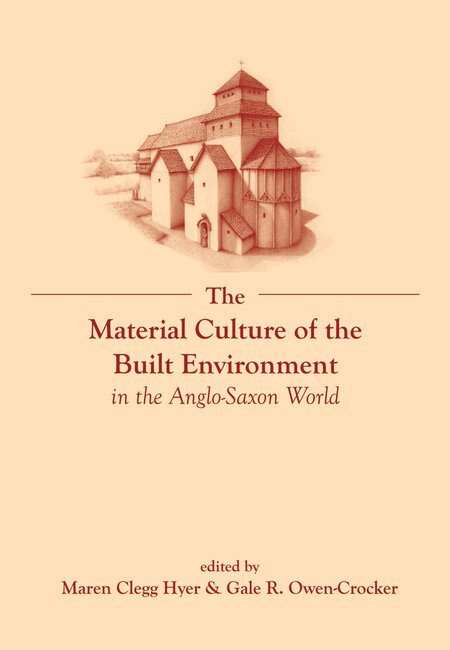
The Material Culture of the Built Environment in the Anglo-Saxon World, second volume of Daily Living in the Anglo-Saxon World, continues to introduce students of Anglo-Saxon culture to aspects of the realities of the built environment that surrounded Anglo-Saxon peoples through reference to archaeological and textual sources. It considers what structures intruded on the natural landscape the Anglo-Saxons inhabited – roads and tracks, ancient barrows and Roman buildings, the villages and towns, churches, beacons, boundary ditches and walls, grave-markers and standing sculptures – and explores the interrelationships between them and their part in Anglo-Saxon life.
1 192 kr
Skickas inom 7-10 vardagar
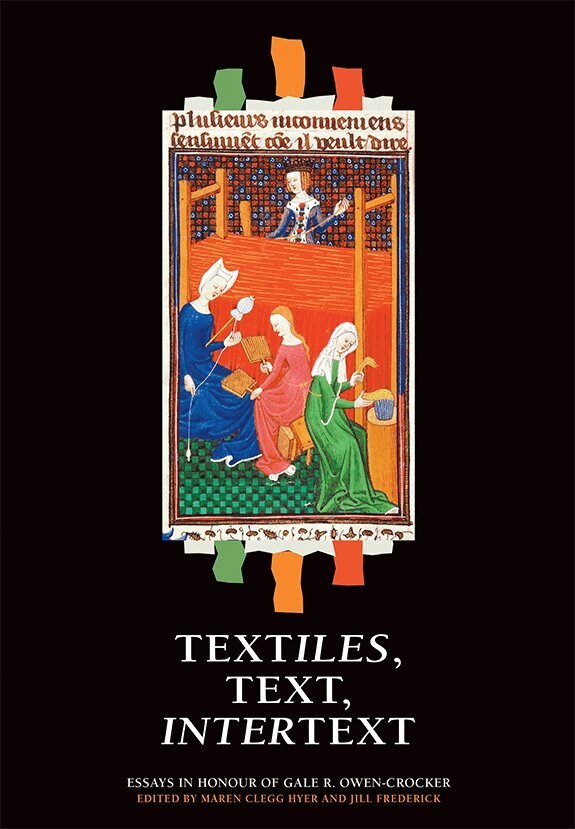
Essays centred round the representation of weaving, both real and imagined, in the early middle ages.The triple themes of textile, text, and intertext, three powerful and evocative subjects within both Anglo-Saxon studies and Old English literature itself, run through the essays collected here. Chapters evoke the semantic complexities of textile references and images drawn from the Bayeux Tapestry, examine parallels in word-woven poetics, riddling texts, and interwoven homiletic and historical prose, and identify iconographical textures in medieval art. The volume thus considers the images and creative strategies of textiles, texts, and intertexts, generating a complex and fascinating view of the material culture and metaphorical landscape of the Anglo-Saxon peoples. It is therefore a particularly fitting tribute to Professor Gale R. Owen-Crocker, whose career and lengthy list of scholarly works have centred on her interests in the meaning and cultural importance of textiles, manuscripts and text, and intertextual relationships between text and textile. MAREN CLEGG HYER is Associate Professor and Graduate Coordinator in the Department of English at Valdosta State University; JILL FREDERICK is Professor of English at Minnesota State University Moorhead.Contributors: Marilina Cesario, Elizabeth Coatsworth, Martin Foys, Jill Frederick, Joyce Hill, Maren Clegg Hyer, Catherine E. Karkov, Christina Lee, Michael Lewis, Robin Netherton, Carol Neuman de Vegvar, Donald Scragg, Louise Sylvester, Paul Szarmach, Elaine Treharne.
Del 4 - Medieval and Renaissance Clothing and Textiles
Refashioning Medieval and Early Modern Dress
A Tribute to Robin Netherton
Inbunden, Engelska, 2019
1 130 kr
Skickas inom 7-10 vardagar
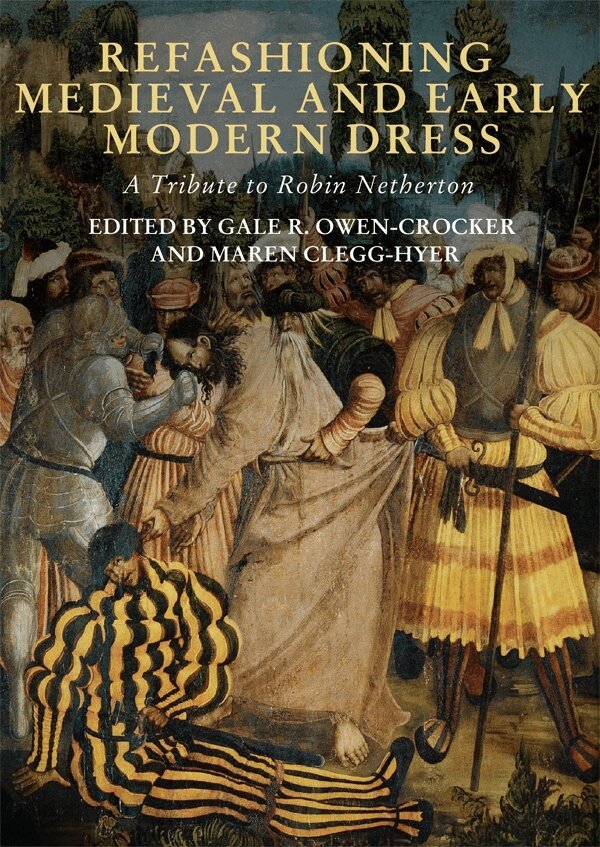
Essays on costume, fabric and clothing in the Middle Ages and beyond.All those who work with historical dress and textiles must in some way re-fashion them. This fundamental concept is developed and addressed by the articles collected here, ranging over issues of gender, status and power. Topics include: the repurposing and transformation of material items for purposes of religion, memorialisation, restoration and display; attempts to regulate dress, both ecclesiastical and secular, the reasons for it and the refashioning which was both a result and a reaction; conventional ways in which dress was used to characterise children, and their transition into young men; how symbolism-laded dress items could indicate political/religious affiliations; waysin which allegorical, biblical and historical figures were depicted in art in dress familiar to the viewers of their own era, and the emotive and intellectual responses to these costumes the artists sought to elicit; and the use of clothing in medieval literature (often rich, exotic or unique) as narrative, structuring and rhetorical devices. Taken together, they honour the costume historian and editor Robin Netherton, who has been hugely influentialin the development of medieval and Renaissance dress and textile studies.GALE R. OWEN-CROCKER is Professor Emerita at the University of Manchester; MAREN CLEGG HYER is Professor of English at Valdosta State University.Contributors: Melanie Schuessler Bond, Elizabeth Coatsworth, Lisa Evans, Gina Frasson-Hudson, Charney Goldman, Sarah-Grace Heller, Maren Clegg Hyer, John Friedman, Thomas Izbicki, Drea Leed, Christine Meek, M.A. Nordtorp-Madson, Gale R. Owen-Crocker, Lucia Sinisi, Monica L. Wright.
1 911 kr
Skickas inom 7-10 vardagar
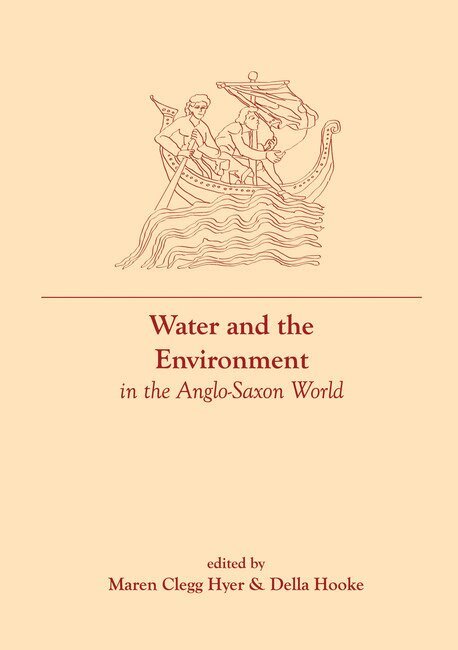
Similar in theme and method to the first and second volumes, Water and the Environment in the Anglo-Saxon World, third volume of the series Daily Living in the Anglo-Saxon World, illuminates how an understanding of the impact of water features on the daily lives of the people and the environment of the Anglo-Saxon world can inform reading and scholarship of the period in significant ways. In discussing fishing, for example, we learn in what ways fish and fishing might have impacted the life of the average person who lived near fishing waters in early medieval England: how fishing affected that person’s diet, livelihood, and religious obligations, as well as how fish and fishing waters influenced social and cultural structures. Similar lines of enquiry in the volume’s chapters shed insight on water imagery in Old English poetry, on place names that delineate types of watery bodies across the early medieval landscape, and on human interactions (poetic and otherwise) with fens and other wetlands, sacred wells and springs, landing spaces, bridges, canals, watermills, and river settlements, as well as a variety of other waterscapes.The volume’s examination of the impact of water features on the daily lives of the people and the environment of the Anglo-Saxon world fosters an understanding, in the end, not only of the archaeological and material circumstances of water and its uses, but also the imaginative waterscapes found in the textual records of the peoples of early medieval England.
1 911 kr
Skickas inom 7-10 vardagar
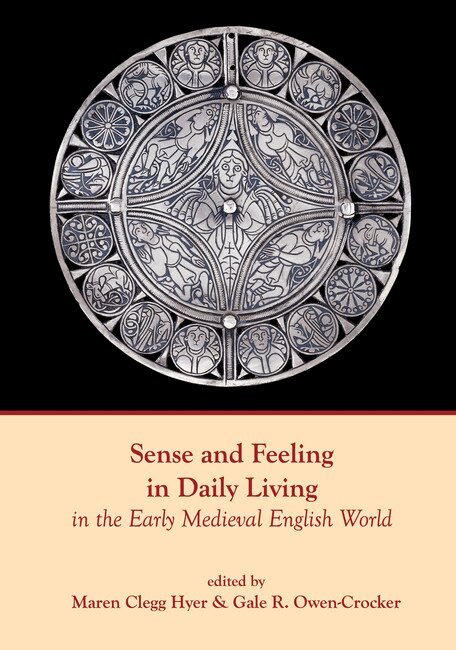
Sense and Feeling in Daily Living in the Early Medieval English World seeks to illuminate important aspects of daily living and the experience of the environment through sense and emotion, using archaeological, art and textual sources. Twelve papers explore sight, sound, taste, smell, touch, and emotions such as anger, horror, grief and joy. Similar in theme andmethod to the first, second and third volumes in the Daily Living in theAnglo-Saxon World series, the collected articles illuminate how an understanding of the sensory and emotional landscape that helped form the daily lives of the peoples and the environments of early medieval England can inform the study of England before the Norman Conquest. The sights, smells, and sounds that informed the physical and emotional landscape of town, scriptoria, and hall, for example, explain urbanplanning, literary imagery and emotional attachment evident among the earlymedieval English peoples. Experienced senses and emotions are thus as centralto understanding the inner and outer landscape of the pre-Conquest English as crafts,towns or water structures.
589 kr
Skickas inom 7-10 vardagar
The Material Culture of the Built Environment in the Anglo-Saxon World, second volume of Daily Living in the Anglo-Saxon World, continues to introduce students of Anglo-Saxon culture to aspects of the realities of the built environment that surrounded Anglo-Saxon peoples through reference to archaeological and textual sources. It considers what structures intruded on the natural landscape the Anglo-Saxons inhabited – roads and tracks, ancient barrows and Roman buildings, the villages and towns, churches, beacons, boundary ditches and walls, grave-markers and standing sculptures – and explores the interrelationships between them and their part in Anglo-Saxon life.
589 kr
Skickas inom 7-10 vardagar
Similar in theme and method to the first and second volumes, Water and the Environment in the Anglo-Saxon World, third volume of the series Daily Living in the Anglo-Saxon World, illuminates how an understanding of the impact of water features on the daily lives of the people and the environment of the Anglo-Saxon world can inform reading and scholarship of the period in significant ways. In discussing fishing, for example, we learn in what ways fish and fishing might have impacted the life of the average person who lived near fishing waters in early medieval England: how fishing affected that person’s diet, livelihood, and religious obligations, as well as how fish and fishing waters influenced social and cultural structures. Similar lines of enquiry in the volume’s chapters shed insight on water imagery in Old English poetry, on place names that delineate types of watery bodies across the early medieval landscape, and on human interactions (poetic and otherwise) with fens and other wetlands, sacred wells and springs, landing spaces, bridges, canals, watermills, and river settlements, as well as a variety of other waterscapes.The volume’s examination of the impact of water features on the daily lives of the people and the environment of the Anglo-Saxon world fosters an understanding, in the end, not only of the archaeological and material circumstances of water and its uses, but also the imaginative waterscapes found in the textual records of the peoples of early medieval England.
589 kr
Skickas inom 7-10 vardagar
Sense and Feeling in Daily Living in the Early Medieval English World seeks to illuminate important aspects of daily living and the experience of the environment through sense and emotion, using archaeological, art and textual sources. Twelve papers explore sight, sound, taste, smell, touch, and emotions such as anger, horror, grief and joy. Similar in theme andmethod to the first, second and third volumes in the Daily Living in theAnglo-Saxon World series, the collected articles illuminate how an understanding of the sensory and emotional landscape that helped form the daily lives of the peoples and the environments of early medieval England can inform the study of England before the Norman Conquest. The sights, smells, and sounds that informed the physical and emotional landscape of town, scriptoria, and hall, for example, explain urbanplanning, literary imagery and emotional attachment evident among the earlymedieval English peoples. Experienced senses and emotions are thus as centralto understanding the inner and outer landscape of the pre-Conquest English as crafts,towns or water structures.
2 252 kr
Skickas inom 7-10 vardagar
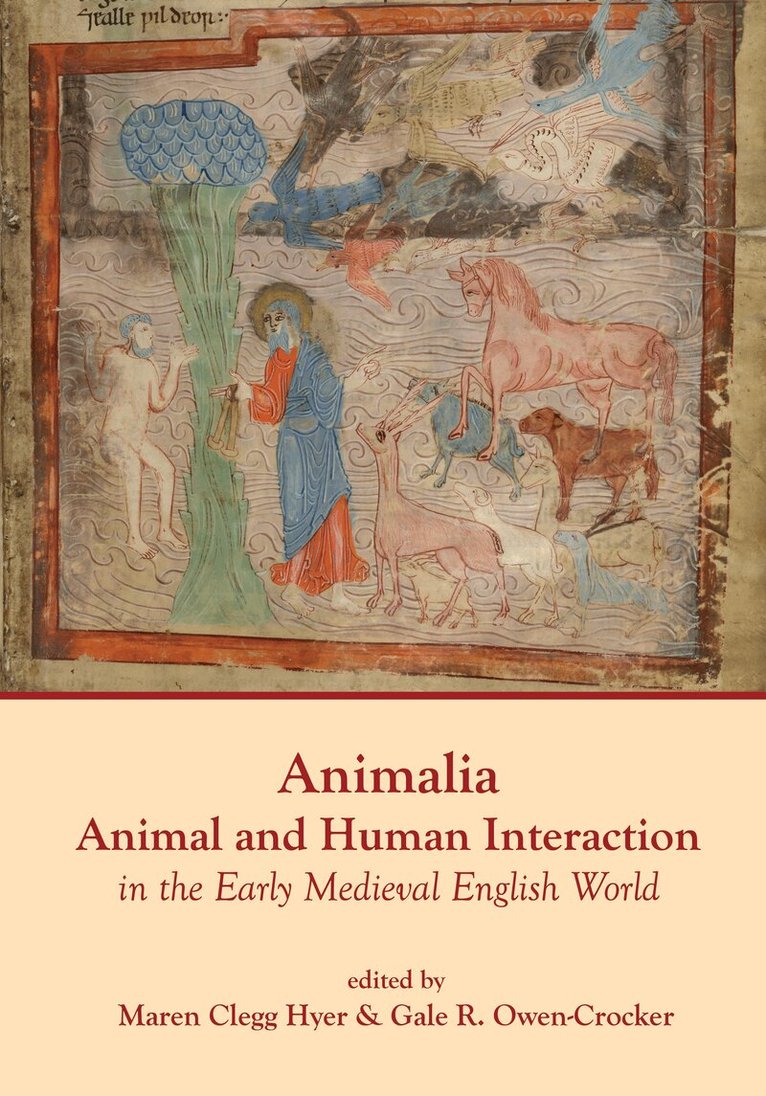
Animalia: Animal and Human Interaction in Daily Living in the Early Medieval English World is the fifth in a series of volumes exploring daily lives, material culture and environment in the early medieval English world. Like its fellow volumes, it explores the interactions and intersections between the peoples of early medieval England and their material surroundings, in this case, the relationship between people and other living creatures in their natural environment and the imagined creatures depicted in their literature and art. The collection is deeply interdisciplinary, using forensic archaeology, genetic testing, textual analysis of literary and documentary sources, and art historical study to assess the evidence for these relationships and interactions.The volume is organized in three parts. The first section, Insights from Archaeology, looks carefully at recent, additional evidence for the existence and role of animals in early medieval England through evidence for animal husbandry and medieval falconry to what surviving books and pages can tell us about animals through biocodicology, a new and important contribution to archaeology for the period.The second section, Insights from Text, focuses attention on how textual sources portray human perception of animal reality and animal-human interaction and relationships, including the role of enslavement and violence between man and beast. From the Beasts of Battle to mundane animals, from poetry to documentary and homiletic text, the textual evidence evinces the highly symbolic role animals held in the early medieval English mind.The third section, Insights from the Visual Arts, continues the volume’s exploration of perception of animals, but in the highly abstract and symbolic realm of early medieval English art. Abstract depictions of animals as iconographic motifs raises again the question of animal voice and agency in metals, ceramics, and stone, as well as animal symbolism in textile and animals as monstrosities in illustrated “monster” collections.
Del 40 - Anglo-Saxon Studies
Old English Lexicology and Lexicography
Essays in Honor of Antonette diPaolo Healey
Inbunden, Engelska, 2020
1 921 kr
Skickas inom 5-8 vardagar
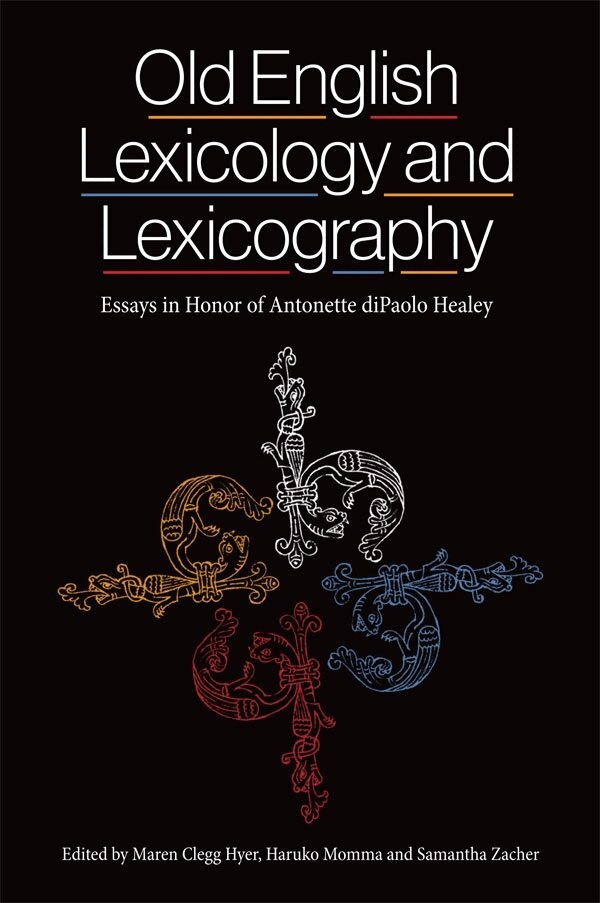
Essays demonstrating how the careful study of individual words can shed immense light on texts more broadly.Dedicated to honoring the remarkable achievements of Dr Antonette di Paolo Healey, the architect and lexicographer of the Old English Concordance, the Dictionary of Old English Web Corpus, and the Dictionary of Old English, the essays in this volume reflect firsthand the research made possible by Dr. Healey's landmark contributions to her field. Each chapter highlights how the careful consideration and study of words can lead to greater insights, from an understanding of early medieval English concepts of time and identity, to reconceptualizations of canonical Old English poems, reappraisals of early medieval English authors and their works, greater understanding of the semantic fields of Old English words and manuscript traditions, and the solving of lexical puzzles. MAREN CLEGG HYER is Professor of English at Valdosta State University; HARUKO MOMMA is Professor of English at NewYork University; SAMANTHA ZACHER is Professor of English and Medieval Studies at Cornell University. Contributors: Brianna Daigneault, Damian Fleming, Roberta Frank, Robert Getz, Joyce Hill, Joan Holland, Maren Clegg Hyer, Christopher A. Jones, R.M. Liuzza, Haruko Momma, Katherine O'Brien O'Keeffe, Andy Orchard, Stephen Pelle, Christine Rauer, Terri Sanderson, Donald Scragg, Paul Szarmach, M. J. Toswell, Audrey Walton, Samantha Zacher.
Del 8 - Medieval and Renaissance Clothing and Textiles
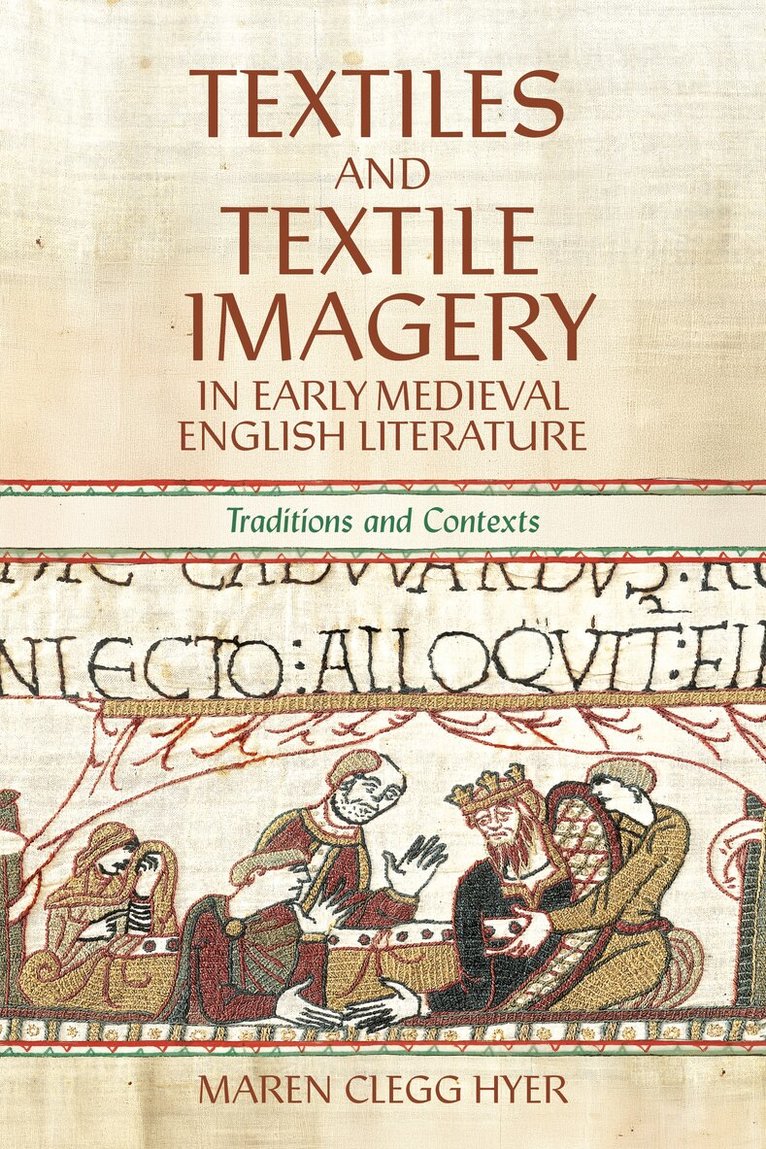
Textiles and Textile Imagery in Early Medieval English Literature
Traditions and Contexts
Inbunden, Engelska, 2025
1 192 kr
Skickas inom 7-10 vardagar
Identifies and analyses a wide range of textile metaphors and imagery from peace-weaving in Beowulf to word-crafting in Elene.Textile metaphors, or metaphors involving the process and product of cloth-making, occur widely in literary traditions around the world. The same phenomenon holds true among the peoples of early medieval England. As close observers of a long and culturally significant textile tradition, pre-Conquest English writers drew upon their close familiarity with spinning and weaving to create a wide range of metaphorical textile images in both Old English and Anglo-Latin literature. This book examines early medieval English textile imagery in close detail, situating it within its cultural and material contexts and addressing the ways in which lived experience informed these metaphors, whether inherited, invented, or both. It explores imagery linked to themes of creation, peace, death, magic, and fate in a comprehensive variety of texts, including Beowulf and Elene, Anglo-Latin letters and riddles, the Exeter Book riddles, prognostics, penitentials, hagiographic and homiletic texts, medical collections, and glosses. Overall, it demonstrates how an understanding of this important body of textile metaphors alters and shapes the ways in which we read the literature of this period.