Margaret Cassidy – författare
Visar alla böcker från författaren Margaret Cassidy. Handla med fri frakt och snabb leverans.
6 produkter
Children, Media, and American History
Printed Poison, Pernicious Stuff, and Other Terrible Temptations
Inbunden, 2017
2888 kr
Lägg i varukorg
Printed poison. Pernicious stuff. Since the nineteenth century, these are some of the many concerned comments critics have made about media for children. From dime novels to comic books to digital media, Cassidy illustrates the ways children have used "old media" when they were first introduced as …
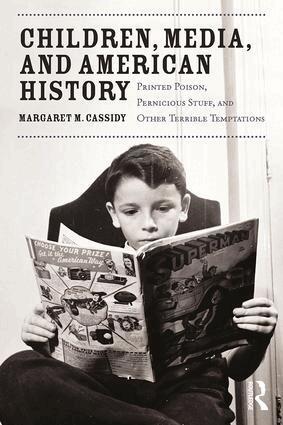
Children, Media, and American History
Printed Poison, Pernicious Stuff, and Other Terrible Temptations
Häftad, 2017
795 kr
Lägg i varukorg
Printed poison. Pernicious stuff. Since the nineteenth century, these are some of the many concerned comments critics have made about media for children. From dime novels to comic books to digital media, Cassidy illustrates the ways children have used "old media" when they were first introduced as …
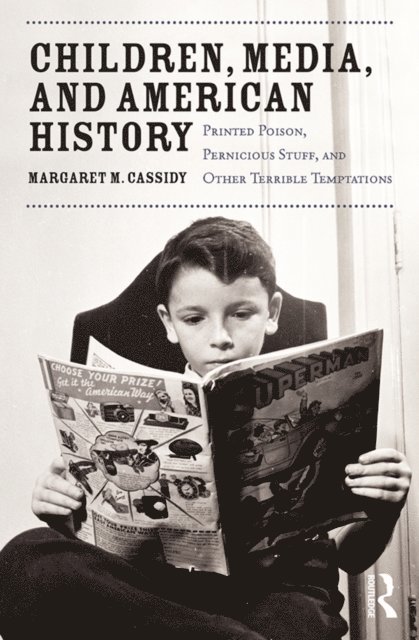
Children, Media, and American History
Printed Poison, Pernicious Stuff, and Other Terrible Temptations
E-bok, 2017
820 kr
Lägg i varukorg
Printed poison. Pernicious stuff. Since the nineteenth century, these are some of the many concerned comments critics have made about media for children. From dime novels to comic books to digital media, Cassidy illustrates the ways children have used "old media" when they were first introduced as …
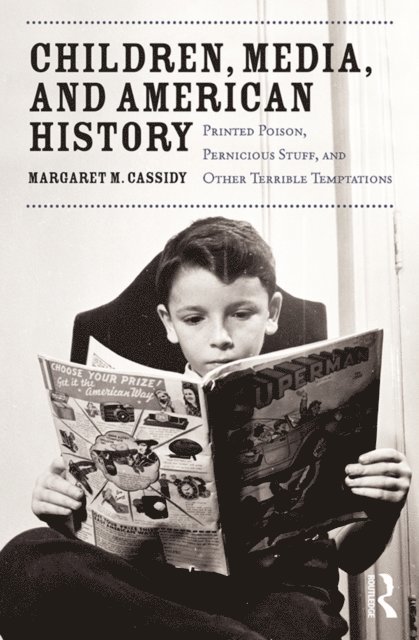
Children, Media, and American History
Printed Poison, Pernicious Stuff, and Other Terrible Temptations
E-bok, 2017
838 kr
Lägg i varukorg
Printed poison. Pernicious stuff. Since the nineteenth century, these are some of the many concerned comments critics have made about media for children. From dime novels to comic books to digital media, Cassidy illustrates the ways children have used "old media" when they were first introduced as …
Bookends
The Changing Media Environment of American Classrooms
Inbunden, 2004
773 kr
Lägg i varukorg
This book examines the history of electronic media in education, from film through radio, television, and automated instruction, ending with a look at contemporary educational technology. It shows how every new educational medium is argued to be compatible with the popular theories of learning, …
Bookends
The Changing Media Environment of American Classrooms
Häftad, 2004
335 kr
Lägg i varukorg
This book examines the history of electronic media in education, from film through radio, television, and automated instruction, ending with a look at contemporary educational technology. It shows how every new educational medium is argued to be compatible with the popular theories of learning, …