Margaret Edds - Böcker
Visar alla böcker från författaren Margaret Edds. Handla med fri frakt och snabb leverans.
3 produkter
3 produkter
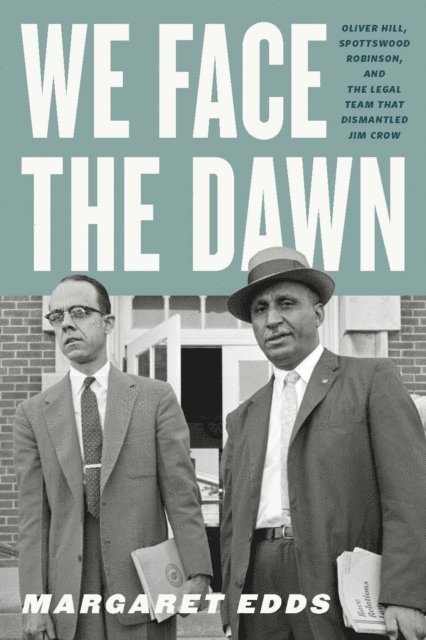
We Face the Dawn
Oliver Hill, Spottswood Robinson, and the Legal Team That Dismantled Jim Crow
Häftad, Engelska, 2019
231 kr
Skickas inom 5-8 vardagar
The decisive victories in the fight for racial equality in America were not easily won, much less inevitable; they were achieved through carefully conceived strategy and the work of tireless individuals dedicated to this most urgent struggle. In We Face the Dawn, Margaret Edds tells the gripping story of how the South's most significant grassroots legal team challenged the barriers of racial segregation in mid-century America.Virginians Oliver Hill and Spottswood Robinson initiated and argued one of the five cases that combined into the landmark Brown v. Board of Education, but their influence extends far beyond that momentous ruling. They were part of a small brotherhood, headed by social-justice pioneer Thurgood Marshall and united largely through the Howard Law School, who conceived and executed the NAACP's assault on racial segregation in education, transportation, housing, and voting. Hill and Robinson's work served as a model for southern states and an essential underpinning for Brown. When the Virginia General Assembly retaliated with laws designed to disbar the two lawyers and discredit the NAACP, they defiantly carried the fight to the United States Supreme Court and won.At a time when numerous schools have resegregated and the prospects of many minority children appear bleak, Hill and Robinson's remarkably effective campaign against various forms of racial segregation can inspire a new generation to embrace educational opportunity as the birthright of every American child.
869 kr
Skickas inom 10-15 vardagar
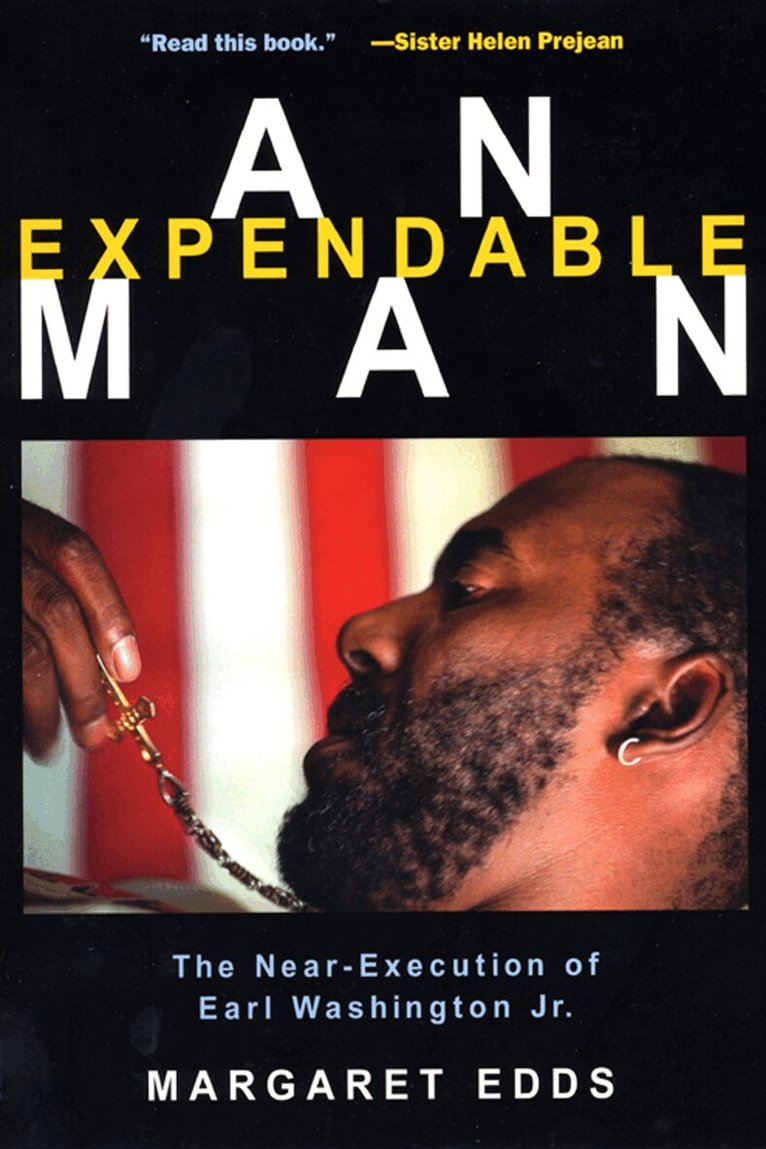
How is it possible for an innocent man to come within nine days of execution? An Expendable Man answers that question through detailed analysis of the case of Earl Washington Jr., a mentally retarded, black farm hand who was convicted of the 1983 rape and murder of a 19-year-old mother of three in Culpeper, Virginia. He spent almost 18 years in Virginia prisons—9 1/2 of them on death row—for a murder he did not commit.This book reveals the relative ease with which individuals who live at society's margins can be wrongfully convicted, and the extraordinary difficulty of correcting such a wrong once it occurs.Washington was eventually freed in February 2001 not because of the legal and judicial systems, but in spite of them. While DNA testing was central to his eventual pardon, such tests would never have occurred without an unusually talented and committed legal team and without a series of incidents that are best described as pure luck.Margaret Edds makes the chilling argument that some other "expendable men" almost certainly have been less fortunate than Washington. This, she writes, is "the secret, shameful underbelly" of America's retention of capital punishment. Such wrongful executions may not happen often, but anyone who doubts that innocent people have been executed in the United States should remember the remarkable series of events necessary to save Earl Washington Jr. from such a fate.
377 kr
Skickas inom 10-15 vardagar
How is it possible for an innocent man to come within nine days of execution? An Expendable Man answers that question through detailed analysis of the case of Earl Washington Jr., a mentally retarded, black farm hand who was convicted of the 1983 rape and murder of a 19-year-old mother of three in Culpeper, Virginia. He spent almost 18 years in Virginia prisons—9 1/2 of them on death row—for a murder he did not commit.This book reveals the relative ease with which individuals who live at society's margins can be wrongfully convicted, and the extraordinary difficulty of correcting such a wrong once it occurs.Washington was eventually freed in February 2001 not because of the legal and judicial systems, but in spite of them. While DNA testing was central to his eventual pardon, such tests would never have occurred without an unusually talented and committed legal team and without a series of incidents that are best described as pure luck.Margaret Edds makes the chilling argument that some other "expendable men" almost certainly have been less fortunate than Washington. This, she writes, is "the secret, shameful underbelly" of America's retention of capital punishment. Such wrongful executions may not happen often, but anyone who doubts that innocent people have been executed in the United States should remember the remarkable series of events necessary to save Earl Washington Jr. from such a fate.