
Margaret H. DeFleur – författare
Visar alla böcker från författaren Margaret H. DeFleur. Handla med fri frakt och snabb leverans.
4 produkter
4 produkter
768 kr
Skickas inom 10-15 vardagar
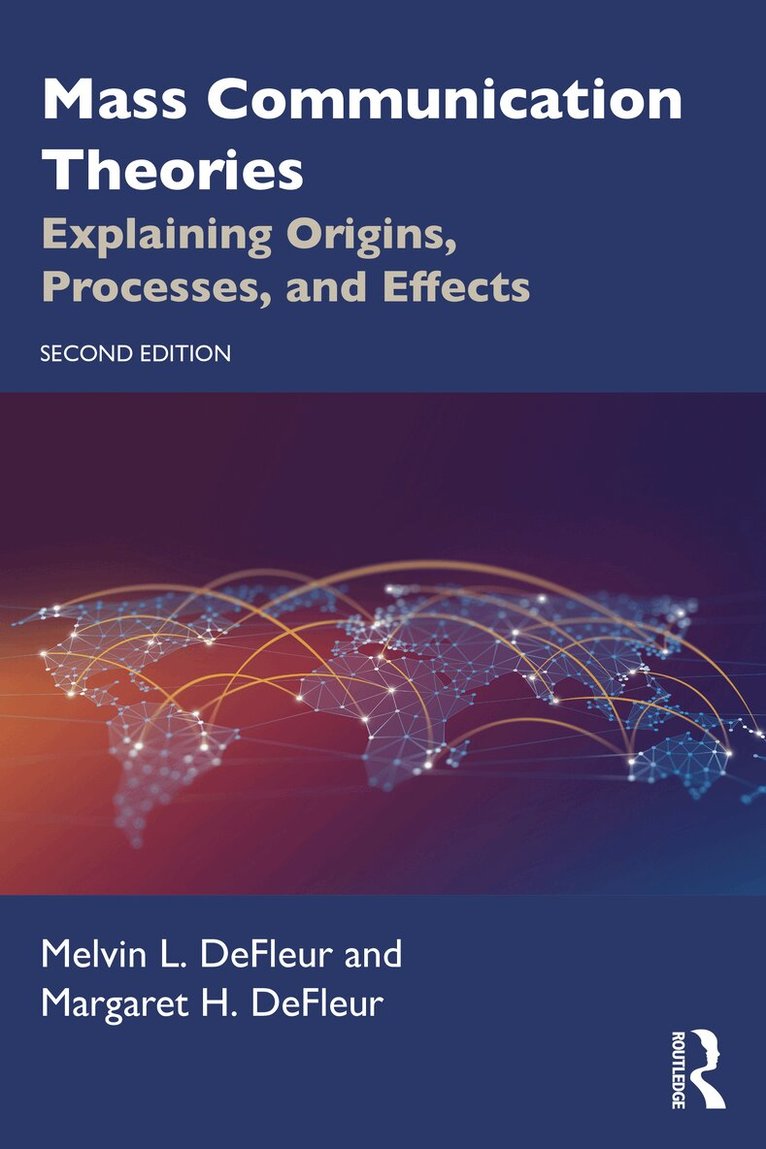
The second edition of this innovative textbook provides a comprehensive overview of mass communication theories, as well as their origins and empirical supports in psychology, sociology, political science, and philosophy. Each chapter presents a specific theory, describing its basic structure in simple formal terms and providing an accessible summary of the research studies and scholarly writings from which it developed. It breaks each complex theory down into five or six interlinked basic propositions, making them easily digestible for students. This new edition includes up-to-date research; improved coverage of all theories presented; expanded treatments of theories such as cultivation theory, the spiral of silence, and framing; contemporary and social media examples; chapter discussion questions; and informative charts and figures. This textbook serves as an accessible core text for undergraduate and graduate Mass Communication, Communication Theory, and Communication and Society courses.
2 113 kr
Skickas inom 10-15 vardagar
The second edition of this innovative textbook provides a comprehensive overview of mass communication theories, as well as their origins and empirical supports in psychology, sociology, political science, and philosophy. Each chapter presents a specific theory, describing its basic structure in simple formal terms and providing an accessible summary of the research studies and scholarly writings from which it developed. It breaks each complex theory down into five or six interlinked basic propositions, making them easily digestible for students. This new edition includes up-to-date research; improved coverage of all theories presented; expanded treatments of theories such as cultivation theory, the spiral of silence, and framing; contemporary and social media examples; chapter discussion questions; and informative charts and figures. This textbook serves as an accessible core text for undergraduate and graduate Mass Communication, Communication Theory, and Communication and Society courses.
1 298 kr
Skickas inom 10-15 vardagar
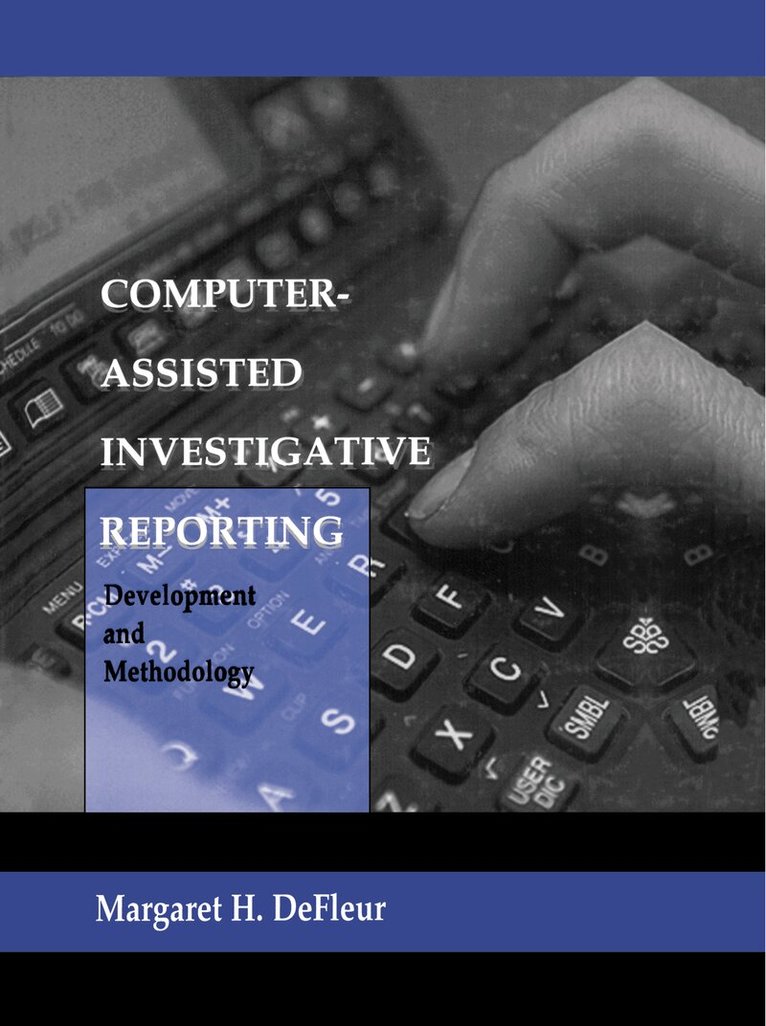
Conducting computer analyses for the purposes of revealing information of significance to the press represents an extension of one of the most important forms of American journalism into the contemporary era of new technologies. Investigative reporting had its start with the establishment of the metropolitan newspaper during the early decades of the 1900s. At the time, it was a continuation of the evolving tradition of freedom of the press that had characterized American political life since colonial times. As it developed, investigative reporting stressed facts rather than the opinions of the editor or reporter. In turn, that tradition had its own intellectual roots. Today, computer-assisted investigative reporting (CAIR) extends that "marketplace of ideas" into systematic examinations of the electronic records of government. In addition, computer analyses of other kinds of information systematically gathered by journalists can provide the press with insights into trends and patterns unlikely to be revealed by other means. This unique volume addresses procedures and issues in investigative journalism that have not been explained in other publications. It sets forth -- for the first time -- a detailed and specific methodology for conducting computer-assisted investigative analyses of both large and small scale electronic records of government and other agencies. That methodology consists of the logic of inquiry, strategies for reaching valid conclusions, and rules for reporting what has been revealed by the analyses to the public in clear ways. Such systematic methodologies are essential in social and other sciences and the development of a counterpart for investigative journalism has been badly needed. That systematic methodology is developed within a context that explains the origin and major characteristics of those elements that have come together in American society to make computer-assisted investigative reporting both possible and increasingly a part of standard newsroom practices. These include the development of traditional investigative journalism, the evolution of computer technology, the use of computers by government to keep records, the legal evolution of freedom of information laws, the rapid adoption of computers in newsrooms, the increasing importance of precision journalism, and the sharp increase in recent times of computer-assisted investigative reporting by American newspapers both large and small. The issues addressed in this book are discussed in a very readable context with an abundance of examples and illustrations drawn from the real world of journalism as it is practiced daily in newsrooms around the country. Explanations of concepts, principles, and procedures are set forth in layperson's terms that require very little in the way of knowledge of computers or statistical methods.
374 kr
Skickas inom 10-15 vardagar
Conducting computer analyses for the purposes of revealing information of significance to the press represents an extension of one of the most important forms of American journalism into the contemporary era of new technologies. Investigative reporting had its start with the establishment of the metropolitan newspaper during the early decades of the 1900s. At the time, it was a continuation of the evolving tradition of freedom of the press that had characterized American political life since colonial times. As it developed, investigative reporting stressed facts rather than the opinions of the editor or reporter. In turn, that tradition had its own intellectual roots. Today, computer-assisted investigative reporting (CAIR) extends that "marketplace of ideas" into systematic examinations of the electronic records of government. In addition, computer analyses of other kinds of information systematically gathered by journalists can provide the press with insights into trends and patterns unlikely to be revealed by other means. This unique volume addresses procedures and issues in investigative journalism that have not been explained in other publications. It sets forth -- for the first time -- a detailed and specific methodology for conducting computer-assisted investigative analyses of both large and small scale electronic records of government and other agencies. That methodology consists of the logic of inquiry, strategies for reaching valid conclusions, and rules for reporting what has been revealed by the analyses to the public in clear ways. Such systematic methodologies are essential in social and other sciences and the development of a counterpart for investigative journalism has been badly needed. That systematic methodology is developed within a context that explains the origin and major characteristics of those elements that have come together in American society to make computer-assisted investigative reporting both possible and increasingly a part of standard newsroom practices. These include the development of traditional investigative journalism, the evolution of computer technology, the use of computers by government to keep records, the legal evolution of freedom of information laws, the rapid adoption of computers in newsrooms, the increasing importance of precision journalism, and the sharp increase in recent times of computer-assisted investigative reporting by American newspapers both large and small. The issues addressed in this book are discussed in a very readable context with an abundance of examples and illustrations drawn from the real world of journalism as it is practiced daily in newsrooms around the country. Explanations of concepts, principles, and procedures are set forth in layperson's terms that require very little in the way of knowledge of computers or statistical methods.