Margaret J. Osler - Böcker
Visar alla böcker från författaren Margaret J. Osler. Handla med fri frakt och snabb leverans.
9 produkter
9 produkter
888 kr
Skickas inom 7-10 vardagar
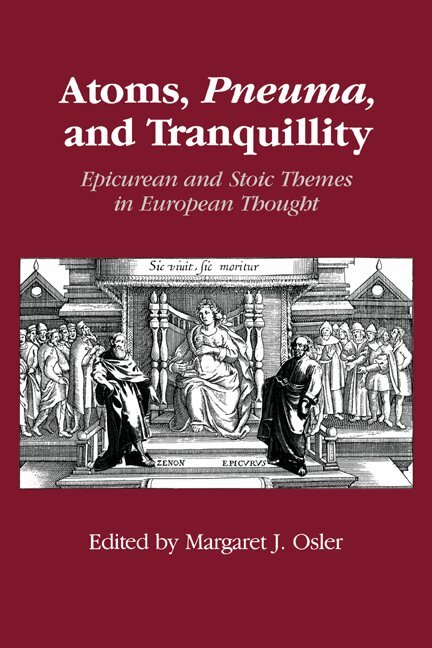
This volume examines the influence that Epicureanism and Stoicism, two philosophies of nature and human nature articulated during classical times, exerted on the development of European thought to the Enlightenment. Although the influence of these philosophies has often been noted in certain areas, such as the influence of Stoicism on the development of Christian thought and the influence of Epicureanism on modern materialism, the chapters in this volume contribute a new awareness of the degree to which these philosophies and their continued interaction informed European intellectual life well into early modern times. The influence of the Epicurean and Stoic philosophies in the areas of literature, philosophy, theology, and science are considered. Many thinkers continue to perceive these philosophies as significant alternatives for understanding the human and natural worlds. Having become incorporated into the canon of philosophical alternatives, Epicureanism and Stoicism continued to exert identifiable influences on scientific and philosophical thought at least until the middle of the eighteenth century.
Atoms, Pneuma, and Tranquillity
Epicurean and Stoic Themes in European Thought
Inbunden, Engelska, 1991
1 574 kr
Skickas inom 7-10 vardagar
This volume examines the influence that Epicureanism and Stoicism, two philosophies of nature and human nature articulated during classical times, exerted on the development of European thought to the Enlightenment. Although the influence of these philosophies has often been noted in certain areas, such as the influence of Stoicism on the development of Christian thought and the influence of Epicureanism on modern materialism, the chapters in this volume contribute a new awareness of the degree to which these philosophies and their continued interaction informed European intellectual life well into early modern times. The influence of the Epicurean and Stoic philosophies in the areas of literature, philosophy, theology, and science are considered. Many thinkers continue to perceive these philosophies as significant alternatives for understanding the human and natural worlds. Having become incorporated into the canon of philosophical alternatives, Epicureanism and Stoicism continued to exert identifiable influences on scientific and philosophical thought at least until the middle of the eighteenth century.
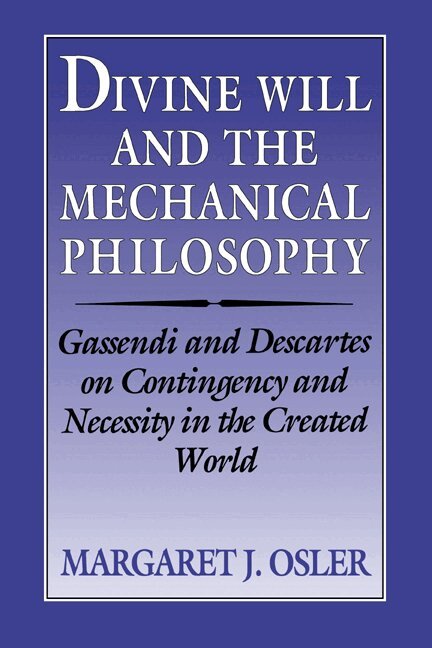
Divine Will and the Mechanical Philosophy
Gassendi and Descartes on Contingency and Necessity in the Created World
Inbunden, Engelska, 1994
1 245 kr
Skickas inom 7-10 vardagar
This book is about the influence of varying theological conceptions of contingency and necessity on two versions of the mechanical philosophy in the seventeenth century. Pierre Gassendi (1592-1655) and René Descartes (1596-1650) both believed that all natural phenomena could be explained in terms of matter and motion alone. They disagreed about the details of their mechanical accounts of the world, in particular about their theories of matter and their approaches to scientific method. This book traces their differences back to theological presuppositions they inherited from the Middle Ages. Theological ideas were transformed into philosophical and scientific ideas which led to the emergence of different styles of science in the second half of the seventeenth century.
Divine Will and the Mechanical Philosophy
Gassendi and Descartes on Contingency and Necessity in the Created World
Häftad, Engelska, 2004
560 kr
Skickas inom 7-10 vardagar
This book is about the influence of varying theological conceptions of contingency and necessity on two versions of the mechanical philosophy in the seventeenth century. Pierre Gassendi (1592-1655) and René Descartes (1596-1650) both believed that all natural phenomena could be explained in terms of matter and motion alone. They disagreed about the details of their mechanical accounts of the world, in particular about their theories of matter and their approaches to scientific method. This book traces their differences back to theological presuppositions they inherited from the Middle Ages. Theological ideas were transformed into philosophical and scientific ideas which led to the emergence of different styles of science in the second half of the seventeenth century.
600 kr
Skickas inom 7-10 vardagar
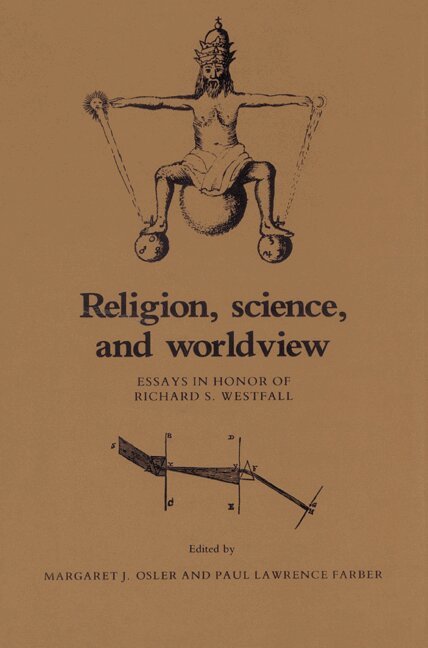
This collection of original essays by his former graduate students and colleagues honors Richard S. Westfall, a highly influential scholar in the history of the physical sciences and their relations with religion. The book is divided into three parts that reflect Professor Westfall's scholarly interests and activity: the life, work, and influence of Newton; science and religion; and historiographical and social studies of science. These contributions represent a variety of approaches to the history of science, including the development of scientific ideas per se, the influence of philosophical and religious ideas on the development of science, and the study of science as a social activity. This valuable collection demonstrates the wide scope of Professor Westfall's influence on his students and on the scholarly community as a whole.
1 390 kr
Skickas inom 7-10 vardagar
This book challenges the traditional historiography of the Scientific Revolution, probably the single most important unifying concept in the history of science. Usually referring to the period from Copernicus to Newton (roughly 1500 to 1700), the Scientific Revolution is considered to be the central episode in the history of science, the historical moment at which that unique way of looking at the world that we call 'modern science' and its attendant institutions emerged. It has been taken as the terminus a quo of all that followed. Starting with a dialogue between Betty Jo Teeter Dobbs and Richard S. Westfall, whose understanding of the Scientific Revolution differed in important ways, the papers in this volume reconsider canonical figures, their areas of study, and the formation of disciplinary boundaries during this seminal period of European intellectual history.
626 kr
Skickas inom 7-10 vardagar
This book challenges the traditional historiography of the Scientific Revolution, probably the single most important unifying concept in the history of science. Usually referring to the period from Copernicus to Newton (roughly 1500 to 1700), the Scientific Revolution is considered to be the central episode in the history of science, the historical moment at which that unique way of looking at the world that we call 'modern science' and its attendant institutions emerged. It has been taken as the terminus a quo of all that followed. Starting with a dialogue between Betty Jo Teeter Dobbs and Richard S. Westfall, whose understanding of the Scientific Revolution differed in important ways, the papers in this volume reconsider canonical figures, their areas of study, and the formation of disciplinary boundaries during this seminal period of European intellectual history.
Reconfiguring the World
Nature, God, and Human Understanding from the Middle Ages to Early Modern Europe
Inbunden, Engelska, 2010
593 kr
Skickas inom 7-10 vardagar
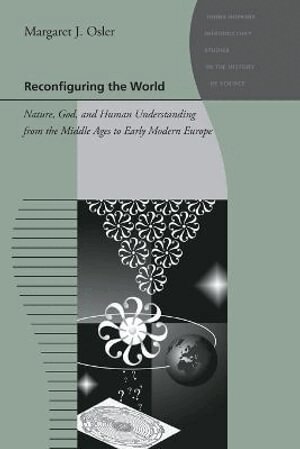
Change in human understanding of the natural world during the early modern period marks one of the most important episodes in intellectual history. This era is often referred to as the scientific revolution, but recent scholarship has challenged traditional accounts. Here, in Reconfiguring the World, Margaret J. Osler treats the development of the sciences in Europe from the early sixteenth to the late seventeenth centuries as a complex and multifaceted process. The worldview embedded in modern science is a relatively recent development. Osler aims to convey a nuanced understanding of how the natural world looked to early modern thinkers such as Galileo, Descartes, Boyle, and Newton. She describes investigation and understanding of the natural world in terms that the thinkers themselves would have used. Tracing the views of the natural world to their biblical, Greek, and Arabic sources, Osler demonstrates the impact of the Renaissance recovery of ancient texts, printing, the Protestant Reformation, and the exploration of the New World.She shows how the traditional disciplinary boundaries established by Aristotle changed dramatically during this period and finds the tensions of science and religion expressed as differences between natural philosophy and theology. Far from a triumphalist account, Osler's story includes false starts and dead ends. Ultimately, she shows how a few gifted students of nature changed the way we see ourselves and the universe.
Reconfiguring the World
Nature, God, and Human Understanding from the Middle Ages to Early Modern Europe
Häftad, Engelska, 2010
331 kr
Skickas inom 7-10 vardagar
Change in human understanding of the natural world during the early modern period marks one of the most important episodes in intellectual history. This era is often referred to as the scientific revolution, but recent scholarship has challenged traditional accounts. Here, in Reconfiguring the World, Margaret J. Osler treats the development of the sciences in Europe from the early sixteenth to the late seventeenth centuries as a complex and multifaceted process. The worldview embedded in modern science is a relatively recent development. Osler aims to convey a nuanced understanding of how the natural world looked to early modern thinkers such as Galileo, Descartes, Boyle, and Newton. She describes investigation and understanding of the natural world in terms that the thinkers themselves would have used. Tracing the views of the natural world to their biblical, Greek, and Arabic sources, Osler demonstrates the impact of the Renaissance recovery of ancient texts, printing, the Protestant Reformation, and the exploration of the New World.She shows how the traditional disciplinary boundaries established by Aristotle changed dramatically during this period and finds the tensions of science and religion expressed as differences between natural philosophy and theology. Far from a triumphalist account, Osler's story includes false starts and dead ends. Ultimately, she shows how a few gifted students of nature changed the way we see ourselves and the universe.