Margaret Litvin - Böcker
Visar alla böcker från författaren Margaret Litvin. Handla med fri frakt och snabb leverans.
5 produkter
5 produkter
533 kr
Skickas inom 7-10 vardagar
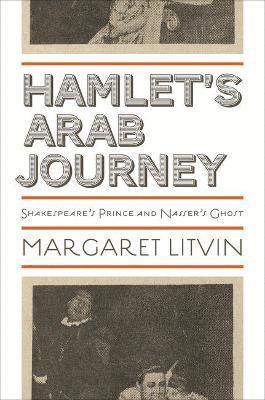
For the past five decades, Arab intellectuals have seen themselves in Shakespeare's "Hamlet": their times "out of joint", their political hopes frustrated by a corrupt older generation. "Hamlet's Arab Journey" traces the uses of "Hamlet" in Arabic theatre and political rhetoric, and asks how Shakespeare's play developed into a musical with a happy ending in 1901 and grew to become the most obsessively quoted literary work in Arab politics today. Explaining the Arab "Hamlet" tradition, Margaret Litvin also illuminates the "to be or not to be" politics that have turned Shakespeare's tragedy into the essential Arab political text, cited by Arab liberals, nationalists, and Islamists alike. On the Arab stage, Hamlet has been an operetta hero, a firebrand revolutionary, and a muzzled dissident. Analyzing productions from Egypt, Syria, Iraq, Jordan, and Kuwait, Litvin follows the distinct phases of Hamlet's naturalization as an Arab. Her fine-grained theatre history uses personal interviews as well as scripts and videos, reviews, and detailed comparisons with French and Russian Hamlets. The result shows Arab theatre in a new light.Litvin identifies the French source of the earliest Arabic "Hamlet", shows the outsize influence of Soviet and East European Shakespeare, and explores the deep cultural link between Egypt's Gamal Abdel Nasser and the ghost of Hamlet's father. Documenting how global sources and models helped nurture a distinct Arab "Hamlet" tradition, "Hamlet's Arab Journey" represents a new approach to the study of international Shakespeare appropriation.
1 186 kr
Kommande
The first literary study of the Arab world’s Soviet entanglements, examining how Arabic writers have retold and reimagined their Soviet and Russian sojournsDuring the Cold War, tens of thousands of Arab students journeyed to study in the USSR, drawn by socialism’s red beacon or simply the chance to study abroad for free. For these students, the Soviet Union was not an Evil Empire but a Red Mecca—a relatively free third space, far from home and away from the influence of the West. In this groundbreaking book, Margaret Litvin analyzes how Arab intellectuals understood and narrated their experiences of studying in the Soviet Union, particularly in Russia and Ukraine. Drawing on novels, letters, interviews, Soviet faculty meeting minutes, a student film, and other sources, Litvin reconstructs these Arab students’ lifeworld in all its political tension and human depth. She shows that, far from disappearing in 1991, the legacy of Cold War–era study abroad has offered rich material to twenty-first-century Arab writers, who use Russian or Soviet themes to explore minoritization, rigid gender identities, jihad, dictatorship, and war.Tracing the unexpected trajectories of people, literary genres, and fantasies, Litvin offers the counterintuitive but illuminating argument that throughout the Soviet and post-Soviet periods, Arab intellectuals have used Soviet educational ties to gain cultural freedom—and that this often worked in spite, not because, of policymakers’ plans. Combining cultural history and literary criticism, Red Mecca recovers a long-overlooked historical conjunction and shows how Arabic novelists have transmuted it into art.
429 kr
Kommande
The first literary study of the Arab world’s Soviet entanglements, examining how Arabic writers have retold and reimagined their Soviet and Russian sojournsDuring the Cold War, tens of thousands of Arab students journeyed to study in the USSR, drawn by socialism’s red beacon or simply the chance to study abroad for free. For these students, the Soviet Union was not an Evil Empire but a Red Mecca—a relatively free third space, far from home and away from the influence of the West. In this groundbreaking book, Margaret Litvin analyzes how Arab intellectuals understood and narrated their experiences of studying in the Soviet Union, particularly in Russia and Ukraine. Drawing on novels, letters, interviews, Soviet faculty meeting minutes, a student film, and other sources, Litvin reconstructs these Arab students’ lifeworld in all its political tension and human depth. She shows that, far from disappearing in 1991, the legacy of Cold War–era study abroad has offered rich material to twenty-first-century Arab writers, who use Russian or Soviet themes to explore minoritization, rigid gender identities, jihad, dictatorship, and war.Tracing the unexpected trajectories of people, literary genres, and fantasies, Litvin offers the counterintuitive but illuminating argument that throughout the Soviet and post-Soviet periods, Arab intellectuals have used Soviet educational ties to gain cultural freedom—and that this often worked in spite, not because, of policymakers’ plans. Combining cultural history and literary criticism, Red Mecca recovers a long-overlooked historical conjunction and shows how Arabic novelists have transmuted it into art.
2 249 kr
Skickas inom 3-6 vardagar
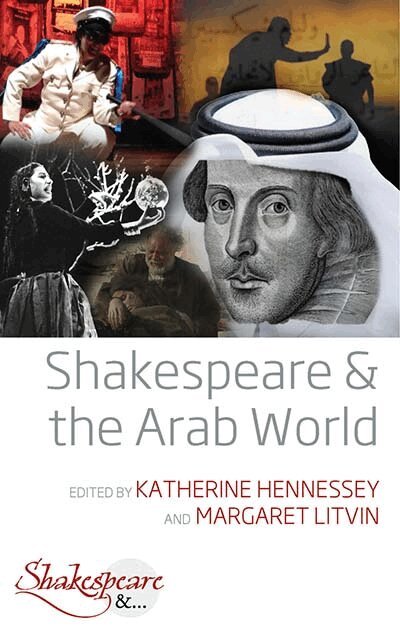
Offering a variety of perspectives on the history and role of Arab Shakespeare translation, production, adaptation and criticism, this volume explores both international and locally focused Arab/ic appropriations of Shakespeare's plays and sonnets. In addition to Egyptian and Palestinian theatre, the contributors to this collection examine everything from an Omani performance in Qatar and an Upper Egyptian television series to the origin of the sonnets to an English-language novel about the Lebanese civil war. Addressing materials produced in several languages from literary Arabic () and Egyptian colloquial Arabic (`ammiyya) to Swedish and French, these scholars and translators vary in discipline and origin, and together exhibit the diversity and vibrancy of this field.
386 kr
Skickas inom 3-6 vardagar
Offering a variety of perspectives on the history and role of Arab Shakespeare translation, production, adaptation and criticism, this volume explores both international and locally focused Arab/ic appropriations of Shakespeare’s plays and sonnets. In addition to Egyptian and Palestinian theatre, the contributors to this collection examine everything from an Omani performance in Qatar and an Upper Egyptian television series to the origin of the sonnets to an English-language novel about the Lebanese civil war. Addressing materials produced in several languages from literary Arabic (fuṣḥā) and Egyptian colloquial Arabic (‘ammiyya) to Swedish and French, these scholars and translators vary in discipline and origin, and together exhibit the diversity and vibrancy of this field.