Margaret Notley – författare
Visar alla böcker från författaren Margaret Notley. Handla med fri frakt och snabb leverans.
10 produkter
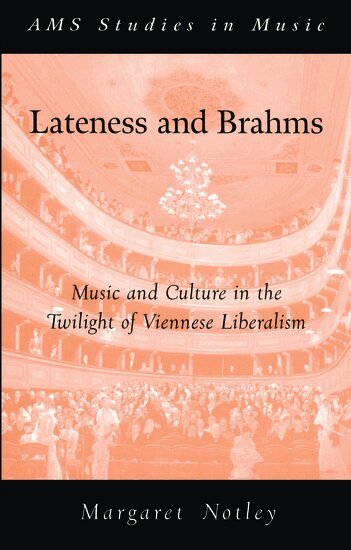
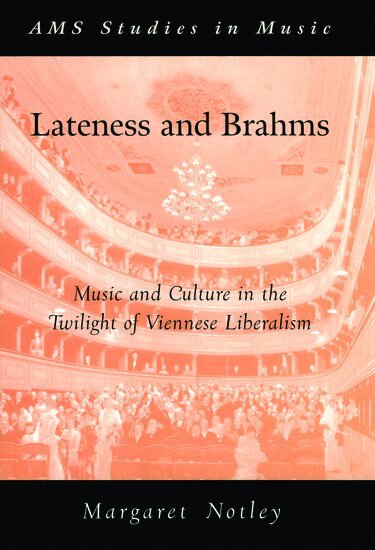
Lateness and Brahms
Music and Culture in the Twilight of Viennese Liberalism
Häftad, 2016
754 kr
Lägg i varukorg
Lateness and Brahms takes up the fascinating, yet understudied problem of how Brahms fits into the culture of turn-of-the-century Vienna. Brahms's conspicuous and puzzling absence in previous scholarly accounts of the time and place raises important questions, and as Margaret Notley demonstrates, …
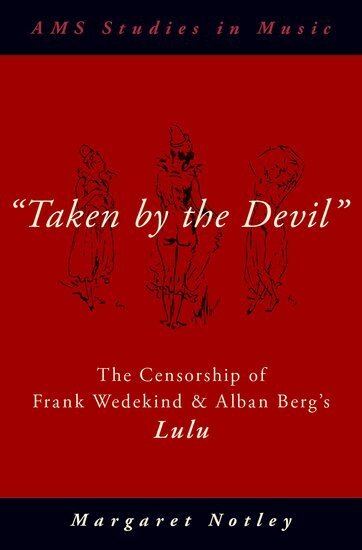
"Taken by the Devil"
The Censorship of Frank Wedekind and Alban Berg's Lulu
Inbunden, 2019
1148 kr
Lägg i varukorg
Censorship had an extraordinary impact on Alban Berg's operaLulu, composed by the Austrian during the politically tumultuous years spanning 1929 to 1935. Based on plays by Frank Wedekind that were repeatedly banned from being published and performed from1894 until the end of World War I, the …
"e;Taken by the Devil"e;
The Censorship of Frank Wedekind and Alban Berg's Lulu
E-bok, 2019
793 kr
Lägg i varukorg
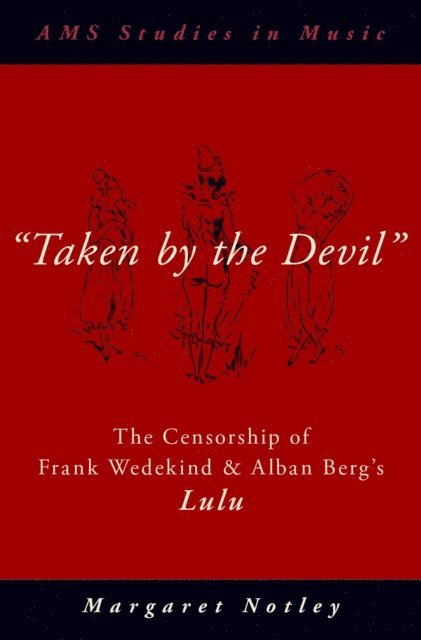
Censorship had an extraordinary impact on Alban Berg''s opera Lulu , composed by the Austrian during the politically tumultuous years spanning 1929 to 1935. Based on plays by Frank Wedekind that were repeatedly banned from being published and performed from 1894 until the end of World War I, the …
"e;Taken by the Devil"e;
The Censorship of Frank Wedekind and Alban Berg's Lulu
E-bok, 2019
793 kr
Lägg i varukorg
Censorship had an extraordinary impact on Alban Berg''s opera Lulu , composed by the Austrian during the politically tumultuous years spanning 1929 to 1935. Based on plays by Frank Wedekind that were repeatedly banned from being published and performed from 1894 until the end of World War I, the …
Lateness and Brahms
Music and Culture in the Twilight of Viennese Liberalism
Inbunden, 2006
1142 kr
Lägg i varukorg
Lateness and Brahms takes up the fascinating, yet understudied problem of how Brahms fits into the culture of turn-of-the-century Vienna. Brahms's conspicuous and puzzling absence in previous scholarly accounts of the time and place raises important questions, and as Margaret Notley demonstrates, …
Lateness and Brahms
Music and Culture in the Twilight of Viennese Liberalism
E-bok, 2006
472 kr
Lägg i varukorg
Lateness and Brahms takes up the fascinating, yet understudied problem of how Brahms fits into the culture of turn-of-the-century Vienna. Brahms''s conspicuous and puzzling absence in previous scholarly accounts of the time and place raises important questions, and as Margaret Notley demonstrates, …
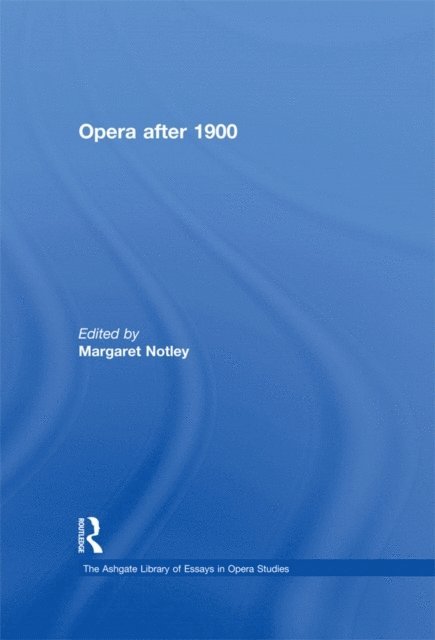
Opera after 1900
Inbunden, 2011
3156 kr
Lägg i varukorg
The articles reprinted in this volume treat operas as opera and from some sort of critical angle; none of the articles uses methodology appropriate for another kind of musical work. Additional criteria used in selecting the articles were that they should not have been reprinted widely before and …
Opera after 1900
Häftad, 2024
547 kr
Lägg i varukorg
The articles reprinted in this volume treat operas as opera and from some sort of critical angle; none of the articles uses methodology appropriate for another kind of musical work. Additional criteria used in selecting the articles were that they should not have been reprinted widely before and …
Opera after 1900
E-bok, 2017
642 kr
Lägg i varukorg
The articles reprinted in this volume treat operas as opera and from some sort of critical angle; none of the articles uses methodology appropriate for another kind of musical work. Additional criteria used in selecting the articles were that they should not have been reprinted widely before and …
Opera after 1900
E-bok, 2017
642 kr
Lägg i varukorg
The articles reprinted in this volume treat operas as opera and from some sort of critical angle; none of the articles uses methodology appropriate for another kind of musical work. Additional criteria used in selecting the articles were that they should not have been reprinted widely before and …