Margaret Scanlan - Böcker
Visar alla böcker från författaren Margaret Scanlan. Handla med fri frakt och snabb leverans.
6 produkter
6 produkter
695 kr
Skickas inom 10-15 vardagar
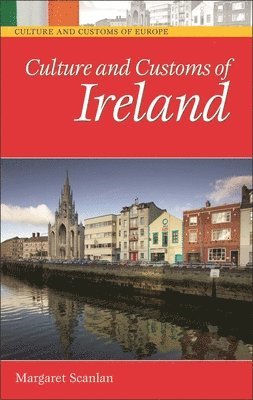
Ireland and the Irish are beloved today in the United States, not the least because of the large Irish-American population. The Irish have contributed a great deal to the Western literary canon and to the arts, and their way of life on the Emerald Isle is fabled. Culture and Customs of Ireland is the source for those interested in learning about the real Ireland and how its culture and customs came to be. Scanlan has her finger on the pulse of the country as it booms into the twenty-first century. This insightful survey of the contemporary scene is a one-stop resource for country study reports, general reading, and travel preparation.Scanlan excels at portraying the vibrancy of Ireland, which has undergone a remarkable transformation since the 1980s and is now the second-wealthiest country in the European Union. At the same time, embattled Northern Ireland has taken key steps toward security and peace. This book surveys the cultural and political heritage of the Irish people, North and South. It highlights the remarkable accomplishments of Ireland's artists, writers, musicians and performers. It investigates the role of religion in Irish life, and the ways in which prosperity, feminism, and scandals within the churches have weakened that role. It looks at the impact of immigrants and refugees on contemporary society, at the increasing visibility of women on both sides of the border, and at the growing acceptance of gays. It also looks at daily life in Ireland—people going to work, shopping, finding someone to care for their children and the like. Most particularly, it shows the challenges of maintaining Irish identity in the face of globalization.
747 kr
Skickas inom 3-6 vardagar
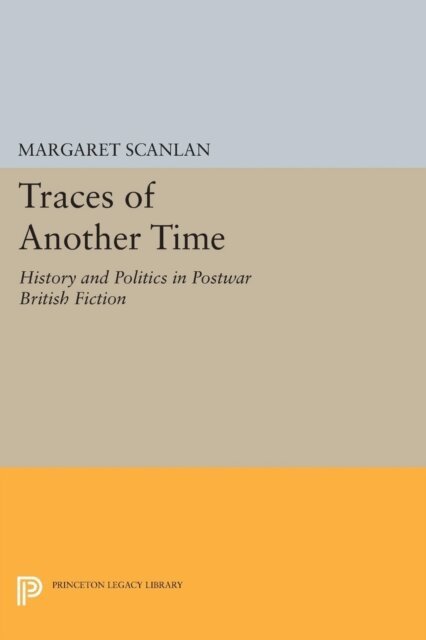
Is the historical novel the outmoded genre that some people imagine--form inseparable from romanticism, nationalism, and the nineteenth century? In this stimulating volume, Margaret Scanlan answers a convincing "no," as she demonstrates the relevance of historical novels by well-known figures such as Anthony Burgess, John le Carr, Graham Greene, Doris Lessing, Iris Murdoch, and Paul Scott, as well as by less well established writers such as Joseph Hone and Thomas Kilroy. Scanlan shows what a skeptical, experimental approach to the relationship between history and fiction these writers adopt and how radically they depart from the mimetic conventions usually associated with historical novels. Drawing on contemporary historiography and literary theory, Scanlan defines the problem of writing historical fiction at a time when people see the subject of history as fragmentary and uncertain. The writers she discusses avoid the great events of history to concentrate on its margins: what interests them is history as it is experienced, usually reluctantly, by human beings who would rather be doing something else.The first section of the book looks at fictional representations of England's difficult history in Ireland; the second examines spies, aliens, and the loss of public confidence; and the third probes the theme of Apocalypse, nuclear or otherwise, and depicts the collapse of the British Empire as an instance of the greatly diminished importance of Western culture in the world. Originally published in 1990. The Princeton Legacy Library uses the latest print-on-demand technology to again make available previously out-of-print books from the distinguished backlist of Princeton University Press. These editions preserve the original texts of these important books while presenting them in durable paperback and hardcover editions. The goal of the Princeton Legacy Library is to vastly increase access to the rich scholarly heritage found in the thousands of books published by Princeton University Press since its founding in 1905.
1 722 kr
Skickas inom 3-6 vardagar
Is the historical novel the outmoded genre that some people imagine--form inseparable from romanticism, nationalism, and the nineteenth century? In this stimulating volume, Margaret Scanlan answers a convincing "no," as she demonstrates the relevance of historical novels by well-known figures such as Anthony Burgess, John le Carr, Graham Greene, Doris Lessing, Iris Murdoch, and Paul Scott, as well as by less well established writers such as Joseph Hone and Thomas Kilroy. Scanlan shows what a skeptical, experimental approach to the relationship between history and fiction these writers adopt and how radically they depart from the mimetic conventions usually associated with historical novels. Drawing on contemporary historiography and literary theory, Scanlan defines the problem of writing historical fiction at a time when people see the subject of history as fragmentary and uncertain. The writers she discusses avoid the great events of history to concentrate on its margins: what interests them is history as it is experienced, usually reluctantly, by human beings who would rather be doing something else.The first section of the book looks at fictional representations of England's difficult history in Ireland; the second examines spies, aliens, and the loss of public confidence; and the third probes the theme of Apocalypse, nuclear or otherwise, and depicts the collapse of the British Empire as an instance of the greatly diminished importance of Western culture in the world. Originally published in 1990. The Princeton Legacy Library uses the latest print-on-demand technology to again make available previously out-of-print books from the distinguished backlist of Princeton University Press. These editions preserve the original texts of these important books while presenting them in durable paperback and hardcover editions. The goal of the Princeton Legacy Library is to vastly increase access to the rich scholarly heritage found in the thousands of books published by Princeton University Press since its founding in 1905.
847 kr
Skickas inom 10-15 vardagar
Is literature dangerous? By looking at a range of novels about terrorism, this work raises the possibility that the writer's relationship to actual politics may be considerably reduced in the age of television and the Internet. Margaret Scanlan traces the figure of the writer as rival or double of the terrorist from its origins in the romantic conviction of the writer's originality and power through a century of political, social and technological developments that undermine that belief. She argues that serious writers like Friedrich Durrenmatt, Doris Lessing, and Don DeLillo imagine a contemporary writer's encounter with terrorists as a test of the old alliance between writer and revolutionary. After considering the possibility that televised terrorism is replacing the novel, or that writing, as contemporary theory would have it, is itself a form of violence, Scanlan asks whether the revolutionary impulse itself is dying - in politics as much as in literature. Her analyses take the reader on an exploration of the relationship between actual bombs and stories about bombings, from the modern world to its electronic representation, and from the exercise of political power to the fiction writer's power in the world.
328 kr
Skickas inom 10-15 vardagar
Is literature dangerous? By looking at a range of novels about terrorism, this work raises the possibility that the writer's relationship to actual politics may be considerably reduced in the age of television and the Internet. Margaret Scanlan traces the figure of the writer as rival or double of the terrorist from its origins in the romantic conviction of the writer's originality and power through a century of political, social and technological developments that undermine that belief. She argues that serious writers like Friedrich Durrenmatt, Doris Lessing, and Don DeLillo imagine a contemporary writer's encounter with terrorists as a test of the old alliance between writer and revolutionary. After considering the possibility that televised terrorism is replacing the novel, or that writing, as contemporary theory would have it, is itself a form of violence, Scanlan asks whether the revolutionary impulse itself is dying - in politics as much as in literature. Her analyses take the reader on an exploration of the relationship between actual bombs and stories about bombings, from the modern world to its electronic representation, and from the exercise of political power to the fiction writer's power in the world.
569 kr
Skickas inom 11-20 vardagar
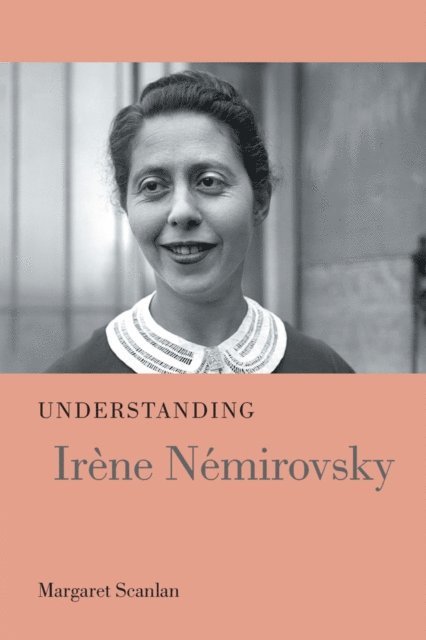
A sympathetic, nuanced exploration of the fiction and turbulent life of this best-selling authorA best-selling novelist in the 1930s, Irène Némirovsky (1903–1942) was rediscovered in 2004, when her Suite Française, set during the fall of France and the first year of German occupation, became a popular and critical success both in France and in the United States. Surviving in manuscript form for sixty years after the author’s deportation to Auschwitz, the work drew respectful attention as the voice of an early Holocaust victim. However, as remaining portions of Némirovsky’s oeuvre returned to print, many twenty-first-century readers were appalled. Works such as David Golder and The Ball were condemned as crudely anti-Semitic, and when biographical details such as her 1938 conversion to Catholicism became known, hostility toward this “self-hating” Jew deepened.Countering such criticisms, Understanding Irène Némirovsky offers a sympathetic, nuanced reading of Némirovsky’s fiction. Margaret Scanlan begins with an overview of the writer’s life—her upper-class Russian childhood, her family’s immigration to France, her troubled relationship with her neglectful mother—and then traces how such experiences informed her novels and stories, including works set in revolutionary Russia, among the nouveau riche on the Riviera, and in struggling French families and failing businesses during the Depression. Scanlan examines the Suite Française and other works that address the rise of fascism and anti-Semitism. Viewing Némirovsky as a major talent with a distinctive style and voice, Scanlan argues for Némirovsky’s keen awareness of the unsettled times in which she lived and examines the ways in which even her novels of manners analyze larger social issues.The Russian Revolution had convinced Némirovsky that violent liberations led to further violence and repression, that interior freedom required political stability. In 1940, when French democracy had collapsed and many seemed reconciled to the Vichy state, Némirovsky’s idea of private freedom faltered—a recognition that her last work, Suite Française, for all its seeming reticence, makes poignantly clear.