Margarita Alexandrou – författare
Visar alla böcker från författaren Margarita Alexandrou. Handla med fri frakt och snabb leverans.
4 produkter
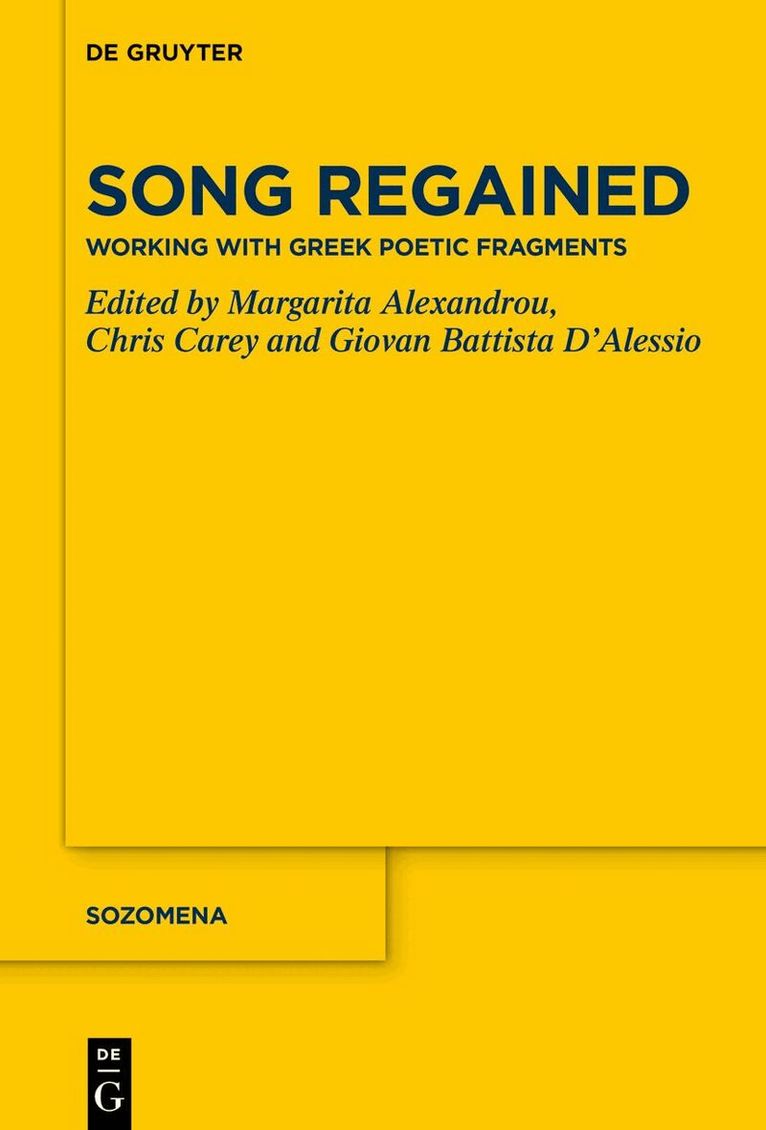
Song Regained
Working with Greek Poetic Fragments
Av Margarita Alexandrou, Chris Carey m. fl.
Inbunden, 2022
1919 kr
Lägg i varukorg
Apart from relatively few exceptions of texts which survive intact, what we have of Ancient Greek literature remains, to a great degree, fragmentary. As a result it is often misread, overlooked or mined not for its own sake but to support the investigation of texts which survive in their entirety. …
Song Regained
Working with Greek Poetic Fragments
Av Giovan Battista D'Alessio, Chris Carey m. fl.
E-bok, 2022
1601 kr
Lägg i varukorg
Apart from relatively few exceptions of texts which survive intact, what we have of Ancient Greek literature remains, to a great degree, fragmentary. As a result it is often misread, overlooked or mined not for its own sake but to support the investigation of texts which survive in their entirety. …
Song Regained
Working with Greek Poetic Fragments
Av Giovan Battista D'Alessio, Chris Carey m. fl.
E-bok, 2022
1601 kr
Lägg i varukorg
Apart from relatively few exceptions of texts which survive intact, what we have of Ancient Greek literature remains, to a great degree, fragmentary. As a result it is often misread, overlooked or mined not for its own sake but to support the investigation of texts which survive in their entirety. …
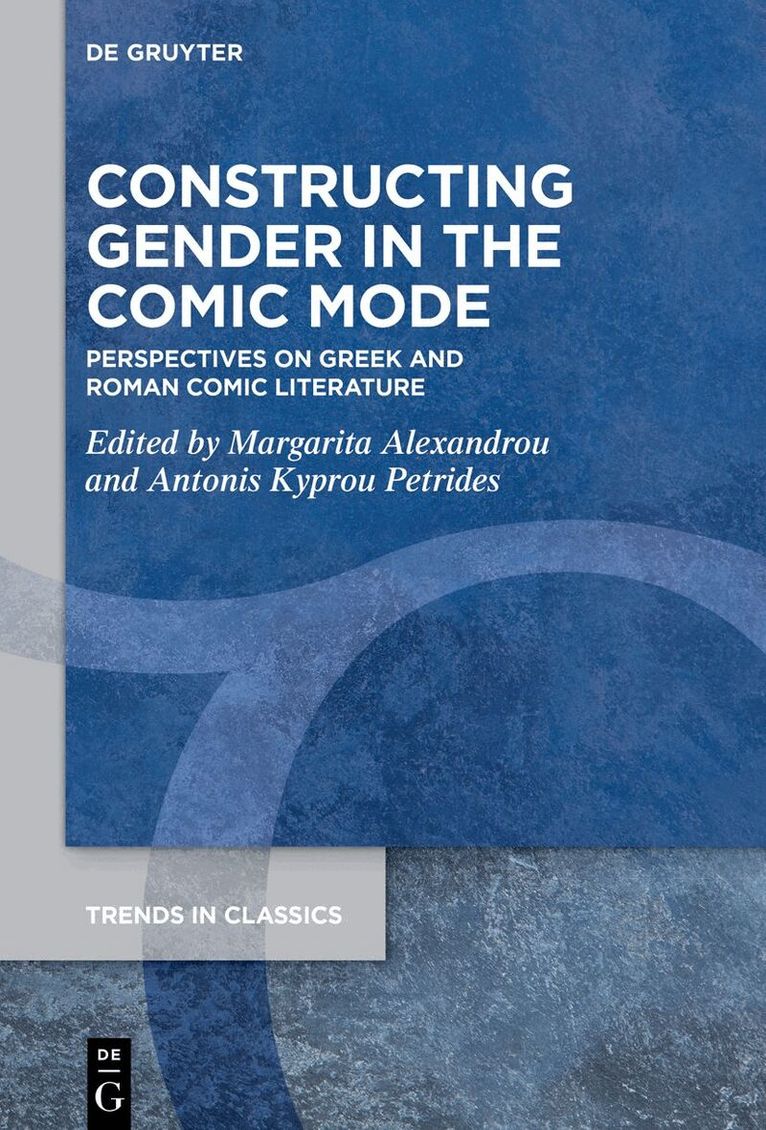
Constructing Gender in The Comic Mode
Perspectives on Greek and Roman Comic Literature
Av Margarita Alexandrou, Antonis Kyprou Petrides
Inbunden, 2027
1995 kr
Kommande
Gender was not theorised as such in Greco-Roman culture. Nonetheless, the concept of gender was never static or stable over the centuries—and if gender is a social construct, it is inevitably also a literary one. Ancient society and literature develop a dialectical, co-dependent dynamic in shaping …