Margit Szöllösi-Janze - Böcker
Visar alla böcker från författaren Margit Szöllösi-Janze. Handla med fri frakt och snabb leverans.
4 produkter
4 produkter
1 799 kr
Skickas inom 3-6 vardagar
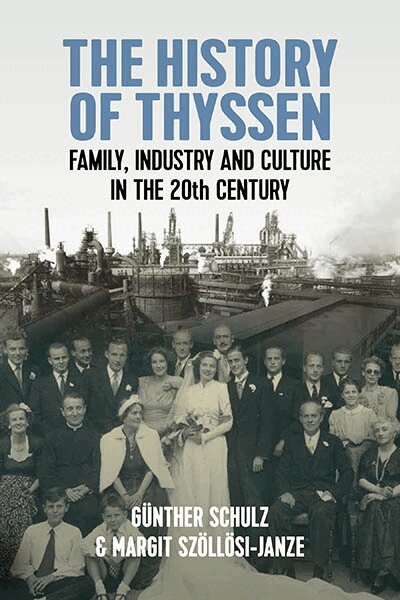
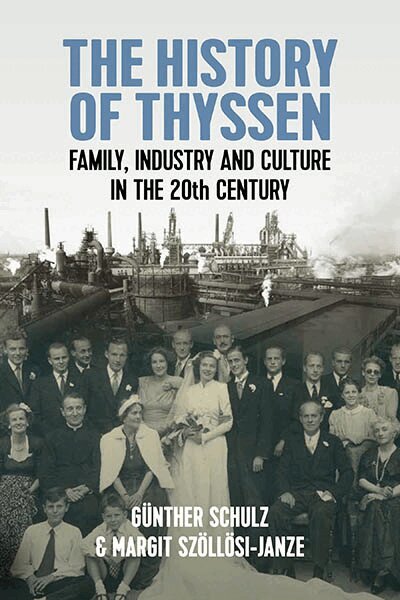
As a result of a multi-volume research project, funded by the Thyssen Foundations (Stiftung zur Industriegeschichte Thyssen and Fritz Thyssen Stiftung), ten books were published that served to greatly advance the available knowledge on the Thyssen family and their companies. The results of this project are summarized in this volume which provides both an explanation of how the project was conceptualized and executed and a detailed case study of a family and their business during the late-nineteenth and twentieth centuries. It explains the development of both whilst addressing issues such as patriarchal succession; gender roles in the family; wealthy lifestyles in international communities of aristocrats and diplomats; operating across national legislation, institutions, and policies; and discussions of labor and capital. In doing so it connects corporate and family history to provide an all-inclusive view of the development of a business.
511 kr
Skickas inom 3-6 vardagar
The History of Thyssenprovides a summary of a research project funded by the Thyssen Foundations. It is both an explanation of how the project was conceptualized and executed and a detailed case study of a family and business during the late-nineteenth and twentieth centuries.
1 703 kr
Skickas inom 10-15 vardagar
How true is it that National Socialism led to an ideologically distorted pseudo-science? What was the relationship between the regime funding 'useful' scientific projects and the scientists offering their expertise? And what happened to the German scientific community after 1945, especially to those who betrayed and denounced Jewish colleagues? In recent years, the history of the sciences in the Third Reich has become a field of growing importance, and the in-depth research of a new generation of German scholars provides us with new, important insights into the Nazi system and the complicated relationship between an elite and the dictatorship. This book portrays the attitudes of scientists facing National Socialism and war and uncovers the continuities and discontinuities of German science from the beginning of the twentieth century to the postwar period. It looks at ideas, especially the Humboldtian concept of the university; examines major disciplines such as eugenics, pathology, biochemistry and aeronautics, as well as technologies such as biotechnology and area planning; and it traces the careers of individual scientists as actors or victims.The striking results of these investigations fill a considerable gap in our knowledge of the Third Reich but also of the postwar role of German scientists within Germany and abroad.
474 kr
Skickas inom 10-15 vardagar
How true is it that National Socialism led to an ideologically distorted pseudo-science? What was the relationship between the regime funding 'useful' scientific projects and the scientists offering their expertise? And what happened to the German scientific community after 1945, especially to those who betrayed and denounced Jewish colleagues? In recent years, the history of the sciences in the Third Reich has become a field of growing importance, and the in-depth research of a new generation of German scholars provides us with new, important insights into the Nazi system and the complicated relationship between an elite and the dictatorship. This book portrays the attitudes of scientists facing National Socialism and war and uncovers the continuities and discontinuities of German science from the beginning of the twentieth century to the postwar period. It looks at ideas, especially the Humboldtian concept of the university; examines major disciplines such as eugenics, pathology, biochemistry and aeronautics, as well as technologies such as biotechnology and area planning; and it traces the careers of individual scientists as actors or victims.The striking results of these investigations fill a considerable gap in our knowledge of the Third Reich but also of the postwar role of German scientists within Germany and abroad.