Margo Tamez - Böcker
Visar alla böcker från författaren Margo Tamez. Handla med fri frakt och snabb leverans.
4 produkter
4 produkter
220 kr
Skickas inom 7-10 vardagar
Written from thirteen years of journals, psychic and earthly, this poetry maps an uprising of a borderland indigenous woman battling forces of racism and sexual violence against Native women and children. This lyric collection breaks new ground, skillfully revealing an unseen narrative of resistance on the Mexico?U.S. border. A powerful blend of the oral and long poem, and speaking into the realm of global movements, these poems explore environmental injustice, sexualized violence, and indigenous women's lives. These complex and necessary themes are at the heart of award-winning poet Margo Tamez's second book of poetry. Her poems bring forth experiences of a raced and gendered life along the border. Tamez engages the experiences of an indigenous life, refusing labels of Mexican or Native American as social constructs of a colonized people. This book is a challenging cartography of colonialism, poverty, and issues of Native identity and demonstrates these as threats to the environment, both ecological and social, in the borderlands. Each poem is crafted as if it were a minute prayer, dense with compassion and unerring optimism. But the hope that Tamez serves is not blind.In poem after poem, she draws us into a space ruled by mythic symbolism and the ebb and flow of the landscape, place where comfort is compromised and where we must work to relearn the nature of existence and the value of life.
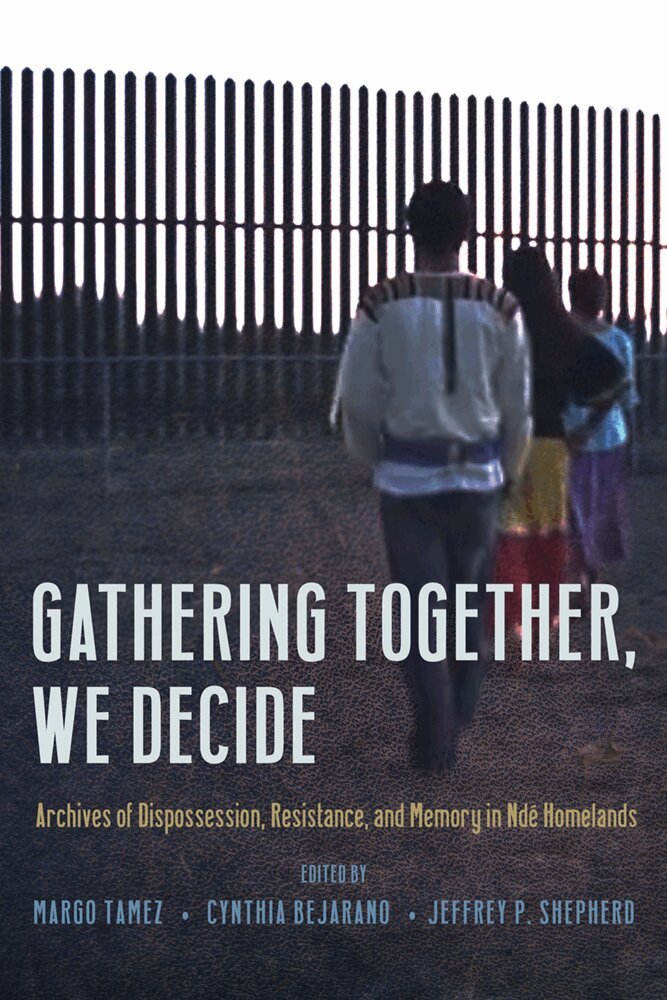
Gathering Together, We Decide
Archives of Dispossession, Resistance, and Memory in Ndé Homelands
Häftad, Engelska, 2025
362 kr
Skickas inom 7-10 vardagar
In 2007, the Department of Homeland Security began condemnation proceedings on the property of Dr. Eloisa Tamez, a Lipan Apache (Ndé ) professor, veteran, and title holder to land in South Texas deeded to her ancestors under the colonial occupation and rule of King Charles III of Spain in 1761, during a time when Indigenous lands were largely taken and exploited by Spanish colonizers. Crown grants of lands to Indigenous peoples afforded them the opportunity to reclaim Indigenous title and control. The federal government wanted Tamez's land to build a portion of the 'border wall' on the U.S.-Mexico border. She refused. In 2008, the Department of Homeland Security sued her, but she countersued based on Aboriginal land rights, Indigenous inherent rights, the land grant from Spain, and human rights. This standoff continued for years, until the U.S. government forced Tamez to forfeit land for the wall. In response, Dr. Eloisa Tamez and her daughter, Dr. Margo Tamez, organized a gathering of Lipan tribal members, activists, lawyers, and allies to meet in El Calaboz, South Texas. This gathering was a response to the appropriation of the Tamez family land, but it also provided an international platform to dispute the militarization of Indigenous territory throughout the U.S.-Mexico bordered-lands. The gathering and years of ensuing resistance and activism produced an archive of scholarly analyses, testimonios, artwork, legal briefs, poetry, and other cultural productions. This unique collection spotlights powerful voices and perspectives from Ndé leaders, Indigenous elders, settler-allies, Native youth, and others associated with the Tamez family, the Ndé defiance, and the larger Indigenous rights movement to document their resistance expose, confront, and end racism and militarization and to foreground Indigenous women-led struggles for justice.
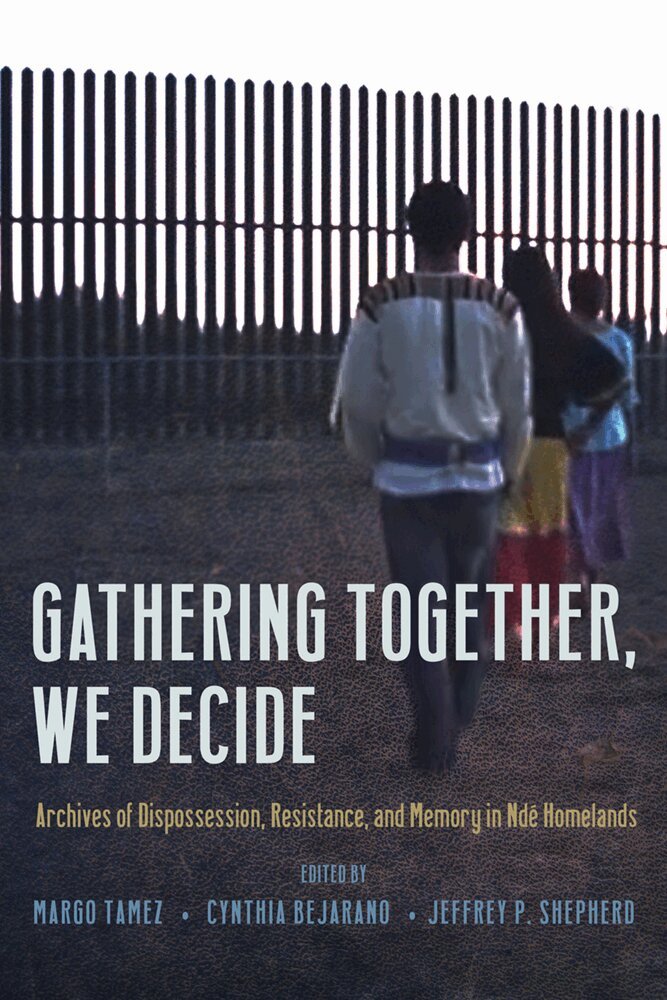
Gathering Together, We Decide
Archives of Dispossession, Resistance, and Memory in Ndé Homelands
Inbunden, Engelska, 2025
1 059 kr
Skickas inom 7-10 vardagar
In 2007, the Department of Homeland Security began condemnation proceedings on the property of Dr. Eloisa Tamez, a Lipan Apache (NdÉ) professor, veteran, and title holder to land in South Texas deeded to her ancestors under the colonial occupation and rule of King Charles III of Spain in 1761, during a time when Indigenous lands were largely taken and exploited by Spanish colonizers. Crown grants of lands to Indigenous peoples afforded them the opportunity to reclaim Indigenous title and control. The federal government wanted Tamez’s land to build a portion of the “border wall” on the U.S.-Mexico border. She refused. In 2008, the Department of Homeland Security sued her, but she countersued based on Aboriginal land rights, Indigenous inherent rights, the land grant from Spain, and human rights. This standoff continued for years, until the U.S. government forced Tamez to forfeit land for the wall. In response, Dr. Eloisa Tamez and her daughter, Dr. Margo Tamez, organized a gathering of Lipan tribal members, activists, lawyers, and allies to meet in El Calaboz, South Texas. This gathering was a response to the appropriation of the Tamez family land, but it also provided an international platform to dispute the militarization of Indigenous territory throughout the U.S.-Mexico bordered-lands. The gathering and years of ensuing resistance and activism produced an archive of scholarly analyses, testimonios, artwork, legal briefs, poetry, and other cultural productions. This unique collection spotlights powerful voices and perspectives from NdÉ leaders, Indigenous elders, settler-allies, Native youth, and others associated with the Tamez family, the NdÉ defiance, and the larger Indigenous rights movement to document their resistance; expose, confront, and end racism and militarization; and to foreground Indigenous women–led struggles for justice.
288 kr
Skickas inom 3-6 vardagar
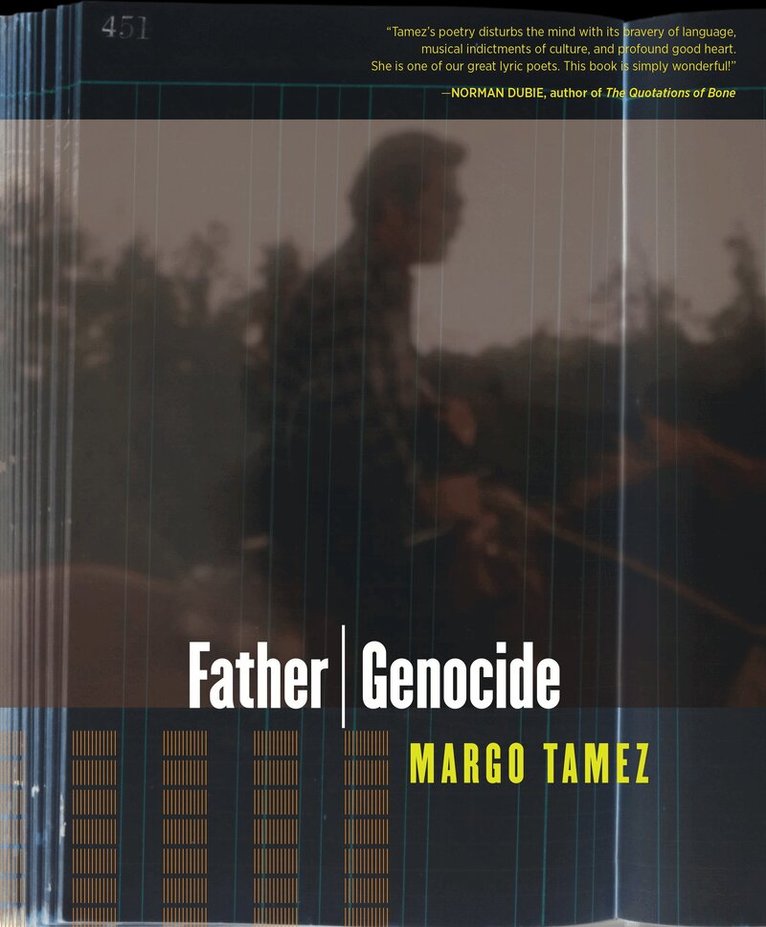
“A necessary, urgent, and affecting work.” —Publishers Weekly“Tamez's poetry disturbs the mind with its bravery of language, musical indictments of culture, and profound good heart. She is one of our great lyric poets. This book is simply wonderful!" —Norman Dubie, author of The Quotations of BoneOn the night before he “walked on,” Margo Tamez's father recorded two questions onto a cassette tape: "Where did all the good men go? Where did they go?" Two decades later, Tamez reconstructs her father's struggle to "be a man" under American domination, tracing the settler erasure, denial, and genocide that he and preceding generations experienced. She reclaims stolen territory in the felt and known history of colonial Texas through Ndé Dene [Lipan Apache] place, memory, and poetics of resistance."I was raised up in American violence," Tamez writes, "and I have to explore all of its possibilities ..." Her poetry brings out those possibilities by "timebending," with a poetic form Tamez calls "Indigenous fusionism-Indigenous futurism," a union of pastpresent, bodyknowing, intertext, bent tradition, landguage, and familial blood-knowing, Father | Genocide reveals why impunity on the Texas border is the key to understanding American identity violence. Her lightning poetry strikes the nested seeds and unburies the truth of "these bitter lands."