Maria Ågren - Böcker
Visar alla böcker från författaren Maria Ågren. Handla med fri frakt och snabb leverans.
9 produkter
9 produkter
395 kr
Skickas
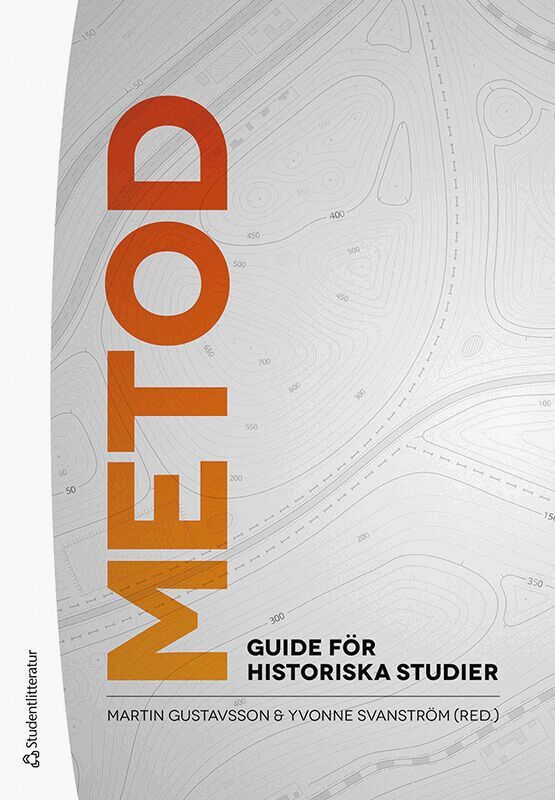
Metodkunskaper är nödvändiga för att både skriva, läsa och förstå vetenskaplig text. För att kunna få fram och ta del av information i historiska källor krävs både kvalitativa och kvantitativa metoder av olika slag. Den här grundboken har därför ett brett anslag och presenterar ett flertal praktiska tillvägagångssätt inom historiska studier.Boken har tre delar. I den första behandlas de inledande faserna av en historisk studie, med kapitel om undersökningsdesign och källkritik. Den andra delen har en kvalitativ inriktning och samlar kapitel om textanalys, begreppshistoria, diskursanalys, bild som källa och muntlig historia. I den tredje delen är fokus kvantitativt och här tar författarna upp beskrivande statistik, korrelations- och regressionsanalys, kollektivbiografi och korrespondensanalys samt rumslig metod.Metod - guide för historiska studier är avsedd för studenter i humanistiska och samhällsvetenskapliga ämnen med historisk inriktning vid universitet och högskolor. I denna utökade upplaga har samtliga kapitel uppdaterats.
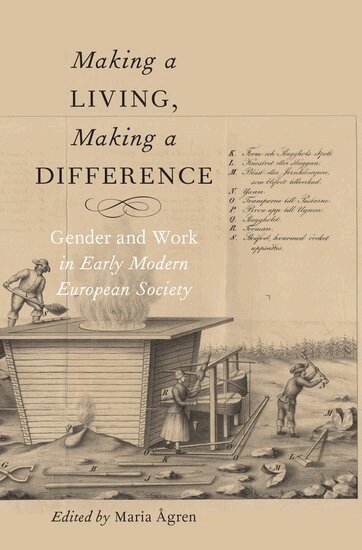
Making a Living, Making a Difference
Gender and Work in Early Modern European Society
Inbunden, Engelska, 2017
1 810 kr
Skickas inom 5-8 vardagar
What do people do all day? What did women and men do to make a living in early modern Europe, and what did their work mean? As this book shows, the meanings depended both on the worker and on the context. With an innovative analytic method that is yoked to a specially-built database of source materials, this book revises many received opinions about the history of gender and work in Europe. The applied verb-oriented method finds the 'work verbs' that appear incidentally in a wide variety of early modern sources and then analyzes the context in which they appear. By tying information technologies and computer-assisted analysis to the analytic powers - both quantitative and qualitative - of professional historians, the method gets much closer to a participatory observation of the micro-patterns of early modern life than was once believed possible. It directly addresses a number of broad problems often debated by historians of gender and early modern Europe. First, it discusses the problem of assessing more accurately the incidence, character and division of work. Second, it analyzes the configurations of work and human difference. Third, it deals with the extent to which work practices created notions of difference - gender difference but also other forms of difference - and, conversely, to what extent work practices contributed to notions of sameness and gender convergence. Finally, it studies the impact of processes of change. Drawing on sources from Sweden, the authors show the importance of multiple employment, the openness of early modern households, the significance of marriage and marital status, the gendered nature of specific tasks, and the ways in which state formation and commercialization were entangled in people's everyday lives.
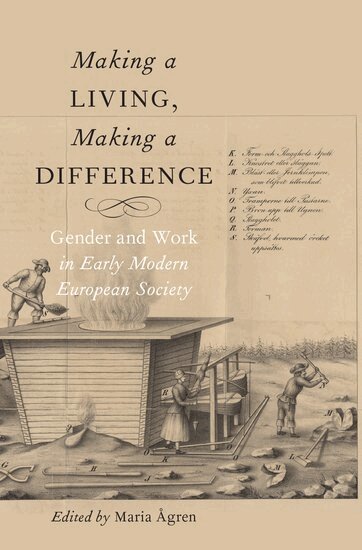
Making a Living, Making a Difference
Gender and Work in Early Modern European Society
Häftad, Engelska, 2017
697 kr
Skickas inom 5-8 vardagar
What do people do all day? What did women and men do to make a living in early modern Europe, and what did their work mean? As this book shows, the meanings depended both on the worker and on the context. With an innovative analytic method that is yoked to a specially-built database of source materials, this book revises many received opinions about the history of gender and work in Europe. The applied verb-oriented method finds the 'work verbs' that appear incidentally in a wide variety of early modern sources and then analyzes the context in which they appear. By tying information technologies and computer-assisted analysis to the analytic powers - both quantitative and qualitative - of professional historians, the method gets much closer to a participatory observation of the micro-patterns of early modern life than was once believed possible. It directly addresses a number of broad problems often debated by historians of gender and early modern Europe. First, it discusses the problem of assessing more accurately the incidence, character and division of work. Second, it analyzes the configurations of work and human difference. Third, it deals with the extent to which work practices created notions of difference - gender difference but also other forms of difference - and, conversely, to what extent work practices contributed to notions of sameness and gender convergence. Finally, it studies the impact of processes of change. Drawing on sources from Sweden, the authors show the importance of multiple employment, the openness of early modern households, the significance of marriage and marital status, the gendered nature of specific tasks, and the ways in which state formation and commercialization were entangled in people's everyday lives.
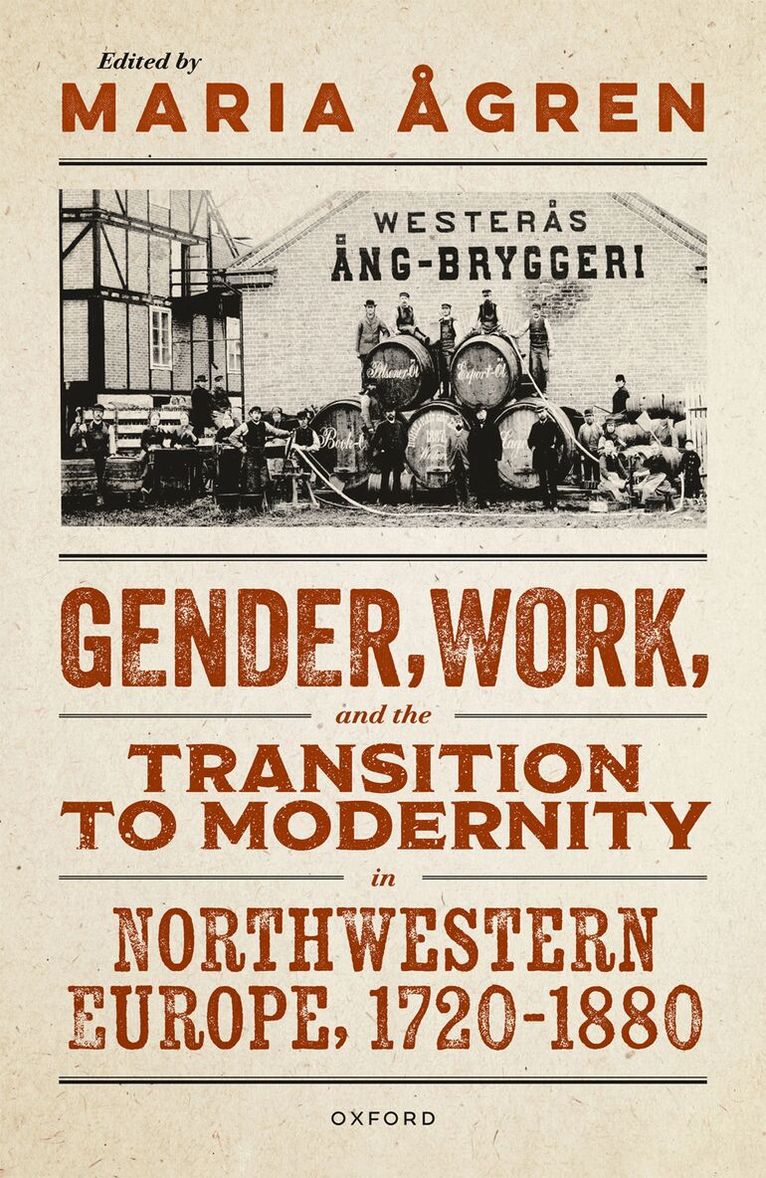
Gender, Work, and the Transition to Modernity in Northwestern Europe, 1720–1880
Inbunden, Engelska, 2025
1 389 kr
Skickas inom 5-8 vardagar
It is well-known that gender distinctions structure the modern labour market, but why is this so and how far back in time does the pattern extend? Gender, Work, and the Transition to Modernity in Northwestern Europe, 1720-1880 uses a unique method to map and explain how gender rather than marital status came to be important. Gender, Work, and the Transition to Modernity in Northwestern Europe, 1720-1880 investigates how and why the division of work between men and women changed in the transition from early modern to modern society. Based on the verb-oriented method and around 19,000 observations of work activities in historical sources, its focus is on a mid-Swedish local society in the period 1720 to 1880. There were several continuities across this time: both women and men were observed in practically all forms of work, many households (both affluent and destitute) still relied on multiple sources of income, and the marital partnership continued to be important for what women and men did to support themselves. Yet, there was also change: tasks that conferred authority were gradually masculinised, the differences between married and unmarried women with respect to work declined, and while women remained mobile, men's work-related mobility increased. In an even longer time perspective, from 1550 to 1880, gender slowly became more important for what types of work people did. The main reason behind this development was increasing social differentiation and shifts in labour relations. The growing impact of gender was not the result of a trickling down of new middle-class ideals, nor the effect of new preferences, nor a consequence of a separation of home and work. Instead, differences grew because more people were in a position where someone else - an employer - controlled how they used their time.
593 kr
Skickas inom 10-15 vardagar
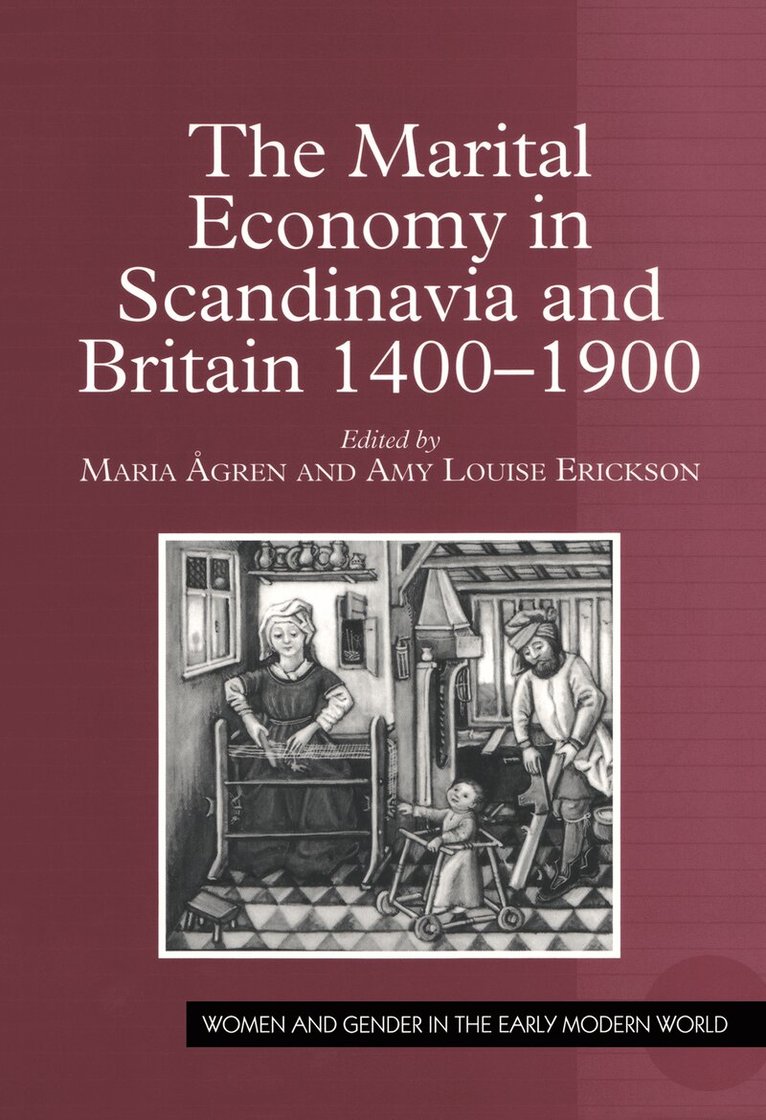
Marriage today is our prime social and legal institution. Historically, it was also the principal economic institution. This collection of essays offers a wealth of original research into the economic, social and legal history of the marital partnership in northern Europe over a 500-year period. Erickson's introduction explores the concept of the marital economy and sketches the legal and economic background across the region. Chapters by Ågren, Gudrun Andersson, Agnes Arnórsdóttir, Inger Dübeck, Elizabeth Ewan, Rosemarie Fiebranz, Catherine Frances, Hanne Johansen, Ann-Catrin Östman, Anu Pylkkänen, Hilde Sandvik and Jane Whittle, are organized according to the three economic stages of the marital life-cycle: forming the partnership; managing the partnership; and dissolving the partnership. In conclusion, Michael Roberts explores how the historical development of modern economic theory has removed marriage from its central position at the heart of the economy.
515 kr
Skickas inom 10-15 vardagar
Between the seventeenth and nineteenth centuries, women's role in the Swedish economy was renegotiated and reconceptualised. Maria Agren chronicles changes in married women's property rights, revealing the story of Swedish women's property as not just a simple narrative of the erosion of legal rights, but a more complex tale of unintended consequences.A public sphere of influence--including the wife's family and the local community--held sway over spousal property rights throughout most of the seventeenth century, Agren argues. Around 1700, a campaign to codify spousal property rights as an arcanum domesticum, or domestic secret, aimed to increase efficiency in legal decision making. New regulatory changes indeed reduced familial interference, but they also made families less likely to give land to women.The advent of the print medium ushered property issues back into the public sphere, this time on a national scale, Agren explains. Mass politicization increased sympathy for women, and public debate popularized more progressive ideas about the economic contributions of women to marriage, leading to mid-nineteenth-century legal reforms that were more favourable to women. Agren's work enhances our understanding of how societies have conceived of women's contributions to the fundamental institutions of marriage and the family, using as an example a country with far-reaching influence during and after the Enlightenment.
Iron-making Societies
Early Industrial Development in Sweden and Russia, 1600-1900
Inbunden, Engelska, 1998
2 229 kr
Skickas inom 3-6 vardagar
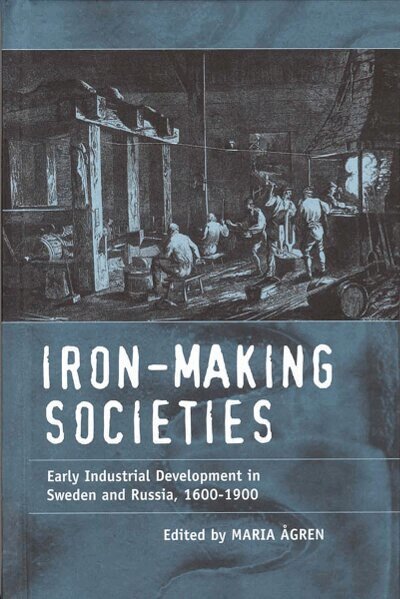
The title of this book has a double meaning: on the one hand, it deals with two very different societies both of which made iron in the early modern period. On the other hand, iron "made" these societies: the needs of iron production and the resistance to these demands from local peasant communities gave the societies a special kind of cohesion and rationality.This volume presents the findings of a joint team of Swedish and Russian scholars examining the social organization of work in early modern iron industry and their respective societies. The comparison was carried out against the backdrop of the international discussion on proto-industrialization, its prerequisites and consequences. There has, however, been a certain bias in much of that debate, the focus being mainly on Western Europe, particularly on Britain, and on textile trades. This book offers an important contribution to the debate in that it widens the perspective by discussing Northern and Eastern Europe and by studying the iron industry. More particularly it examines actual production processes, the organization of work, social conflict, questions of ownership and its evolution, as well as the diffusion and organization of technical knowledge. The comparative approach is consistently applied throughout, with each chapter closely integrating the results relating to the two selected geographical areas, thus showing ways of solving some of the problems arising from comparative history.
159 kr
Skickas inom 5-8 vardagar
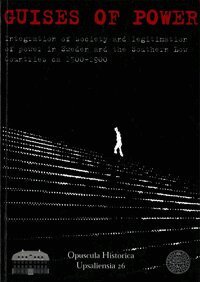
Understanding how power works has always been regarded as a central responsibility for researchers in the social sciences. To look upon the issue in a geographically comparative perspective provides important advantages because then the scope for explaining power increases considerably. To study power in a chronologically comparative perspective adds yet another dimension to the question, and must involve historians. This is the point of departure of this volume, which sets out to describe and analyse the working of power in different social contexts and at different times. The authors do not, however, discuss just any social settings but focus explicitly on Sweden and the Southern Low Countries (present-day Belgium) in the early modern period. This book is the reult of a co-operative project involving the department of history at Uppsala University and the department of history at Louvain-la-Neuve.
169 kr
Skickas inom 5-8 vardagar
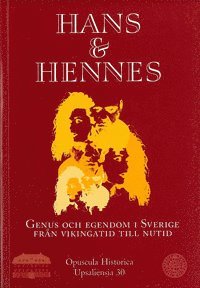
En person som har något i sin besittning är alltid värd större förtroende än den, som inget har. En kvinna bör i allmänhet inte tillåtas sköta egendom och ekonomi på egen hand. Men likväl finns det anledning att göra undantag för de kvinnor, som är kloka och vettiga. Så såg en av 1600-talets mest inflytelserika män (Claes Rålamb) på egendom och kön. För honom var egendom mer än bara en källa till välstånd: den gav också upphov till makt och socialt kapital. Kvinnors tillgång till egendom sågs som mer begränsad än mäns, och den var dessutom beroende av den enskilda kvinnans kvalifikationer. Dessa båda tankar – att egendom kan kopplas till makt och att tillgången till egendom sett olika ut för män och kvinnor – är centrala även i denna publikation. Här diskuterar en rad svenska historiker egendoms- och könsrelationer i ett tusenårigt perspektiv och med exempel från såväl städer som landsbygd.