Maria Green Cowles - Böcker
Visar alla böcker från författaren Maria Green Cowles. Handla med fri frakt och snabb leverans.
5 produkter
5 produkter
1 108 kr
Skickas inom 3-6 vardagar
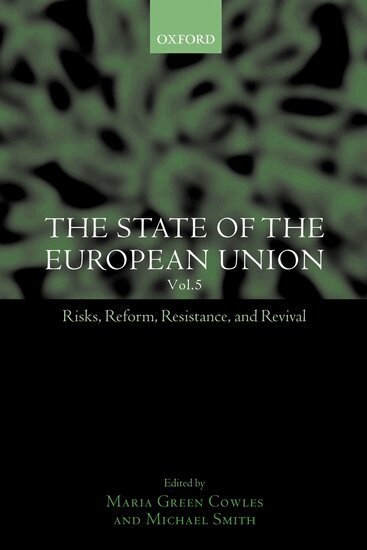
With the introduction of a single currency in 1999 and the negotiations for the fifth enlargement in 2000, the European Union is at a major crossroads in its history. While the adoption of EMU and the entrance of new member states hold the promise of creating an 'ever close union', they must take place in a rather turbulent environment. Exogenous shocks such as the Asian financial crisis, the Russian upheaval, and new Balkan problems threaten to derail advances in monetary affairs and common foreign and security policy. Endogenous resistance to further European policy reform in areas such as the budget, CAP, and structural funds has strengthened, as suggested by the meagre advances in the Amsterdam Treaty. Indeed, domestic developments, including changes in the political composition of leading governments and growing unemployment, pose further challenges to EU reforms. With contributions from leading scholars, the book examines the European Union in a theoretically informed, empirically-grounded manner. The book begins by exploring the evolving nature of the European polity and its capacity for change. The second section on monetary union examines the conditions under which EMU will challenge integration, the viability of the European Central Bank, as well as the ability of European citizens to adjust to the single currency. The third section investigates why member states agreed to the Eastern enlargement and what internal and external challenges face the Union as a result. The fourth section highlights the institutional upheavals underway in the major European institutions, as well as Europeans support of and identify with the European polity. The final section of the book highlights the extent to which the European Union is able to govern in key policy areas - trade, environment, common foreign and security policy, and development - given the state of the European Union today. This is the fifth volume in the biannual series State of the European Union produced under the auspices of the American European Community Studies Association (ECSA)
720 kr
Skickas inom 7-10 vardagar
With the introduction of a single currency in 1999 and the negotiations for the fifth enlargement in 2000, the European Union is at a major crossroads in its history. While the adoption of EMU and the entrance of new member states hold the promise of creating an 'ever close union', they must take place in a rather turbulent environment. Exogenous shocks such as the Asian financial crisis, the Russian upheaval, and new Balkan problems threaten to derail advances in monetary affairs and common foreign and security policy. Endogenous resistance to further European policy reform in areas such as the budget, CAP, and structural funds has strengthened, as suggested by the meagre advances in the Amsterdam Treaty. Indeed, domestic developments, including changes in the political composition of leading governments and growing unemployment, pose further challenges to EU reforms. With contributions from leading scholars, the book examines the European Union in a theoretically informed, empirically-grounded manner. The book begins by exploring the evolving nature of the European polity and its capacity for change. The second section on monetary union examines the conditions under which EMU will challenge integration, the viability of the European Central Bank, as well as the ability of European citizens to adjust to the single currency. The third section investigates why member states agreed to the Eastern enlargement and what internal and external challenges face the Union as a result. The fourth section highlights the institutional upheavals underway in the major European institutions, as well as Europeans support of and identify with the European polity. The final section of the book highlights the extent to which the European Union is able to govern in key policy areas–trade, environment, common foreign and security policy, and development–given the state of the European Union today. This is the fifth volume in the biannual series State of the European Union produced under the auspices of the American European Community Studies Association (ECSA)
568 kr
Skickas inom 10-15 vardagar
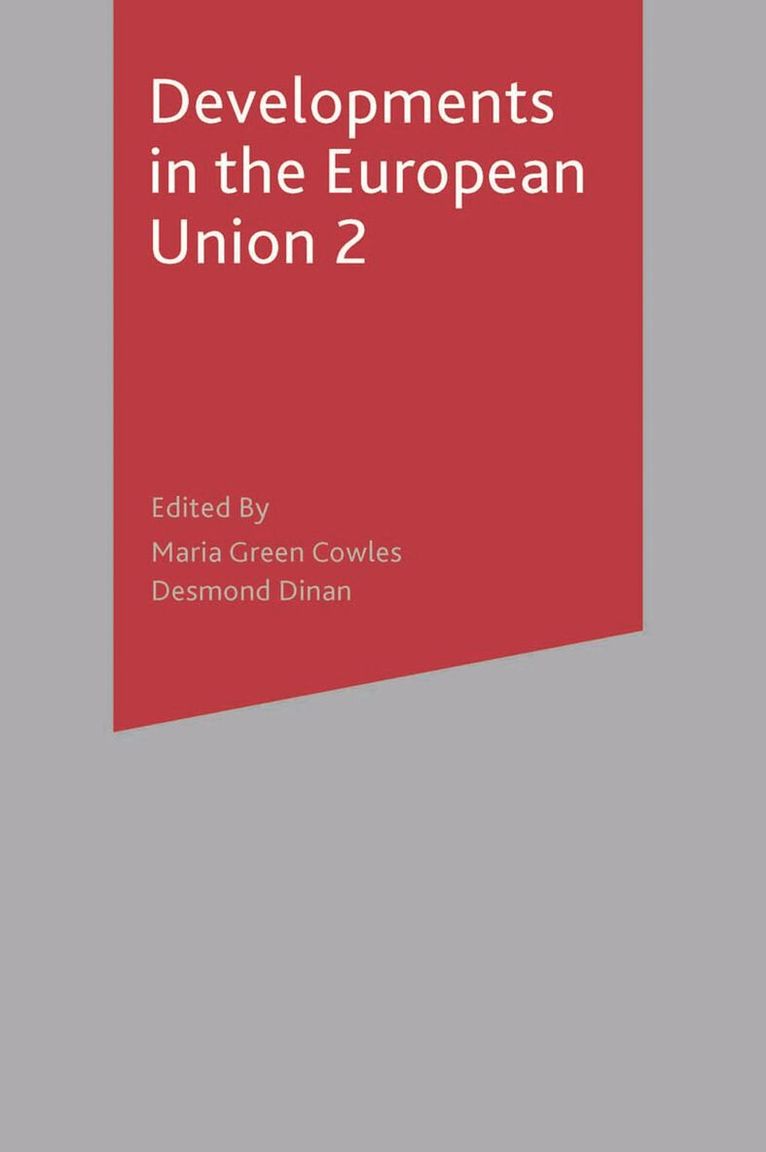
Bringing together specially-commissioned chapters by leading authorities and rigorously edited for coherence and accessibility, this all-new replacement for Developments in the European Union provides state-of-the-art coverage of the EU as it expands and reconstitutes itself in the early Twenty-first-century. Ranging broadly across the economic, social, legal and political dimensions of the EU, it assesses both internal changes and external relations and examines in detail key policy areas.
1 548 kr
Skickas inom 10-15 vardagar
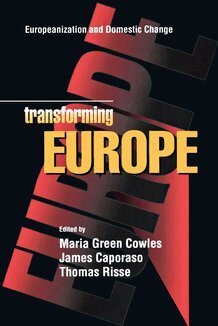
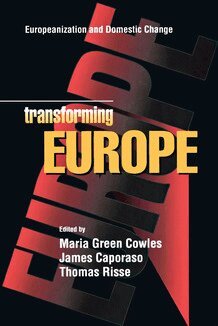
Does the European Union change the domestic politics and institutions of its member states? Many studies of EU decisionmaking in Brussels pay little attention to the potential domestic impact of European integration. Transforming Europe traces the effects of Europeanization on the EU member states. The various chapters, based on cutting-edge research, examine the impact of the EU on national court systems, territorial politics, societal networks, public discourse, identity, and citizenship norms.The European Union, the authors find, does indeed make a difference—even in Germany, France, and the United Kingdom. In many cases EU rules and regulations incompatible with domestic institutions have created pressure for national governments to adapt. This volume examines the conditions under which this "adaptational pressure" has led to institutional change in the member states.
339 kr
Skickas inom 10-15 vardagar
Does the European Union change the domestic politics and institutions of its member states? Many studies of EU decisionmaking in Brussels pay little attention to the potential domestic impact of European integration. Transforming Europe traces the effects of Europeanization on the EU member states. The various chapters, based on cutting-edge research, examine the impact of the EU on national court systems, territorial politics, societal networks, public discourse, identity, and citizenship norms.The European Union, the authors find, does indeed make a difference—even in Germany, France, and the United Kingdom. In many cases EU rules and regulations incompatible with domestic institutions have created pressure for national governments to adapt. This volume examines the conditions under which this "adaptational pressure" has led to institutional change in the member states.